Support our educational content for free when you purchase through links on our site. Learn more

🚀 What Should I Put in My Daily Routine? The Ultimate 2026 Guide
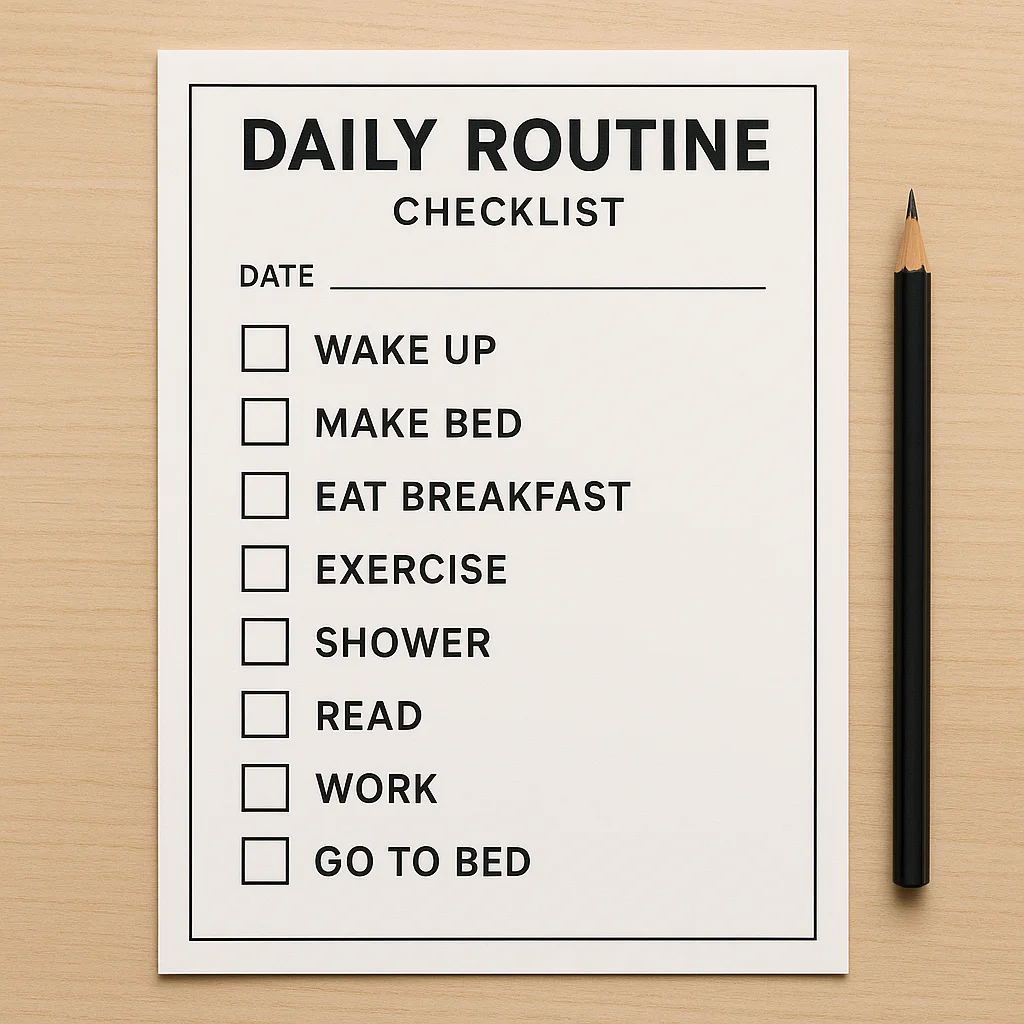
Ever feel like your day is a chaotic jumble of “shoulds” and “musts,” leaving you exhausted before lunch? You’re not alone. At Daily Checklist™, we’ve seen brilliant minds crumble under the weight of rigid schedules that ignore human biology. The secret isn’t copying Richard Branson’s 5 AM ice bath (unless you love shivering); it’s building a flexible framework that adapts to your energy, not the other way around.
In this comprehensive guide, we’re ditching the one-size-fits-all advice. We’ll reveal the 3-tier routine system that works even on your worst days, debunk the myth of the “perfect morning,” and show you exactly how to stack habits so they stick without burning you out. Whether you have 5 minutes or 5 hours, we have a blueprint for you.
Key Takeaways
- Consistency beats intensity: A flexible routine that adapts to your energy levels is far more effective than a rigid, perfect schedule.
- The 3-Tier System: Build your day around an Ideal Routine, a Most-Likely Routine, and a Minimum Viable Routine to ensure progress even on chaotic days.
- Science-backed habits: Prioritize morning light exposure, protein-rich meals, and a digital detox before bed to optimize your circadian rhythm and focus.
- Start small: Use micro-habits (as little as 2 minutes) to build momentum without triggering procrastination or overwhelm.
Table of Contents
- ⚡️ Quick Tips and Facts
- 🕰️ The Evolution of the Perfect Daily Routine: From Monks to Modern Minimalists
- 🤔 What Is a Healthy Daily Routine and Why Does Your Brain Crave One?
- 🌅 How Do You Start a Healthy Morning Routine That Actually Sticks?
- 🚀 10 Power Moves to Supercharge Your Miday Productivity
- 🌙 What’s a Healthy Bedtime Routine for Deep, Restorative Sleep?
- 🧘 ♀️ 7 Essential Self-Care Rituals to Weave Into Your Day
- 🥗 5 Nutrition Hacks to Fuel Your Body Without the Food Coma
- 🏃 ♂️ 6 Movement Breaks for Sedentary Souls and Desk Jockeys
- 🧠 8 Mental Health Check-Ins to Keep Your Mind Sharp and Calm
- ⏱️ A Healthy Routine for Busy Schedules: The “No-Excuses” Edition
- ⚡️ If You Have Less Than 5 Minutes: The Micro-Habit Miracle
- 📊 How Do You Know if Your Routine Is Working? The Data-Driven Approach
- 🛑 When To Seek Support: Signs Your Routine Has Gone Off the Rails
- 🛠️ Tools, Apps, and Gadgets to Automate Your Success
- 🎯 Conclusion: Your Blueprint for a Life Well-Lived
- 🔗 Recommended Links
- ❓ FAQ: Your Burning Questions About Daily Routines Answered
- 📚 Reference Links
⚡️ Quick Tips and Facts
Before we dive into the nitty-gritty of building a routine that doesn’t feel like a prison sentence, let’s hit the fast lane with some game-changing facts. Did you know that habits account for nearly 40% of our daily actions? That’s right, almost half of what you do isn’t a conscious choice; it’s autopilot. 🤯
At Daily Checklist™, we’ve seen thousands of people try to overhaul their lives overnight, only to crash and burn by Wednesday. Why? Because they ignored the science of habit formation. Here is the truth: Consistency beats intensity.
| Fact | The Reality Check |
|---|---|
| Time to Form a Habit | It takes an average of 6 days to make a behavior automatic, not the mythical 21 days. Source: UCL |
| Decision Fatigue | Your brain has a limited number of decisions per day. A routine saves willpower for big choices. |
| Sleep Impact | Adults need 7-9 hours of sleep. Skimping on this ruins focus, mood, and even your metabolism. Source: National Sleep Foundation |
| The “5-Minute” Rule | If a task takes less than 5 minutes, do it now. It prevents the “clutter” of procrastination. |
If you’re wondering, “But what exactly should be on my daily checklist?”, we’ve got a dedicated guide that breaks it down to the minute. Check out our article on What should be on your daily checklist? to get the blueprint.
Key Takeaway: You don’t need a military-grade schedule. You need a flexible framework that adapts to your energy levels.
🕰️ The Evolution of the Perfect Daily Routine: From Monks to Modern Minimalists
Why are we so obsessed with routines? It’s not just a modern productivity fad. The concept dates back to ancient monastic orders, where the Rule of Saint Benedict dictated every hour of the day, from prayer to manual labor. These monks understood that structure creates freedom. By automating the mundane, they freed their minds for spiritual growth.
Fast forward to the Industrial Revolution, and the “clock” became the master. We traded spiritual rhythm for factory whistles. Today, in the age of the digital nomad and the hustle culture, we’ve swung the pendulum back. We want the structure of the monk but the freedom of the artist.
The Modern Dilemma:
We are bombarded with “perfect” routines on social media. 5 AM wake-ups, ice baths, and 4-hour deep work sessions. But here’s the secret the influencers won’t tell you: Perfection is the enemy of progress.
“My autistic brain wants routine, really bad. My ADHD brain however requires motivation, dopamine and interest to do something.” — Creator of the “First Video” on Routine Flexibility
This tension between the desire for order and the need for flexibility is where most people fail. We try to copy Richard Branson’s routine (when we can actually access his blog!) without accounting for our own neurodivergence or energy levels.
The Daily Checklist™ Philosophy:
We believe in Tiered Routines.
- The Ideal Routine: For your high-energy, “on-fire” days.
- The Most-Likely Routine: For your average Tuesday.
- The Minimum Viable Routine: For the days when you just want to crawl back into bed.
This approach, popularized by creators focusing on neurodivergent productivity, ensures you never break the chain, even on your worst days.
🤔 What Is a Healthy Daily Routine and Why Does Your Brain Crave One?
So, what exactly are we building? A healthy daily routine isn’t a rigid list of chores. It’s a predictable sequence of behaviors that supports your physical, mental, and emotional well-being.
According to experts at Northwestern Medicine, a healthy routine is “simple, flexible, and realistic.” It’s the scaffolding that holds your life together when the world feels chaotic.
The Science of Predictability
Your brain loves patterns. When you know what comes next, your brain doesn’t have to waste energy making micro-decisions. This is called cognitive ease.
- Reduced Stress: Predictability lowers cortisol levels.
- Better Focus: Less decision fatigue means more brainpower for deep work.
- Emotional Stability: Knowing your day has a rhythm provides a sense of control.
The “Why” Behind the “What”:
You might ask, “Why can’t I just wing it?” Because “wing it” is actually exhausting. Every time you decide what to eat, when to exercise, or when to sleep, you are burning glucose. A routine automates these decisions, leaving you with a full tank of gas for the things that truly matter.
“A healthy daily routine doesn’t need to be perfect. It should be simple, flexible and realistic.” — Northwestern Medicine
🌅 How Do You Start a Healthy Morning Routine That Actually Sticks?
The morning sets the tone for the entire day. If you start with chaos, you’ll likely end with chaos. But here’s the trap: Don’t try to do everything at once.
Step 1: The “No-Phone” First Hour
The moment you grab your phone, you are reacting to other people’s agendas. Instead, claim the first 30 minutes for yourself.
- Hydrate: Drink a large glass of water immediately. Your brain is dehydrated after 8 hours of sleep.
- Light Exposure: Get sunlight in your eyes within 30 minutes of waking. This triggers your circadian rhythm and boosts alertness. Source: Huberman Lab
- Movement: Even 5 minutes of stretching gets the blood flowing.
Step 2: The “Big 3”
Instead of a 20-item to-do list, pick three critical tasks for the day.
- The most important task (MIT).
- The second most important.
- The “must-do” administrative task.
Step 3: Fuel Up
Eat a breakfast with protein and fiber. Avoid the sugar crash that comes from cereal or pastries.
Common Pitfall: Trying to meditate for 30 minutes when you’ve never meditated before.
The Fix: Start with 2 minutes. Use an app like Headspace or Calm to guide you.
“Do you feel rested upon waking?” — Dr. Mary Ella Blair Wood, DO
If the answer is no, your morning routine (or your sleep routine) needs an overhaul.
🚀 10 Power Moves to Supercharge Your Miday Productivity
The miday slump is real. Between 1 PM and 3 PM, your energy naturally dips. Instead of fighting it with more caffeine, try these 10 Power Moves to reclaim your afternoon.
- The 20-20-20 Rule: Every 20 minutes, look at something 20 feet away for 20 seconds. This saves your eyes and resets your focus.
- Power Nap: A 20-minute nap (no more!) can boost alertness without grogginess.
- Hydration Station: Keep a water bottle on your desk. Dehydration mimics fatigue.
- The “Walk and Talk”: Take a meeting while walking. It boosts creativity and gets you moving.
- Deep Work Blocks: Schedule 90-minute blocks of uninterrupted work. Turn off notifications.
- Snack Smart: Swap the candy bar for nuts or fruit.
- Digital Detox: Step away from screens for 15 minutes. Read a physical book or just stare out the window.
- Prioritize the “Ugly” Tasks: Do the task you dread first thing in the afternoon. Get it over with.
- Gratitude Check: Write down one thing you’re grateful for. It shifts your mindset from stress to abundance.
- Environment Reset: Tidy your desk. A cluttered space leads to a cluttered mind.
Pro Tip: Use habit stacking. If you drink coffee, do 10 squats while it brews. If you wait for the elevator, do a breathing exercise.
🌙 What’s a Healthy Bedtime Routine for Deep, Restorative Sleep?
Sleep is the foundation of everything. Without it, your routine is built on sand. A healthy bedtime routine signals to your brain that it’s time to power down.
The 1-Hour Wind-Down
Start your wind-down routine 60 minutes before bed.
- Dim the Lights: Lower the lights to mimic sunset.
- No Screens: Blue light suppresses melatonin. Use blue light blocking glasses or enable “Night Shift” on your devices.
- Cool Down: Keep your room between 60-67°F (15-19°C).
The Mental Reset
- Brain Dump: Write down your worries or tomorrow’s to-do list. Get them out of your head and onto paper.
- Reading: Read a physical book (fiction is great for escapism).
- Relaxation: Try progressive muscle relaxation or a guided sleep meditation.
The “Minimum Routine” for Sleep:
If you’re exhausted, just do these three things:
- Brush teeth.
- Change into pajamas.
- Get in bed.
That’s it. You’ve kept the habit alive.
🧘 ♀️ 7 Essential Self-Care Rituals to Weave Into Your Day
Self-care isn’t just bubble baths (though those are nice). It’s about intentional actions that replenish your energy.
- Mindful Breathing: 3 minutes of box breathing (4-4-4-4) to lower cortisol.
- Gratitude Journaling: Write 3 things you are grateful for.
- Digital Detox: A 30-minute break from all screens.
- Movement Break: A 10-minute walk or stretch session.
- Hydration Check: Drink a glass of water before every meal.
- Connection: Call a friend or family member for a quick chat.
- Reflection: Spend 5 minutes reviewing what went well today.
Why it matters: These rituals act as “reset buttons” throughout the day, preventing burnout before it starts.
🥗 5 Nutrition Hacks to Fuel Your Body Without the Food Coma
Food is fuel, but it can also be a trap. The wrong choices lead to the dreaded afternoon slump.
- Protein First: Start every meal with protein. It keeps you full and stabilizes blood sugar.
- Fiber is King: Add veggies or whole grains to every meal.
- Hydrate Before Eating: Drink water 20 minutes before a meal to aid digestion.
- Limit Caffeine After 2 PM: It stays in your system for hours and ruins sleep.
- Plan Your Snacks: Don’t wait until you’re starving. Have healthy snacks ready (nuts, fruit, yogurt).
The “Default Choice” Strategy:
Keep a water bottle on your desk. Place walking shoes near the door. Make the healthy choice the easy choice.
🏃 ♂️ 6 Movement Breaks for Sedentary Souls and Desk Jockeys
Sitting is the new smoking. But you don’t need a gym membership to stay active. You just need to move often.
- The 10-Minute Walk: Walk around the block or up and down the stairs.
- Desk Stretches: Neck rolls, shoulder shrugs, and wrist stretches.
- Squats: Do 10 squats every hour.
- Wall Push-ups: A quick upper body boost.
- Standing Meetings: Take calls while standing or pacing.
- The “Bathroom Break” Walk: Walk a little further to the restroom to get extra steps in.
The “Walking Meditation”:
Focus on each step and your surroundings. It’s a great way to clear your mind and get some fresh air.
🧠 8 Mental Health Check-Ins to Keep Your Mind Sharp and Calm
Your mental health is just as important as your physical health. Check in with yourself regularly.
- Morning Check-in: How do I feel? What’s my energy level?
- Miday Check-in: Am I stressed? Do I need a break?
- Evening Check-in: What went well? What could I improve?
- The “5-5-5” Grounding: Name 5 things you see, 5 you hear, 5 you feel.
- Emotional Labeling: Name your emotion. “I am feeling anxious.” This reduces its power.
- The “Why” Question: Why am I feeling this way?
- The “What If” Game: What’s the worst that could happen? Usually, it’s not that bad.
- The “Gratitude” Shift: What am I grateful for right now?
When to Seek Help:
If you feel overwhelmed, don’t suffer in silence. Reach out to a professional.
⏱️ A Healthy Routine for Busy Schedules: The “No-Excuses” Edition
No time? No problem. A healthy routine is scalable.
The “Busy Schedule” Strategy:
- Meal Prep: Cook in bulk on Sundays.
- Habit Stacking: Attach new habits to existing ones.
- Default Choices: Make the healthy choice the default.
- Micro-Habits: Do 1 minute of exercise instead of 30.
The “No-Excuses” Mindset:
It’s not about doing everything perfectly. It’s about doing something. Even 5 minutes counts.
⚡️ If You Have Less Than 5 Minutes: The Micro-Habit Miracle
Sometimes, you only have 5 minutes. That’s enough to make a difference.
- Box Breathing: 1-2 minutes.
- Progressive Muscle Relaxation: 2-3 minutes.
- 5-5-5 Grounding: 3 minutes.
- Gratitude Practice: 2 minutes.
- Mini Meditation: 5 minutes.
“Taking five minutes a few times a day makes a difference in lowering cortisol, and improving focus and health overall.” — Dr. Mary Ella Blair Wood, DO
📊 How Do You Know if Your Routine Is Working? The Data-Driven Approach
How do you measure success? It’s not about perfection. It’s about trends.
Signs Your Routine is Working:
- Steadier Energy: No more 3 PM crashes.
- Improved Mood: You feel more stable and less reactive.
- Better Sleep: You fall asleep faster and wake up refreshed.
- Increased Focus: You can concentrate for longer periods.
Signs to Adjust:
- You dread your routine.
- You skip it constantly.
- Your stress levels are increasing.
The Weekly Check-in:
Ask yourself:
- What helped?
- What felt challenging?
- What small tweak could make next week easier?
Adaptability is Key:
Scale habits down when busy. Build them back up when space allows.
🛑 When To Seek Support: Signs Your Routine Has Gone Off the Rails
Sometimes, a routine isn’t enough. If you’re struggling with anxiety, depression, or ADHD, you might need extra support.
Red Flags:
- You can’t stick to any routine, even the “minimum” one.
- You feel hopeless or overwhelmed.
- Your sleep is severely disrupted.
- You’re using substances to cope.
What to Do:
Reach out to a therapist, counselor, or doctor. There is no shame in asking for help.
🛠️ Tools, Apps, and Gadgets to Automate Your Success
You don’t have to do it alone. Use technology to your advantage.
Top Apps for Routine Building:
- Habitica: Gamify your habits.
- Streaks: Track your daily habits.
- Forest: Stay focused and avoid distractions.
- Calm / Headspace: For meditation and sleep.
- Notion / Trello: For planning and organization.
Gadgets:
- Smart Lights: Automate your morning and evening light exposure.
- Fitness Trackers: Monitor your activity and sleep.
- Blue Light Blocking Glasses: Protect your eyes and sleep quality.
👉 Shop for Routine Tools:
- Habit Trackers: Amazon Search: Habit Trackers | Etsy Search: Habit Trackers
- Meditation Apps: Headspace Official Site | Calm Official Site
- Blue Light Glasses: Amazon Search: Blue Light Glasses | Brand Official: Felix Gray
🎯 Conclusion: Your Blueprint for a Life Well-Lived

So, what should you put in your daily routine? The answer is simple: What works for you.
We started this journey by asking if you could build a routine that sticks. We explored the history, the science, and the pitfalls. We learned that perfection is the enemy of progress. We discovered the power of tiered routines—the Ideal, the Most-Likely, and the Minimum.
The Final Verdict:
Your routine should be a flexible framework, not a rigid cage. It should adapt to your energy levels, your schedule, and your mood. It should support your physical health, your mental well-being, and your productivity.
Your Action Plan:
- Start Small: Pick one habit to add this week.
- Be Consistent: Do it every day, even if it’s just for 5 minutes.
- Be Flexible: Adjust when life gets crazy.
- Track Your Progress: Use a checklist or an app.
- Celebrate Wins: Acknowledge your progress.
Remember, the goal isn’t to be perfect. The goal is to be better than you were yesterday.
Ready to simplify your day?
Check out our Daily Checklist™ Habit Formation Guide to get started.
🔗 Recommended Links
Books to Transform Your Routine:
- Atomic Habits by James Clear – The ultimate guide to building good habits.
- The Power of Habit by Charles Duhigg – Understanding the science of habit.
- Deep Work by Cal Newport – Mastering focus in a distracted world.
Tools & Apps:
- Headspace – Meditation and mindfulness.
- Calm – Sleep stories and meditation.
- Notion – All-in-one workspace for planning.
- Streaks – Habit tracking.
External Resources:
- Northwestern Medicine: Health Benefits of Having a Routine
- Richard Branson’s Daily Routine (Archived/Alternative Sources)
- American Heart Association: Exercise Guidelines
- National Sleep Foundation: Sleep Duration
❓ FAQ: Your Burning Questions About Daily Routines Answered

What is a healthy daily schedule?
A healthy daily schedule is a flexible and realistic plan that includes consistent sleep, regular meals, physical activity, and time for stress management. It’s not about perfection, but about creating a rhythm that supports your well-being.
Read more about “🚀 Simplify Your Routine with Checklists: 10 Apps That Actually Work (2026)”
How do I write my daily routine?
Start by identifying your non-negotiables (sleep, meals, exercise). Then, add flexible blocks for work, hobbies, and relaxation. Use habit stacking to attach new habits to existing ones. Remember to include a minimum routine for low-energy days.
Read more about “12-Step ADHD Daily Routine Visual Schedule Guide (2026) 🗓️”
What should I put in my routine?
Your routine should include:
- Morning: Hydration, light exposure, movement, and a healthy breakfast.
- Miday: Movement breaks, healthy snacks, and deep work blocks.
- Evening: Wind-down activities, screen-free time, and a consistent bedtime.
- Throughout: Hydration, mental health check-ins, and gratitude practices.
Read more about “🚀 25 Best Daily Checklist Apps of 2026: Find Your Perfect Match”
What should a daily routine include?
A daily routine should include physical activity, nutritious meals, adequate sleep, stress management techniques, and time for connection. It should also be adaptable to your energy levels and schedule.
Read more about “🚀 10 Ultimate To-Do List Templates to Master Your Day (2026)”
What are the best habits to include in a morning checklist?
- Drink a glass of water.
- Get sunlight exposure.
- Move your body (stretch, walk, or exercise).
- Eat a protein-rich breakfast.
- Practice mindfulness or gratitude.
Read more about “5 Reasons Daily Checklists Transform Business Success 🚀”
How can I create a simple evening routine to reduce stress?
- Dim the lights 1 hour before bed.
- Avoid screens.
- Write down your thoughts or to-do list for tomorrow.
- Read a book or listen to calming music.
- Practice relaxation techniques like deep breathing or progressive muscle relaxation.
Read more about “12 Digital Minimalism Daily Habits to Reclaim Your Brain (2026) 🧠”
What items should be on a daily productivity checklist?
- Top 3 Tasks: The most important things to accomplish.
- Time Blocks: Scheduled times for deep work and breaks.
- Habit Stacking: New habits attached to existing ones.
- Energy Management: Breaks for movement and hydration.
- Review: A quick end-of-day review of what went well.
Read more about “🏠 The Ultimate 15-Step Daily Checklist for Home Organization (2026)”
How do I stick to a daily routine when I feel overwhelmed?
- Scale Down: Switch to your Minimum Routine.
- Focus on One Thing: Don’t try to do everything at once.
- Be Kind to Yourself: It’s okay to have off days.
- Seek Support: Talk to a friend, therapist, or coach.
- Remember the “Why”: Reconnect with your reasons for building a routine.
Read more about “✅ Can a Daily Checklist Prioritize Tasks? (7 Proven Methods)”
📚 Reference Links
- Northwestern Medicine: Health Benefits of Having a Routine
- American Heart Association: Physical Activity Guidelines
- National Sleep Foundation: How Much Sleep Do You Need?
- University College London: How Long Does It Take to Form a Habit?
- Huberman Lab: Sunlight and Circadian Rhythm
- Daily Checklist™: What should be on your daily checklist?
- Daily Checklist™: Habit Formation Category
- Daily Checklist™: Life Hacks Category
- Daily Checklist™: Digital Detox Category
- Virgin.com: My (usual) daily routine – Richard Branson (Note: Access may be restricted; alternative sources recommended).