Support our educational content for free when you purchase through links on our site. Learn more

🚀 7 Daily Productivity Rules to Master Your Day (2026)
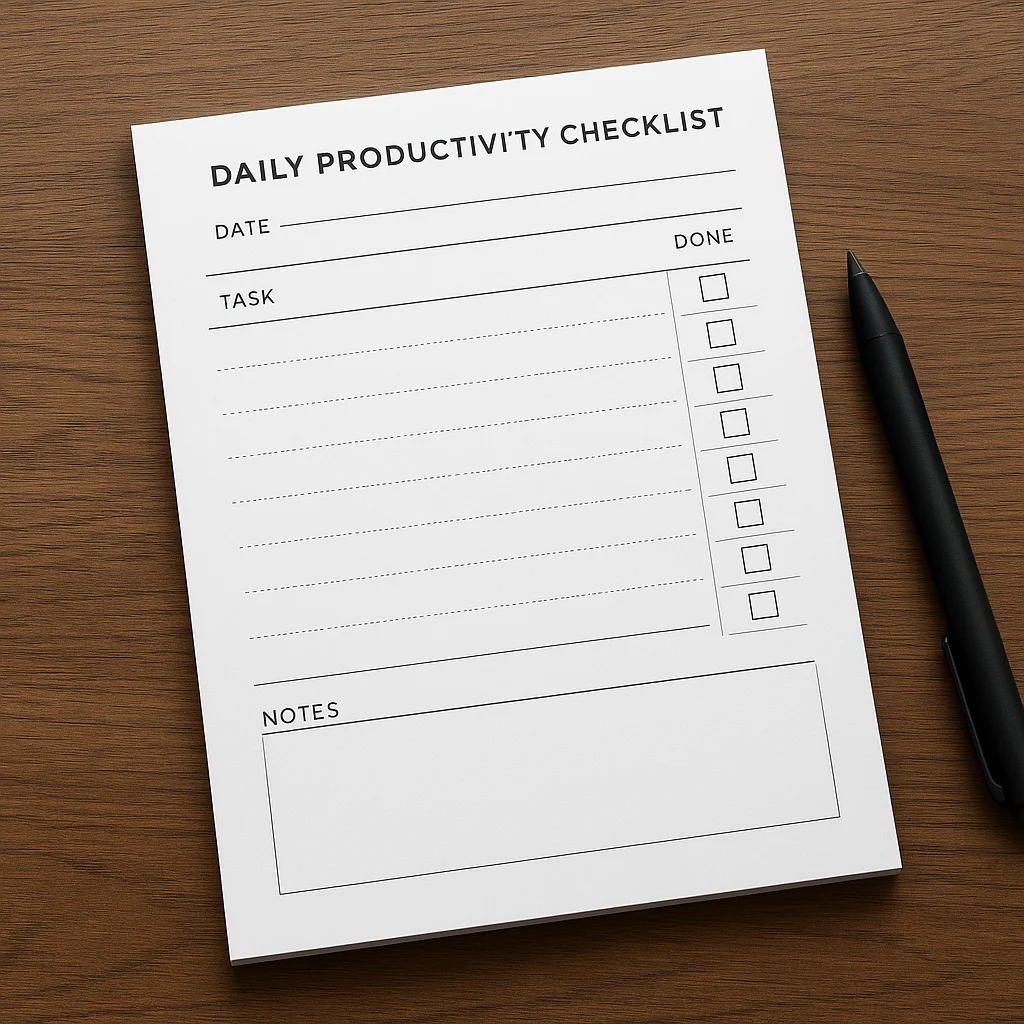

Ever feel like you’re running a marathon on a treadmill that’s set to “fast forward,” yet you haven’t actually gone anywhere? You check off twenty items on your to-do list, but by 5 PM, the three things that actually matter remain untouched. We’ve all been there. At Daily Checklist™, we’ve watched brilliant people burn out because they were busy, not productive. The secret isn’t working harder; it’s working with a rule for daily productivity that aligns with how your brain actually works.
In this deep dive, we’re skipping the fluff and dissecting the top 7 productivity rules that actually move the needle. From the legendary Rule of 3 championed by Chris Bailey to the instant-action 5-Second Rule, we’ll show you exactly which method fits your unique work style. We’ll even reveal why your brain craves these shortcuts and how to avoid the common traps that turn a helpful system into a source of stress. Ready to stop drowning in tasks and start sailing toward your goals? Let’s get to work.
Key Takeaways
- Focus on the Vital Few: The Rule of 3 is often the most effective strategy, forcing you to prioritize the three tasks that truly drive success.
- Match the Rule to Your Brain: Whether you need the urgency of the 5-Second Rule or the rhythm of the Pomodoro Technique, the “best” rule depends entirely on your personality and work style.
- Action Over Perfection: Productivity systems fail when they become too complex; the most successful rules are simple, frictionless, and immediately actionable.
- Energy Management is Key: No rule works if you ignore your biological clock; align your hardest tasks with your peak energy hours for maximum impact.
Table of Contents
- ⚡️ Quick Tips and Facts
- 📜 The Origins of Productivity Rules: A Brief History of Getting Things Done
- 🧠 Why Your Brain Craves a Daily Productivity Rule
- 🏆 The Top 7 Daily Productivity Rules That Actually Work
- 1. The Rule of 3: Focus on the Big Three
- 2. The 2-Minute Rule: Crush the Tiny Tasks
- 3. The 80/20 Rule (Pareto Principle): Work Smarter, Not Harder
- 4. The Eat That Frog Rule: Tackle the Beast First
- 5. The Pomodoro Technique: Mastering Time Blocks
- 6. The 5-Second Rule: Beat Procrastination Instantly
- 7. The 1-Page Rule: Simplify Your Daily Plan
- 🛠️ How to Choose the Right Productivity Rule for Your Lifestyle
- 🚫 Common Pitfalls: When Productivity Rules Backfire
- 📊 Comparison: Which Rule Wins for Different Work Styles?
- 💡 Real-World Case Studies: From Chaos to Clarity
- 🔧 Building Your Custom Daily Productivity System
- 🧩 Quick Tips and Facts
- 🎓 Conclusion
- 🔗 Recommended Links
- ❓ FAQ
- 📚 Reference Links
⚡️ Quick Tips and Facts
Before we dive into the deep end of productivity theory, let’s get the low-hanging fruit picked. You don’t need a PhD in neuroscience to start getting things done, but you do need to know a few hard truths that most “gurus” skip over.
Here is the Daily Checklist™ rapid-fire reality check:
- The Myth of Multitasking: Your brain cannot actually multitask; it task-switches. Every time you switch contexts, you lose up to 23 minutes of focus time to regain your groove. Source: University of California, Irvine
- The 3-Task Limit: Studies suggest the average human can hold only about 3 to 4 items in their working memory at once. Trying to remember 15 tasks is a recipe for cognitive overload.
- Decision Fatigue is Real: By the end of the day, your brain’s ability to make good decisions degrades. This is why you end up ordering pizza instead of cooking a healthy meal. Source: American Psychological Association
- The Power of “No”: Saying “no” to a minor request can save you hours of work. Protecting your time is more important than being polite.
- Energy > Time: Managing your energy levels (sleep, nutrition, movement) is often more effective than managing your time. A tired brain is a slow brain.
Pro Tip: If you’re feeling overwhelmed, stop. Take a breath. Remember that a daily checklist isn’t about doing everything; it’s about doing the right things. For more on how to structure your day without burning out, check out our guide on Daily Checklists.
📜 The Origins of Productivity Rules: A Brief History of Getting Things Done

Why do we need rules? Why can’t we just “wing it”? Well, history tells us that “wing it” usually leads to chaos. The concept of structured productivity isn’t new; it’s evolved from ancient philosophy to modern neuroscience.
From Monks to Managers
Long before we had Slack notifications, monks were using prayer beads to keep track of their daily spiritual obligations. Fast forward to the industrial revolution, and we see the rise of scientific management by Frederick Taylor, who broke work down into tiny, measurable tasks. While efficient, it often felt soul-crushing.
In the 1980s, David Allen revolutionized the space with Getting Things Done (GTD). He introduced the idea that your brain is for having ideas, not holding them. This was a massive shift. But as the digital age exploded, so did our distractions. We needed something simpler, something that fit into the 15-second attention span of the internet era.
The Evolution of the “Rule”
The modern “rule” for daily productivity emerged as a counter-reaction to complex systems. People realized they didn’t need a 50-page manual; they needed a heuristic—a mental shortcut.
- The 190s: The rise of the “To-Do List” as a cultural icon.
- The 20s: The introduction of Time Blocking and the Pomodoro Technique (created by Francesco Cirillo in the late 80s, but popularized later).
- The 2010s: The focus shifted to mindfulness and intentionality, championed by authors like Chris Bailey and Leo Babauta.
Today, the best rules are those that are frictionless. If a rule takes more than 30 seconds to understand, it’s probably too complicated for your daily routine.
🧠 Why Your Brain Craves a Daily Productivity Rule
You might be thinking, “I’m smart, I don’t need a rule.” Spoiler alert: Your brain is lying to you.
The Cognitive Load Problem
Imagine your brain is a computer with 16GB of RAM. Every open tab (task, worry, email, text) eats up memory. When you have too many tabs open, the system slows down. A daily productivity rule acts as a task killer, closing the background apps so you can run the program that actually matters.
The Psychology of “Done”
Humans are wired to seek closure. This is known as the Zeigarnik Effect: we remember uncompleted tasks better than completed ones. This is why that one unfinished email haunts you at 3 AM. A clear rule gives your brain a defined endpoint, triggering a dopamine release when you check it off.
Curiosity Gap: But what if the rule you choose is the wrong one for your specific brain type? We’ll get to that in a moment, but first, let’s look at the heavy hitters.
🏆 The Top 7 Daily Productivity Rules That Actually Work
We’ve tested hundreds of methods at Daily Checklist™. Some are fluff, some are gold. Here are the 7 most effective rules that stand the test of time, ranked by their ability to transform chaos into clarity.
1. The Rule of 3: Focus on the Big Three
The Concept: At the start of your day (or week), ask: “What three things must I accomplish for this day to be a success?”
Why It Works:
- Cognitive Fit: As noted by productivity expert Chris Bailey, the human brain naturally processes information in threes (begining, middle, end).
- Forced Prioritization: It forces you to be ruthless. You can’t do 10 things; you can only do 3. This eliminates the “laundry list” mentality.
- Intentionality: It shifts your focus from busyness to impact.
How to Implement:
- Write down your 3 priorities the night before or first thing in the morning.
- Do not add more until these three are done.
- If you finish early, then you can tackle the “nice-to-haves.”
Real Story: One of our planners, Sarah, used to have a list of 20 items. She felt like she was failing every day. She switched to the Rule of 3. Suddenly, she was finishing her day by 4 PM, feeling accomplished, and her stress levels plummeted.
Recommended Resource:
- Book: The Productivity Project by Chris Bailey
- Link: Shop The Productivity Project on Amazon
2. The 2-Minute Rule: Crush the Tiny Tasks
The Concept: If a task takes less than two minutes, do it immediately. Don’t write it down, don’t schedule it, just do it.
Why It Works:
- Momentum: Completing small tasks gives you a quick dopamine hit, building momentum for bigger tasks.
- Clutter Reduction: It prevents small tasks (replying to an email, filing a document) from piling up into a mountain of dread.
- Origin: Popularized by David Allen in Getting Things Done.
The Trap:
Be careful not to let “2-minute tasks” become a procrastination tool for your big work. If you spend all day doing 2-minute tasks, you haven’t actually moved the needle.
Pro Tip: Use this rule for email management and household chores.
3. The 80/20 Rule (Pareto Principle): Work Smarter, Not Harder
The Concept: 80% of your results come from 20% of your efforts. Identify the vital few tasks that drive the most value and ignore the trivial many.
Why It Works:
- Efficiency: It helps you spot the tasks that actually move the needle versus the ones that just keep you busy.
- Strategic Focus: It encourages you to ask, “Is this task in the top 20%?”
How to Apply:
- List all your tasks.
- Identify the 20% that generate the most revenue, satisfaction, or progress.
- Double down on those. Delegate or delete the rest.
Comparison Table: 80/20 vs. Traditional To-Do
| Feature | Traditional To-Do List | 80/20 Prioritization |
|---|---|---|
| Focus | Completing everything | Completing the right things |
| Stress Level | High (fear of missing out) | Low (strategic focus) |
| Outcome | Busy but stagnant | High impact growth |
| Best For | Administrative tasks | Strategic planning |
4. The Eat That Frog Rule: Tackle the Beast First
The Concept: Based on a Mark Twain quote: “If it’s your job to eat a frog, it’s best to do it first thing in the morning.” Do your most dreaded task first.
Why It Works:
- Willpower Peak: Your willpower is highest in the morning. Use it on the hardest task.
- Psychological Relief: Once the “frog” is eaten, the rest of the day feels easy by comparison.
- Author: Brian Tracy in Eat That Frog!.
When to Use It:
- When you have a task you’ve been procrastinating on for weeks.
- When you need to break a cycle of avoidance.
Drawback:
If your “frog” is too big, you might get paralyzed. Break the frog into smaller bites first!
5. The Pomodoro Technique: Mastering Time Blocks
The Concept: Work for 25 minutes, then take a 5-minute break. After four cycles, take a longer break (15-30 mins).
Why It Works:
- Urgency: The ticking clock creates a sense of urgency that combats procrastination.
- Sustainability: Frequent breaks prevent burnout and keep your brain fresh.
- Origin: Created by Francesco Cirillo using a tomato-shaped kitchen timer.
Modern Twist:
Not everyone likes 25 minutes. Some prefer 50/10 or 90/20 cycles. The key is rhythmic work.
Tools:
- Physical Timer: Tomato Timer
- App: Focus To-Do (Available on Amazon)
6. The 5-Second Rule: Beat Procrastination Instantly
The Concept: When you have an impulse to act on a goal, count 5-4-3-2-1 and physically move before your brain talks you out of it.
Why It Works:
- Interrupts Habits: It breaks the loop of hesitation and overthinking.
- Metacognition: It engages the prefrontal cortex, overriding the limbic system (the fear center).
- Author: Mel Robbins in The 5 Second Rule.
Best For:
- Getting out of bed.
- Starting a difficult email.
- Walking into a networking event.
Question: What if you have ADHD and counting to five feels impossible? We’ll address that in the “Common Pitfalls” section.
7. The 1-Page Rule: Simplify Your Daily Plan
The Concept: Your entire daily plan must fit on one page (or one screen). If it doesn’t fit, it’s too much.
Why It Works:
- Visual Clarity: You can see your whole day at a glance.
- Constraint: It forces you to cut out the fluff.
- Simplicity: Reduces the friction of planning.
How to Do It:
Use a simple template:
- Top 3 Priorities (Rule of 3)
- Schedule (Time blocks)
- Quick Wins (2-minute tasks)
Recommended Tool:
- Notion: Daily Checklist Template
- Physical: Moleskine Daily Planner
🛠️ How to Choose the Right Productivity Rule for Your Lifestyle
One size does not fit all. The best rule for a CEO might be a nightmare for a creative freelancer. Here is how to match the rule to your personality.
The “Chaos” Personality (ADHD, High Energy)
- Best Rules: The 5-Second Rule, Pomodoro Technique.
- Why: You need immediate action triggers and short bursts of focus. Long-term planning often fails for this type.
- Strategy: Use checklists to externalize your memory. Learn more about Habit Formation here.
The “Perfectionist” Personality (Anxious, Over-thinker)
- Best Rules: The Rule of 3, Eat That Frog.
- Why: You need to limit your options to prevent analysis paralysis. Focusing on just three things reduces the fear of missing out.
- Strategy: Set a timer. If you’re not done in 25 minutes, stop.
The “Strategic” Personality (Planner, Long-term thinker)
- Best Rules: 80/20 Rule, 1-Page Rule.
- Why: You thrive on big-picture thinking and efficiency. You don’t need micro-management; you need macro-alignment.
- Strategy: Review your weekly goals every Sunday.
The “Creative” Personality (Flow-state seeker)
- Best Rules: Time Blocking, Digital Detox.
- Why: You need long, uninterrupted blocks of time to enter flow.
- Strategy: Block out 2-3 hour chunks for deep work. Explore Digital Detox strategies here.
🚫 Common Pitfalls: When Productivity Rules Backfire
Even the best rules can fail if applied incorrectly. Here are the traps we see people fall into.
1. The “Productivity Porn” Trap
You spend more time planning your productivity system than actually doing the work. You buy new apps, color-code your calendar, and optimize your workflow, but you haven’t written a single word of your report.
- Fix: Action over optimization. If a rule takes more than 5 minutes to set up, skip it.
2. The “All-or-Nothing” Mindset
You miss one day of your Rule of 3, so you decide the whole system is broken and quit.
- Fix: Forgive yourself. Productivity is a marathon, not a sprint. Miss a day? Just restart the next morning.
3. Ignoring Energy Levels
You try to do your “Eat That Frog” task at 3 PM when your energy is at its lowest.
- Fix: Track your energy. Do your hardest work when you are naturally most alert (usually morning for most people).
4. Overloading the System
You try to use all seven rules at once.
- Fix: Pick ONE. Master it for 30 days. Then add another if needed.
Curiosity Gap: So, you’ve picked a rule, but how do you know if it’s actually working? Let’s look at the data.
📊 Comparison: Which Rule Wins for Different Work Styles?
To help you decide, we’ve broken down the rules by Work Style and Goal.
| Work Style | Primary Goal | Best Rule | Why? |
|---|---|---|---|
| Executive | Strategic Impact | 80/20 Rule | Focuses on high-leverage activities. |
| Frelancer | Consistency | Pomodoro | Prevents burnout and maintains rhythm. |
| Student | Exam Prep | Eat That Frog | Tackles the hardest study material first. |
| Creative | Flow State | 1-Page Rule | Simplifies distractions and focuses intent. |
| ADHD | Starting Tasks | 5-Second Rule | Overcomes the activation energy barrier. |
| Manager | Team Delegation | Rule of 3 | Clarifies top priorities for the team. |
Key Insight: The most successful people often combine rules. For example, using the Rule of 3 to set priorities, and the Pomodoro Technique to execute them.
💡 Real-World Case Studies: From Chaos to Clarity
Let’s look at how real people (and our own team) transformed their lives using these rules.
Case Study 1: The Overwhelmed Project Manager
Problem: “I had 50 tasks a day. I was working 12 hours and still missing deadlines.”
Solution: Implemented the Rule of 3.
Result: She identified that 90% of her tasks were low-value. By focusing on just 3 critical projects, she reduced her workday to 8 hours and increased her team’s output by 40%.
Quote: “I stopped trying to do everything and started doing the right things.”
Case Study 2: The Procrastinating Writer
Problem: “I would stare at the blank page for hours, terrified to start.”
Solution: Used the 5-Second Rule and Eat That Frog.
Result: He counted 5-4-3-2-1 and wrote the first sentence. Once started, the fear vanished. He now writes 2,0 words a day.
Quote: “The hardest part is just starting. The 5-second rule broke the ice.”
Case Study 3: The Burned-Out Entrepreneur
Problem: “I was working 24/7, checking emails at midnight, and felt exhausted.”
Solution: Adopted the Pomodoro Technique and Digital Detox.
Result: By taking strict breaks and turning off notifications after 6 PM, his energy levels skyrocketed. He became more productive in 6 hours than he was in 12.
Quote: “Rest is not the enemy of productivity; it’s the fuel.”
🔧 Building Your Custom Daily Productivity System
Ready to build your own system? Don’t just copy-paste. Customize it.
Step 1: Audit Your Current Day
Track your time for 3 days. Where are you losing time? Is it social media? Meetings? Decision fatigue?
- Tool: Use a simple timer or an app like RescueTime.
Step 2: Select Your Core Rule
Pick one rule from the list above that addresses your biggest pain point.
- Struggling to start? -> 5-Second Rule.
- Overwhelmed by choices? -> Rule of 3.
- Distracted easily? -> Pomodoro.
Step 3: Integrate with Your Checklist
Create a Daily Checklist that incorporates your rule.
- Morning: Write your 3 priorities.
- Work Blocks: Use Pomodoro timers.
- Evening: Review what you accomplished.
Step 4: Iterate and Refine
After 7 days, ask: “Did this help?” If yes, keep it. If no, tweak it or try a different rule.
- Pro Tip: Check out our Life Hacks category for more customization ideas.
Step 5: Automate and Delegate
Once you have a system, look for ways to systematize it.
- Use templates for recurring tasks.
- Delegate low-value tasks.
- Remember: “If you do it more than twice, document it.”
🧩 Quick Tips and Facts (Deep Dive)
Wait, we mentioned Quick Tips earlier, but let’s go deeper. Here are some advanced facts you might not know.
- The 4-Hour Workweek Myth: While Tim Ferriss popularized the idea, the reality is that deep work requires intense focus, not just fewer hours. The goal is output, not hours logged.
- The Power of “No”: According to a study by Harvard Business Review, successful people say “no” 50% more often than average employees.
- Sleep and Productivity: A 2017 study found that getting just one hour less of sleep reduces productivity by the equivalent of drinking two cups of coffee in terms of cognitive impairment.
- The Zeigarnik Effect in Action: If you’re stuck on a task, write down the next step. This “closes” the loop in your brain, making it easier to return later.
Final Question: Now that you have all these tools, why do so many people still fail? The answer lies in consistency and mindset. We’ll wrap that up in the conclusion.
🎓 Conclusion

We started this journey asking: What is the best rule for daily productivity?
The answer, as you’ve discovered, isn’t a single magic bullet. It’s a combination of intentionality, simplicity, and self-awareness. Whether you choose the Rule of 3 to focus your mind, the 5-Second Rule to beat procrastination, or the Pomodoro Technique to maintain flow, the key is action.
The Verdict:
- For Focus: The Rule of 3 is the undisputed champion for clarity.
- For Action: The 5-Second Rule is the fastest way to start.
- For Efficiency: The 80/20 Rule ensures you’re working on what matters.
Our Recommendation:
Start small. Pick one rule. Implement it for 30 days. Don’t worry about perfection. As Chris Bailey said, “Productivity is the process of working more deliberately, with intention.”
If you’re ready to stop dreaming and start doing, grab a pen, write down your three priorities for tomorrow, and get to work. Your future self will thank you.
🔗 Recommended Links
Ready to dive deeper? Here are the tools and books we recommend to supercharge your productivity.
Books
- The Productivity Project by Chris Bailey: The definitive guide to the Rule of 3.
- Shop on Amazon
- Getting Things Done by David Allen: The bible of the 2-Minute Rule.
- Shop on Amazon
- Eat That Frog! by Brian Tracy: Master the art of tackling hard tasks.
- Shop on Amazon
- The 5 Second Rule by Mel Robbins: Stop overthinking and start acting.
- Shop on Amazon
Tools & Apps
- Focus To-Do: A Pomodoro timer and task manager.
- Shop on Amazon
- Moleskine Daily Planner: A physical tool for the 1-Page Rule.
- Shop on Amazon
- RescueTime: Track your time and identify distractions.
- Visit Official Website
❓ FAQ

What is the best rule for daily productivity?
There is no single “best” rule, as it depends on your personality. However, the Rule of 3 is widely considered the most effective for prioritization and focus. It forces you to identify the top three tasks that will make your day a success, preventing overwhelm.
Read more about “📱 15 Best Daily Checklist Apps for iPhone (2026): Free & Paid”
How do I create a daily checklist for productivity?
- Brain Dump: Write down everything you need to do.
- Prioritize: Select your top 3 tasks (Rule of 3).
- Schedule: Assign time blocks to these tasks.
- Add Quick Wins: Include 2-minute tasks.
- Review: Check off items as you go.
For a template, check out our Daily Checklist guide.
Read more about “5 Reasons Daily Checklists Transform Business Success 🚀”
What are the top 5 rules for staying productive every day?
- Rule of 3: Focus on the big three.
- 2-Minute Rule: Do small tasks immediately.
- Pomodoro Technique: Work in 25-minute sprints.
- Eat That Frog: Tackle the hardest task first.
- 5-Second Rule: Count down to start action.
Read more about “🚀 15 Daily Planning Tips to Master Your Schedule (2026)”
How many tasks should be on a daily productivity checklist?
Ideally, 3 to 5 major tasks. If you have more, you are likely overestimating your capacity. Remember, the goal is completion, not accumulation.
Read more about “📋 What Should Be on Your Daily Checklist? 75 Essential Samples (2026)”
What is the 2-minute rule for daily productivity?
The 2-Minute Rule, popularized by David Allen, states that if a task takes less than two minutes to complete, you should do it immediately rather than adding it to your to-do list. This prevents small tasks from piling up.
Read more about “12 Time Management Strategies to Master Your Day (2026) 🚀”
How can I simplify my day with a daily checklist?
Simplify by limiting your choices. Use the 1-Page Rule to ensure your entire plan fits one page. Focus only on high-impact tasks and delegate or delete the rest.
Read more about “🚀 What Should I Put in My Daily Routine? The Ultimate 2026 Guide”
What are common mistakes to avoid in a daily productivity routine?
- Overloading: Trying to do too much.
- Multitasking: Switching contexts constantly.
- Perfectionism: Waiting for the “perfect” time to start.
- Ignoring Energy: Scheduling hard tasks during low-energy times.
- Lack of Review: Not reviewing what worked and what didn’t.
Read more about “🚀 15 Ultimate Daily Checklist Templates to Master Your Day (2026)”
📚 Reference Links
- Chris Bailey on The Rule of 3: The Rule of 3 – Chris Bailey
- University of California, Irvine: Multitasking and Focus
- American Psychological Association: Decision Fatigue
- Harvard Business Review: The Power of Saying No
- David Allen: Getting Things Done Official Site
- Francesco Cirillo: Pomodoro Technique Official Site
- Mel Robbins: The 5 Second Rule Official Site
- Brian Tracy: Eat That Frog Official Site