Support our educational content for free when you purchase through links on our site. Learn more

🚀 15 Daily Planning Tips to Master Your Schedule (2026)
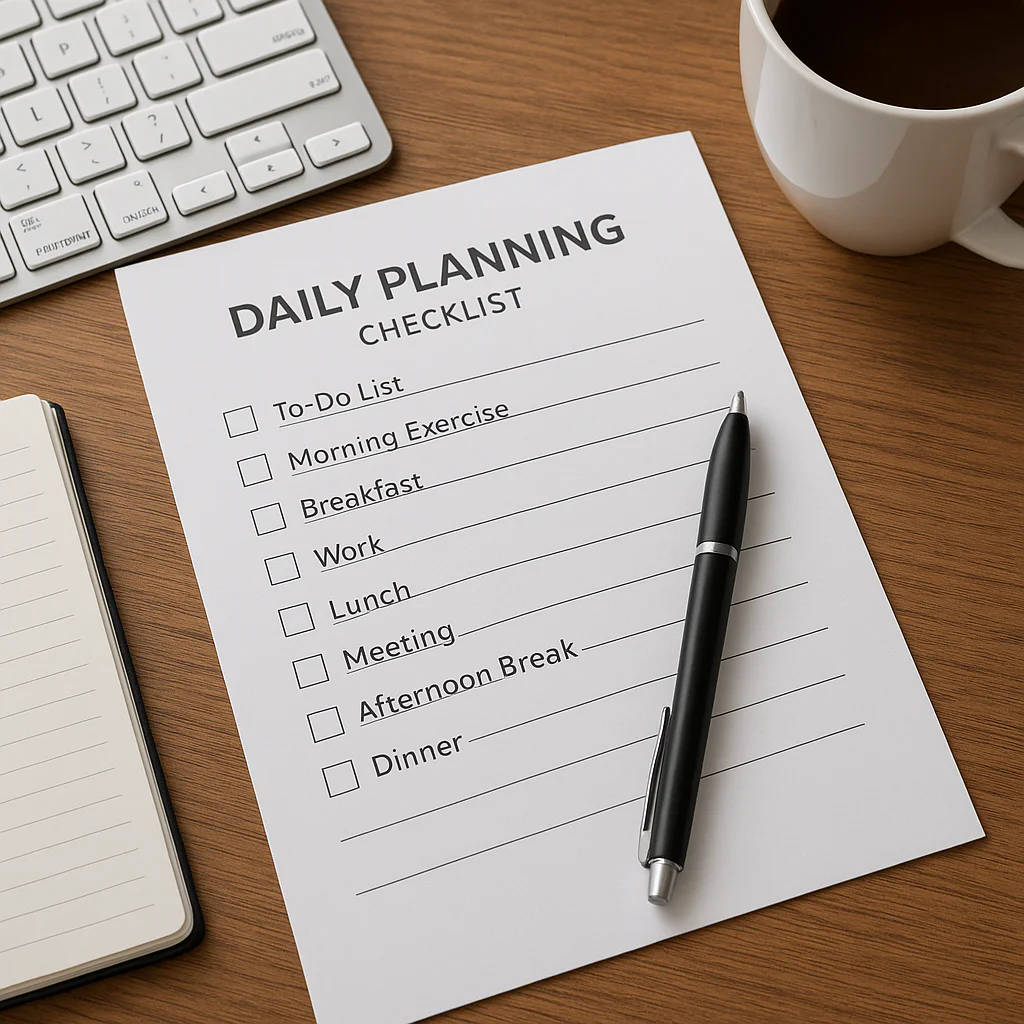
Ever feel like your day is a chaotic juggling act where you’re constantly dropping the ball? You’re not alone. We’ve all been there: staring at a to-do list that looks more like a novel than a plan, wondering how we managed to spend three hours answering emails but zero minutes on the one project that actually moves the needle. The secret isn’t working harder; it’s working smarter with a strategic daily planning routine.
In this comprehensive guide, we’re ditching the generic advice and diving deep into 15 proven daily planning tips that transform overwhelm into execution. From the science-backed “Big Three” method to the art of time-blocking, we’ll show you how to reclaim your time. We’ll even reveal why your brain craves a written list and how to choose the perfect planner—whether you’re a fan of the customizable A5 Daily LifePlanner™ or the pocket-sized PetitePlanner. By the end, you’ll have a system that doesn’t just manage your time, but elevates your entire life.
Key Takeaways
- Prioritize Ruthlessly: Focus on your “Big Three” tasks daily to ensure you’re working on what truly matters, not just what’s urgent.
- Master Time Blocking: Assign specific time slots to tasks to prevent Parkinson’s Law and boost sustained focus.
- Choose the Right Tool: Whether it’s a digital app or a physical A5 Daily LifePlanner™, the best planner is the one you actually use consistently.
- Build in Flexibility: Life is unpredictable; always schedule buffer zones to handle the unexpected without derailing your entire day.
- Leverage the Power of Writing: Simply writing down your goals can increase your likelihood of achieving them by up to 42%.
Table of Contents
- ⚡️ Quick Tips and Facts
- 📜 The Evolution of Daily Planning: From Stone Tablets to Smart Schedules
- 🧠 Why Your Brain Craves a Daily Planning Routine
- 🗓️ Daily vs. Weekly vs. Monthly: Choosing the Right Planning Rhythm
- 🛠️ Essential Features to Look for in the Perfect Daily Planner
- 🚀 15 Proven Daily Planning Tips to Master Your Schedule
- 1. Define Your “Big Three” Goals Before You Start
- 2. Master the Art of Time Blocking for Maximum Focus
- 3. Leverage Color-Coding to Visualize Your Priorities
- 4. Utilize Checkboxes to Gamify Your Task Completion
- 5. Schedule Strategic Micro-Breaks to Prevent Burnout
- 6. Dedicate Space for Brain Dumps and Reflections
- 7. Apply Visual Hierarchy to Spot Critical Tasks Instantly
- 8. Build Flexibility into Your Plan for the Unexpected
- 9. Block Time for Self-Care and Personal Passions
- 10. Commit to a Consistent Daily Planning Ritual
- 1. Tackle High-Energy Tasks During Peak Productivity Windows
- 12. Use the “Two-Minute Rule” to Clear Small Clutter
- 13. Review and Roll Over Unfinished Tasks Intentionally
- 14. Integrate Digital Tools with Your Analog System
- 15. Celebrate Small Wins to Boost Motivation
- 📝 Top-Rated Daily Planners for Every Lifestyle
- A5 Daily LifePlanner™ Ring Agenda: The Ultimate Customizable System
- Daily LifePlanner™ Duo: Double the Organization, Double the Fun
- Daily Wellness Planner: Prioritizing Mental and Physical Health
- PetitePlanner Daily Planners: Big Organization for Small Hands
- A5 Daily Intention Journal Planner: Mindfulness Mets Productivity
- 💻 Digital Integration: Blending Apps with Paper Planners
- 🕒 Strategic Planning Times: When to Plan for Best Results
- 🎨 Join Our Colorful, Functional World
- 🛒 Shop Daily Planners
- 💳 Pay in 4 Interest-Free Payments
- ❓ Frequently Asked Questions About Daily Planning
- 🏁 Conclusion
- 🔗 Recommended Links
- 📚 Reference Links
⚡️ Quick Tips and Facts
Before we dive into the nitty-gritty of turning your chaotic days into a symphony of productivity, let’s hit the fast track. Here are the non-negotiable truths about daily planning that we’ve learned from years of organizing everything from startup launch schedules to family vacation itineraries.
- The 10-Minute Rule: As the first video in our research highlighted, every minute spent in planning saves 10 minutes in execution. It’s the ultimate ROI for your time.
- The Written Word Wins: Studies suggest that writing down your goals and tasks can increase your likelihood of achieving them by up to 42%, and simply having a written list can boost productivity by 25% on day one.
- The 80/20 Reality: Often, 20% of your tasks will yield 80% of your results. If you don’t identify these “Big Three” early, you might spend all day busy but not productive.
- Single-Tasking is King: Multitasking is a myth that kills focus. Single handling—focusing one task until 10% complete—can increase personal productivity by 50%.
- The Night-Before Advantage: Planning the night before prevents decision fatigue in the morning. Your brain wakes up ready to execute, not to decide.
If you’re wondering how to start this journey, we’ve got a comprehensive guide on how to use a daily checklist effectively that breaks down the basics. But remember, a checklist is just a tool; the magic happens in the mindset.
📜 The Evolution of Daily Planning: From Stone Tablets to Smart Schedules
Have you ever wondered why we feel such a strange sense of relief when we cross an item off a list? It’s not just modern anxiety; it’s evolutionary.
Long before the A5 Daily LifePlanner™ or digital apps like Todoist existed, humans were scratching marks into clay tablets and stone walls. The Sumerians used cuneiform to track grain deliveries, and the Romans used wax tablets to manage their political agendas. The core human need hasn’t changed: we crave order in a chaotic world.
In the Middle Ages, monks used horologia (books of hours) to structure their prayers and work around the canonical hours. Fast forward to the 19th century, and the rise of the industrial revolution brought the first mass-produced diaries. But it wasn’t until the 20th century that the “to-do list” became a cultural phenomenon, popularized by productivity gurus like Brian Tracy and Stephen Covey.
Today, we stand at a fascinating intersection. We have the tactile satisfaction of pen on paper (like our beloved ring agendas) and the relentless efficiency of digital synchronization. The evolution of planning is the story of humanity trying to externalize its memory so the brain can focus on doing rather than remembering.
Did you know? The concept of “time blocking” wasn’t invented by Elon Musk; it was popularized by Benjamin Franklin, who famously divided his day into specific segments for work, reflection, and rest.
🧠 Why Your Brain Craves a Daily Planning Routine
Let’s be honest: your brain is a terrible filing cabinet. It’s designed for survival, not for remembering whether you bought milk or if you have a dentist appointment at 2 PM. When you try to hold too many tasks in your head, you experience cognitive load.
The Science of “Offloading”
When you write a task down, you are performing a cognitive offload. You are telling your brain, “I don’t need to keep this active in my RAM anymore; it’s saved on the hard drive.” This reduces anxiety and frees up mental energy for creative problem-solving.
The Dopamine Hit
There is a biological reason why crossing out a task feels so good. It triggers a release of dopamine, the brain’s “reward chemical.” This creates a positive feedback loop:
- You plan a task.
- You complete it.
- You check it off.
- Your brain gets a hit of dopamine.
- You feel motivated to do the next task.
Without a planner, this loop is broken. You might finish a task and immediately forget you did it, or worse, feel overwhelmed by the invisible mountain of things you haven’t done.
The “Zeigarnik Effect”
Psychologists call the tendency to remember uncompleted tasks better than completed ones the Zeigarnik Effect. Unfinished tasks create a state of mental tension. A daily planner acts as a “closure mechanism,” allowing you to acknowledge a task, schedule it, and finally let it go until the scheduled time.
🗓️ Daily vs. Weekly vs. Monthly: Choosing the Right Planning Rhythm
One of the biggest mistakes we see is trying to force a square peg into a round hole. Not everyone needs a daily planner, and not everyone can survive on a monthly overview.
The Hierarchy of Planning
Think of planning like a camera lens. You need different focal lengths for different shots.
| Planning Type | Best For | Pros | Cons |
|---|---|---|---|
| Daily Planner | Execution & Focus | Granular control, immediate action, reduces daily stress. | Can feel micromanaging; easy to get lost in the weeds. |
| Weekly Planner | Strategy & Flow | Great for seeing the big picture, balancing work/life, spotting gaps. | Lacks detail; easy to procrastinate on specific tasks. |
| Monthly Planner | Vision & Goals | Perfect for long-term goals, deadlines, and major events. | Too vague for daily execution; easy to forget small tasks. |
The Hybrid Approach
The most successful planners we know at Daily Checklist™ use a hybrid system.
- Monthly: Set the “North Star” goals.
- Weekly: Break those goals into themes (e.g., “Week of Marketing,” “Week of Family”).
- Daily: Execute the specific tasks required to hit the weekly theme.
As one busy mom we interviewed put it, “Planning has become a super power of mine because of how I utilize these tools to evolve and grow as my life and family changes.” She uses a Google Calendar for the rigid appointments and a daily checklist for the flexible “must-dos” that fit in the cracks.
🛠️ Essential Features to Look for in the Perfect Daily Planner
Not all planners are created equal. Some are beautiful works of art that gather dust; others are functional tools that change your life. When you’re hunting for your perfect match, look for these non-negotiable features:
- Date Flexibility: Can you start using it anytime, or do you need a specific calendar year? (We love undated planners for their longevity).
- Space for “Brain Dumps”: A section for random thoughts, ideas, and worries that pop up during the day.
- Prioritization Tools: Look for built-in sections like “Top 3,” “Must Do,” or “Should Do.”
- Habit Trackers: Integrated checkboxes for water intake, exercise, or meditation.
- Paper Quality: If you use fountain pens or gel pens, you need thick, bleed-proof paper.
- Durability: A sturdy cover and lay-flat binding are essential for daily use.
🚀 15 Proven Daily Planning Tips to Master Your Schedule
Ready to transform your day? We’ve compiled 15 actionable tips that go beyond the basics. These are the strategies we use to turn chaos into clarity.
1. Define Your “Big Three” Goals Before You Start
Don’t just list 20 things. Identify the three most critical tasks that, if completed, would make the day a success. Everything else is secondary. This aligns with the 80/20 rule mentioned earlier.
2. Master the Art of Time Blocking for Maximum Focus
Assign specific time slots to your tasks. Instead of “Write report,” write “Write report: 9:0 AM – 10:30 AM.” This creates a sense of urgency and prevents Parkinson’s Law (work expands to fill the time available).
3. Leverage Color-Coding to Visualize Your Priorities
Use different colors for different categories: Blue for work, Green for personal, Red for urgent. This allows you to scan your day and instantly see if your schedule is balanced.
4. Utilize Checkboxes to Gamify Your Task Completion
There is a primal satisfaction in checking a box. Make it a game. Can you clear your “Must Do” list before lunch? The visual progress is a powerful motivator.
5. Schedule Strategic Micro-Breaks to Prevent Burnout
Your brain isn’t a machine. Schedule 5-10 minute breaks every 90 minutes. Use this time to stretch, hydrate, or just stare out the window. This is crucial for maintaining sustained focus.
6. Dedicate Space for Brain Dumps and Reflections
Keep a dedicated section in your planner for “Brain Dumps.” When a distracting thought pops up (“I need to buy cat food”), write it down immediately to get it out of your head, then return to your task.
7. Apply Visual Hierarchy to Spot Critical Tasks Instantly
Use bolding, underlining, or symbols (like stars or exclamation points) to highlight the most important items. Your eyes should be able to find the critical path in seconds.
8. Build Flexibility into Your Plan for the Unexpected
Life happens. Kids get sick, meetings run late, emails pile up. Leave buffer zones in your schedule. If you plan every minute, one disruption ruins the whole day.
9. Block Time for Self-Care and Personal Passions
If it’s not scheduled, it won’t happen. Block time for exercise, reading, or just doing nothing. Treat these appointments with the same respect as a client meeting.
10. Commit to a Consistent Daily Planning Ritual
Whether it’s 7:0 AM with coffee or 9:0 PM with tea, make planning a non-negotiable ritual. Consistency builds the habit, and habits build the life.
1. Tackle High-Energy Tasks During Peak Productivity Windows
Are you a morning lark or a night owl? Schedule your most difficult, creative tasks during your peak energy hours. Save administrative tasks for your low-energy slumps.
12. Use the “Two-Minute Rule” to Clear Small Clutter
If a task takes less than two minutes (e.g., replying to an email, filing a document), do it immediately. Don’t write it down; just do it. This keeps your list clean and your mind clear.
13. Review and Roll Over Unfinished Tasks Intentionally
At the end of the day, review what didn’t get done. Don’t just copy it tomorrow. Ask: “Is this still important?” If yes, reschedule it. If no, delete it. This prevents “zombie tasks” from haunting you forever.
14. Integrate Digital Tools with Your Analog System
Use your phone for reminders and calendar alerts, but use your paper planner for deep thinking and prioritization. The best system is the one you actually use.
15. Celebrate Small Wins to Boost Motivation
Did you finish a tough task? Take a moment to acknowledge it. Celebrating small wins keeps your dopamine levels high and your motivation strong.
📝 Top-Rated Daily Planners for Every Lifestyle
We’ve tested dozens of planners, from budget-friendly notebooks to luxury leather-bound agendas. Here are our top picks based on design, functionality, and user experience.
A5 Daily LifePlanner™ Ring Agenda: The Ultimate Customizable System
| Feature | Rating (1-10) | Notes |
|---|---|---|
| Design | 9.5 | Slek, professional, and available in various colors. |
| Functionality | 10 | The ring system allows for infinite customization. |
| Paper Quality | 9 | Thick, bleed-resistant paper perfect for all pen types. |
| Durability | 9 | Built to last for years with proper care. |
| Value | 9 | High quality for the price point. |
Why We Love It:
The A5 Daily LifePlanner™ Ring Agenda is the Swiss Army Knife of planners. The ring mechanism means you can add, remove, or rearrange pages as your life changes. Need a budget tracker? Add a page. Finished a project? Remove the old sheets. It’s the ultimate tool for habit formation and adaptability.
Pros:
- Fully customizable layout.
- Durable ring binding.
- Includes pre-printed daily, weekly, and monthly views.
Cons:
- Slightly bulkier than a standard notebook.
- Requires a bit of setup time initially.
👉 Shop A5 Daily LifePlanner™ Ring Agenda on:
- Amazon: Search for A5 Daily LifePlanner Ring Agenda
- Official Website: Daily LifePlanner™ Official Store
Daily LifePlanner™ Duo: Double the Organization, Double the Fun
| Feature | Rating (1-10) | Notes |
|---|---|---|
| Design | 9 | Two distinct sections in one book. |
| Functionality | 9.5 | Perfect for separating work and personal life. |
| Paper Quality | 9 | Consistent high-quality paper throughout. |
| Portability | 8 | A bit thick, but manageable. |
| Value | 9 | Two planners in one price. |
Why We Love It:
The Daily LifePlanner™ Duo is designed for those who struggle to separate their professional and personal lives. One half is for your career, the other for your home life. This physical separation helps create mental boundaries, reducing the feeling of being overwhelmed.
Pros:
- Clear separation of life domains.
- Comprehensive daily and weekly layouts.
- Includes goal-setting sections.
Cons:
- May be too large for small purses.
- Some users prefer a single, unified view.
👉 Shop Daily LifePlanner™ Duo on:
- Amazon: Search for Daily LifePlanner Duo
- Official Website: Daily LifePlanner™ Official Store
Daily Wellness Planner: Prioritizing Mental and Physical Health
| Feature | Rating (1-10) | Notes |
|---|---|---|
| Design | 10 | Calming colors and soothing aesthetics. |
| Functionality | 9.5 | Focuses on holistic well-being. |
| Paper Quality | 9 | Soft, matte finish. |
| Durability | 8.5 | Good, but the cover is softer. |
| Value | 9 | Great for those prioritizing self-care. |
Why We Love It:
The Daily Wellness Planner goes beyond tasks. It includes sections for mood tracking, water intake, gratitude journaling, and sleep quality. It’s perfect for anyone looking to integrate mental health into their daily routine.
Pros:
- Integrated wellness trackers.
- Prompts for mindfulness and reflection.
- Beautiful, calming design.
Cons:
- Less focus on strict time-blocking.
- Might feel too “soft” for hardcore productivity seekers.
👉 Shop Daily Wellness Planner on:
- Amazon: Search for Daily Wellness Planner
- Official Website: Daily Checklist Wellness Shop
PetitePlanner Daily Planners: Big Organization for Small Hands
| Feature | Rating (1-10) | Notes |
|---|---|---|
| Design | 10 | Compact and stylish. |
| Functionality | 8.5 | Smaller writing space, but efficient. |
| Paper Quality | 9 | High quality despite small size. |
| Portability | 10 | Fits in any pocket or small bag. |
| Value | 9 | Excellent value for a pocket-sized planner. |
Why We Love It:
The PetitePlanner is proof that you don’t need a massive book to be organized. It’s perfect for students, travelers, or anyone who prefers a minimalist approach. It forces you to be concise and prioritize ruthlessly.
Pros:
- Ultra-portable.
- Encourages brevity and focus.
- Stylish and modern.
Cons:
- Limited space for detailed notes.
- Not ideal for those with large handwriting.
👉 Shop PetitePlanner Daily Planners on:
- Amazon: Search for PetitePlanner Daily Planner
- Official Website: PetitePlanner Official Store
A5 Daily Intention Journal Planner: Mindfulness Mets Productivity
| Feature | Rating (1-10) | Notes |
|---|---|---|
| Design | 9.5 | Elegant and inspiring. |
| Functionality | 9 | Blends journaling with task management. |
| Paper Quality | 9.5 | Premium paper for writing. |
| Durability | 9 | Sturdy hardcover. |
| Value | 9 | High value for the dual purpose. |
Why We Love It:
The A5 Daily Intention Journal Planner is for the dreamer who also needs to get things done. It starts with intention setting and gratitude, then moves into the daily schedule. It’s a perfect tool for digital detox and reconnecting with your purpose.
Pros:
- Combines journaling and planning.
- Focuses on intention and mindset.
- High-quality materials.
Cons:
- May take longer to fill out each day.
- Not for those who want a purely functional list.
👉 Shop A5 Daily Intention Journal Planner on:
- Amazon: Search for A5 Daily Intention Journal Planner
- Official Website: Daily Checklist Intention Shop
💻 Digital Integration: Blending Apps with Paper Planners
Can you use a paper planner and a digital app at the same time? Absolutely. In fact, many of the most productive people we know use a hybrid system.
The key is to assign roles to each tool:
- Paper Planner: For deep work, prioritization, brainstorming, and the “Big Three” goals. The act of writing by hand engages the brain differently and aids memory.
- Digital App (e.g., Google Calendar, Todoist): For reminders, recurring events, meeting links, and sharing schedules with others.
How to Sync Them:
- Morning Review: Check your digital calendar for fixed appointments.
- Transfer to Paper: Write these appointments into your paper planner.
- Add Tasks: Fill in your flexible tasks and “Big Three” goals in the paper planner.
- Set Reminders: If a task has a hard deadline, set a digital reminder.
- Evening Review: Check off completed tasks in your paper planner and update your digital app if anything was moved.
This approach gives you the tactile benefits of paper with the convenience of digital.
🕒 Strategic Planning Times: When to Plan for Best Results
When should you plan your day? The answer depends on your chronotype and lifestyle, but there are two golden windows:
The Night-Before Strategy
Best for: People who struggle with morning decision fatigue or have early starts.
Why it works: You go to sleep with a clear plan. Your subconscious processes the tasks overnight, and you wake up ready to execute. As the first video in our research noted, planning the night before can save you 10 minutes of execution time for every minute spent planning.
The Morning Ritual
Best for: Night owls or those who need to see the day unfold before committing.
Why it works: You can adjust your plan based on how you feel, the weather, or unexpected news. However, be careful not to get boged down in emails or social media before you plan. Plan first, then engage.
Pro Tip: If you choose the morning strategy, set a timer for 15 minutes. Don’t let planning become a procrastination tool!
🎨 Join Our Colorful, Functional World
At Daily Checklist™, we believe that planning shouldn’t be boring. It should be colorful, functional, and fun. We’ve designed our planners to be visually stimulating, using color psychology to help you categorize and prioritize.
Imagine opening your planner to a page that makes you smile. Imagine the satisfaction of checking off a task with a bright green pen. Imagine the clarity of seeing your week laid out in a rainbow of organization. That’s the world we’ve created for you.
Whether you’re a busy mom, a student, a CEO, or a creative freelancer, there’s a place for you in our community. We’re not just selling planners; we’re selling a lifestyle of intention.
🛒 Shop Daily Planners
Ready to take the leap? Explore our full range of planners, from the customizable A5 Daily LifePlanner™ to the compact PetitePlanner.
👉 Shop Daily Planners on:
- Amazon: Search for Daily Checklist Planners
- Walmart: Search for Daily Checklist Planners
- Official Website: Shop All Planners at Daily Checklist™
💳 Pay in 4 Interest-Free Payments
We know that investing in your productivity is an investment in your future. That’s why we offer Pay in 4 interest-free payments through our partners. Split the cost of your new planner into four easy payments, so you can start your journey today without breaking the bank.
How it works:
- Select your planner.
- Choose “Pay in 4” at checkout.
- Pay 25% now, and the rest in three bi-weekly installments.
- No interest, no hidden fees.
❓ Frequently Asked Questions About Daily Planning
How do I create a daily checklist that actually works?
Creating a checklist that works starts with clarity. Don’t just write “Work on project.” Write “Draft the introduction for the project report.” Be specific. Also, limit your list to your Big Three priorities and a few smaller tasks. If your list is too long, you’ll feel overwhelmed and do nothing.
What are the best apps for daily planning and checklists?
While we love paper, digital tools have their place. Todoist is excellent for task management and the “externalize memory” philosophy. Google Calendar is unbeatable for time blocking and scheduling. Notion is great for those who want an all-in-one workspace. However, for pure focus and reducing screen time, a physical planner is often superior.
How can I stop procrastinating with a daily planner?
Procrastination often stems from fear or overwhelm. Use the Two-Minute Rule to get started on small tasks. For larger tasks, break them down into tiny, manageable steps in your planner. Also, try the Pomodoro Technique: work for 25 minutes, then take a 5-minute break. Your planner can track these intervals.
What should be included in a morning daily checklist?
A morning checklist should include:
- Hydration: Drink a glass of water.
- Movement: Stretch or do a quick workout.
- Mindfulness: 5 minutes of meditation or gratitude journaling.
- Review: Check your planner for the day’s “Big Three.”
- Preparation: Lay out clothes, pack lunch, etc.
How do I prioritize tasks on my daily to-do list?
Use the Eisenhower Matrix:
- Urgent & Important: Do these first.
- Important but Not Urgent: Schedule these.
- Urgent but Not Important: Delegate these if possible.
- Not Urgent & Not Important: Delete these.
Why is my daily plan failing and how can I fix it?
If your plan is failing, it might be too rigid. Life is unpredictable. Build in buffer time and be willing to adjust. Also, ensure you’re not overloading your list. Start small and build up. Remember, the goal is progress, not perfection.
How much time should I spend planning my day?
Ideally, 10-15 minutes in the morning or the night before. If you spend more than 20 minutes, you might be over-planning and procrastinating. Keep it efficient.
🏁 Conclusion

So, there you have it. From the ancient stone tablets to the modern A5 Daily LifePlanner™, the journey of planning is a journey of self-discovery. We’ve explored the science behind why we plan, the different types of planners, and 15 proven tips to master your schedule.
Remember, the perfect planner isn’t the one with the most features or the pretiest cover. It’s the one you actually use. Whether you choose the flexibility of the Daily LifePlanner™ Duo, the mindfulness of the Daily Wellness Planner, or the portability of the PetitePlanner, the key is consistency.
As we mentioned earlier, planning is a superpower. It transforms your day from a series of reactive fires to a proactive flow. It allows you to focus on what truly matters, whether that’s growing your family, building your business, or simply finding a moment of peace.
The question remains: What will you do with your time tomorrow? Will you let it slip away, or will you take control? The answer lies in your hands, and perhaps, in your planner.
Start small. Pick one tip. Try it for a week. You might just find that your days become not just more productive, but more enjoyable.
🔗 Recommended Links
Ready to dive deeper? Check out these resources to supercharge your planning journey:
- 👉 Shop Top Planners:
- A5 Daily LifePlanner™ Ring Agenda on Amazon
- Daily LifePlanner™ Duo on Amazon
- PetitePlanner Daily Planners on Amazon
- Books for Productivity:
- Atomic Habits by James Clear – The ultimate guide to building good habits.
- Deep Work by Cal Newport – Learn to focus in a distracted world.
- The 7 Habits of Highly Effective People by Stephen Covey – A classic on personal effectiveness.
📚 Reference Links
- Todoist: Externalize Memory: The Science of Planning
- Mom On Purpose: Daily Planning Tips For Busy Moms Of Young Kids: My Proven Routine
- Brian Tracy: The Psychology of Achievement
- Harvard Business Review: Why Time Management is a Myth
- American Psychological Association: The Zeigarnik Effect
- Daily Checklist™: Habit Formation
- Daily Checklist™: Life Hacks
- Daily Checklist™: Digital Detox