Support our educational content for free when you purchase through links on our site. Learn more

🧠 The Ultimate 15-Step Dopamine Cleaning Checklist for a Brain-Boosting Home (2026)
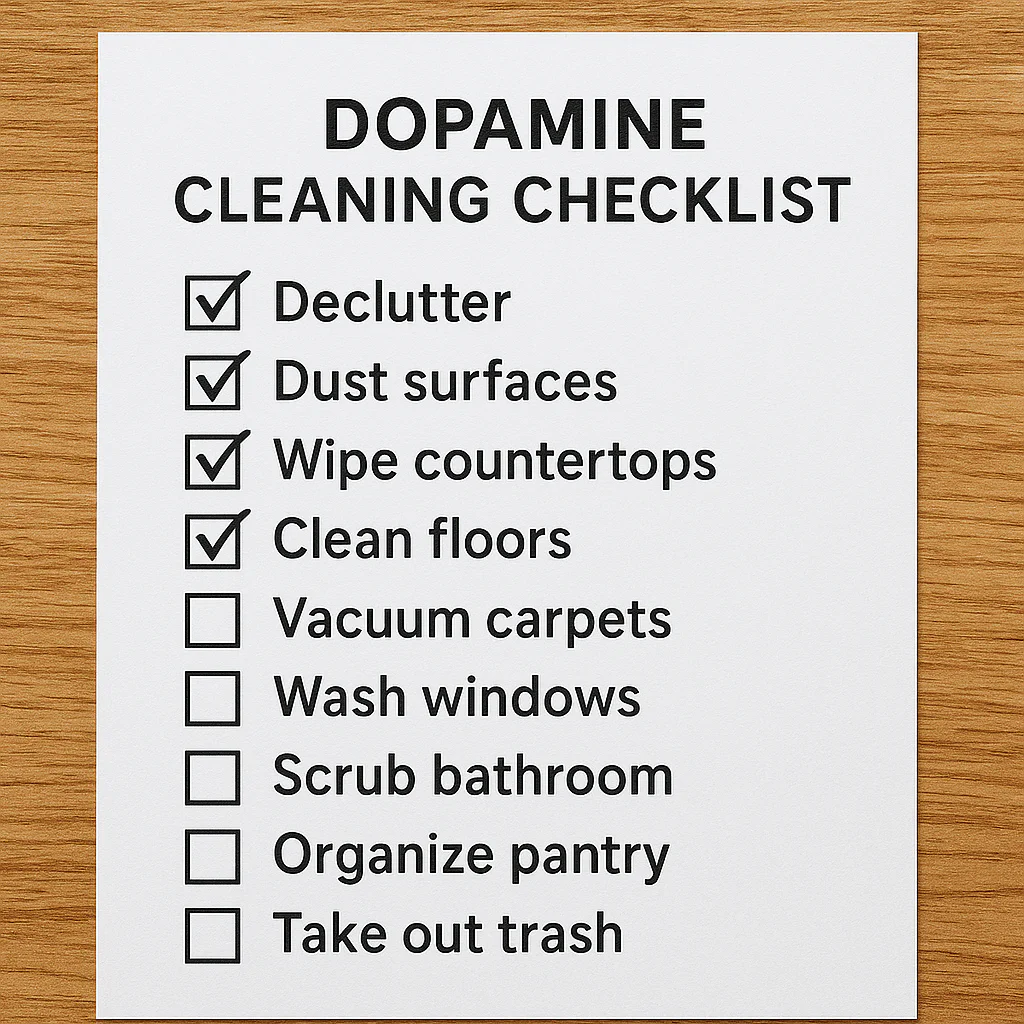

Stop staring at the mess and start checking boxes: the Dopamine cleaning checklist works by breaking overwhelming chores into tiny, high-reward actions that trick your brain into releasing motivation chemicals. Instead of waiting for willpower to strike, this method uses micro-wins to build unstoppable momentum, turning a paralyzed day into a productive one.
Did you know the average person spends 20 hours a year just looking for lost items? That’s nearly a full work week wasted on clutter-induced confusion. I once spent an entire Saturday paralyzed by a mountain of laundry, convinced I needed to “clean the whole house” before I could relax. It wasn’t until I set a timer for just five minutes and committed to picking up only three items that the fog lifted.
The secret isn’t working harder; it’s working with your brain’s chemistry. By focusing on instant visual progress rather than perfection, you can transform your home and your mood in minutes.
Key Takeaways
- Start Small: The most effective Dopamine cleaning checklist begins with tasks that take less than two minutes to build immediate momentum.
- Gamify the Process: Turn chores into a point-based game or use a timer to trigger urgency and release dopamine with every completed step.
- Visual Wins Matter: Clearing a single surface provides a bigger psychological reward than staring at a clean room you haven’t started yet.
- Neurodivergent Friendly: This method is specifically designed to bypass executive dysfunction and task paralysis common in ADHD.
- Consistency Over Perfection: A messy room is better than a paralyzed one; focus on progress, not a magazine-cover finish.
Table of Contents
- ⚡️ Quick Tips and Facts
- 🧠 The Science Behind the Spark: Understanding Dopamine Cleaning
- 📜 From Chaos to Calm: A Brief History of the Dopamine Decluttering Method
- 🛠️ The Ultimate 15-Step Dopamine Cleaning Checklist for a Brain-Boosting Home
- 1. The “Five-Minute Fire Drill” to Kickstart Your Momentum
- 2. Taming the Laundry Beast: A Reward-Based Sorting System
- 3. Kitchen Counter Reset: Visual Clarity for Instant Satisfaction
- 4. The “One-In, One-Out” Rule for Sustainable Tidy Habits
- 5. Bathroom Blitz: Turning Scrubing into a Sensory Experience
- 6. Bedroom Zen: Creating a Sleep Sanctuary with Minimal Effort
- 7. Digital Detox: Decluttering Your Phone to Clear Your Mind
- 8. The “Touch It Once” Strategy to Stop Pile-Up Before It Starts
- 9. Gamifying Chores: Turning Boring Tasks into a Point System
- 10. The Power of Playlists: Curating Soundtracks for Maximum Focus
- 1. Micro-Habit Stacking: Linking Cleaning to Existing Routines
- 12. The “Doom Box” Rescue Mission: Organizing Without Overthinking
- 13. Scent Scaping: Using Aromatherapy to Trigger Positive Memories
- 14. The 2-Minute Rule: Why Small Wins Matter More Than Big Projects
- 15. The End-of-Day “Shutdown Ritual” to Prevent Tomorrow’s Mess
- 🧩 Dopamine Cleaning for Neurodivergent Minds: ADHD and Beyond
- 📱 Top Apps and Tools to Supercharge Your Dopamine Cleaning Routine
- Chillio: Life Planner & Habit Tracker
- TidyLens: Visual Cleaning Checklists
- ADHD Cleaning Planner Schedule & Task Managers
- Unfrozen: AI Cleaning Planner & Organizer
- Cohabitate: Chore Charts for Shared Spaces
- 🚫 Common Pitfalls: Why Your Dopamine Cleaning Routine Might Fail
- 🎁 The Reward System: How to Treat Yourself Without Guilt
- 🌍 Global Perspectives: Cleaning Habits from Around the World
- 📊 Comparison: Traditional Cleaning vs. Dopamine-Fueled Decluttering
- 🏆 Conclusion
- 🔗 Recommended Links
- 📚 Reference Links
⚡️ Quick Tips and Facts
Before we dive into the nitty-gritty of scrubing baseboards while listening to a high-BPM playlist, let’s hit the fast lane. If you’re reading this, you probably feel that familiar knot in your stomach when you look at a pile of laundry that has achieved sentience. You aren’t alone. The average person spends 20 hours a year just looking for lost items. 😱
Here is the dopamine cleaning checklist cheat sheet to get you moving now:
- The 2-Minute Rule: If a task takes less than two minutes (hanging a coat, rinsing a dish), do it imediately. No thinking, just doing.
- Visual Wins: Your brain craves visual progress. Clearing a single counter gives a bigger dopamine hit than staring at a clean room you haven’t started yet.
- Sensory Triggers: Use scents you love (citrus, lavender) and upbeat music to hack your brain into “work mode.”
- The “Panic Clean” Method: Set a timer for 12 minutes. Clean as if guests are arriving in 5. The artificial urgency forces action.
- Done > Perfect: A messy room is better than a paralyzed one. Perfectionism is the enemy of progress.
Pro Tip: If you’re feeling overwhelmed, check out our guide on Daily Checklist to see how breaking tasks down can change your entire day.
🧠 The Science Behind the Spark: Understanding Dopamine Cleaning
Why does cleaning sometimes feel like dragging a boulder uphill, while other times it feels like a victory lap? It’s all about neurochemistry.
Dopamine isn’t just the “pleasure chemical”; it’s the motivation molecule. It’s what makes you want to do things. When you see a messy room, your brain often registers it as a threat, releasing cortisol (the stress hormone). This creates a feedback loop: stress leads to avoidance, which leads to more mess, which leads to more stress.
The Dopamine Cleaning Checklist flips this script. By breaking cleaning into tiny, achievable steps, you trick your brain into releasing small bursts of dopamine with every checkmark.
| Neurochemical | Role in Cleaning | Effect of Mess | Effect of Cleaning |
|---|---|---|---|
| Dopamine | Motivation & Reward | Low levels (procrastination) | High levels (satisfaction) |
| Cortisol | Stress Response | High levels (anxiety) | Reduced levels (calm) |
| Serotonin | Mood Regulation | Low (due to clutter) | Improved (due to order) |
The “Small Wins” Theory
According to Dr. Daniel Glazer, a clinical psychologist, the psychology behind this is based on the idea of small wins. By starting with an achievable task, you build confidence and receive a dopamine boost each time you complete a task. This is why a checklist is so powerful—it provides a visual map of your victories.
Did you know? A study published in the Personality and Social Psychology Bulletin found that people who completed small tasks felt more motivated to tackle larger ones immediately after. It’s the snowball effect of productivity!
📜 From Chaos to Calm: A Brief History of the Dopamine Decluttering Method

You might think “dopamine cleaning” is a buzzword born in a TikTok algorithm, but the roots go deeper. The concept of using reward systems to drive behavior dates back to B.F. Skinner’s operant conditioning experiments in the 1930s. However, the specific application to home organization is a modern evolution.
In the early 20s, the “KonMari” method took the world by storm, focusing on the joy of items. While effective, it could be overwhelming for those with executive dysfunction. Enter the dopamine decluttering method, which gained traction in the 2020s, specifically tailored for neurodivergent minds (ADHD, autism) and anyone struggling with task paralysis.
The shift was from “How do I feel about this object?” to “How do I feel after I move this object?” It’s a pragmatic approach that prioritizes action over analysis.
Fun Fact: The term “dopamine menu” was popularized by Dr. Ned Hallowell, an ADHD specialist, as a way to list activities that provide a dopamine hit. This concept was quickly adapted by the cleaning community to create “dopamine checklists.”
🛠️ The Ultimate 15-Step Dopamine Cleaning Checklist for a Brain-Boosting Home
Ready to turn your home into a dopamine factory? We’ve compiled the ultimate 15-step checklist. This isn’t about cleaning your whole house in an hour (unless you’re a superhero). It’s about momentum.
1. The “Five-Minute Fire Drill” to Kickstart Your Momentum
Don’t think about the whole house. Set a timer for 5 minutes. Your only goal is to pick up trash. That’s it.
- Why it works: It lowers the barrier to entry. Anyone can do 5 minutes.
- The Trick: Put on shoes (yes, even inside! As one popular video suggests, staying in shoes can trick your brain into “work mode”).
- Result: You’ll likely keep going once you start.
2. Taming the Laundry Beast: A Reward-Based Sorting System
Laundry is the ultimate dopamine killer. Break it down:
- Step A: Sort into piles (Whites, Colors, Delicates).
- Step B: Load one machine.
- Reward: Watch the cycle start. The spinning water is oddly satisfying.
- Step C: Fold one item. Just one.
3. Kitchen Counter Reset: Visual Clarity for Instant Satisfaction
The kitchen counter is the “front door” of your home.
- Action: Clear everything off. Wipe the surface. Put items back only if they have a designated home.
- Dopamine Hit: The instant visual of a blank, shiny surface.
4. The “One-In, One-Out” Rule for Sustainable Tidy Habits
For every new item that enters your home, one must leave.
- Example: Buy a new shirt? Donate an old one immediately.
- Benefit: Prevents clutter from accumulating in the first place.
5. Bathroom Blitz: Turning Scrubing into a Sensory Experience
- Scent: Light a candle or use a strong-smelling cleaner.
- Sound: Play an upbeat playlist.
- Action: Scrub the sink for 2 minutes. The foaming action is surprisingly therapeutic.
6. Bedroom Zen: Creating a Sleep Sanctuary with Minimal Effort
- Focus: Make the bed. It’s the single most impactful thing you can do for a tidy room.
- Why: It signals to your brain that the day is done and rest is coming.
7. Digital Detox: Decluttering Your Phone to Clear Your Mind
Your phone is a digital extension of your home.
- Task: Delete 5 unused apps. Unsubscribe from 3 annoying newsletters.
- Connection: This links physical cleaning to digital detox habits.
8. The “Touch It Once” Strategy to Stop Pile-Up Before It Starts
When you pick something up, deal with it immediately.
- Mail: Recycle junk, file bills, toss coupons.
- Coat: Hang it up, don’t drape it on the chair.
- Dish: Rinse and load it.
9. Gamifying Chores: Turning Boring Tasks into a Point System
Assign points to tasks:
- 10 points: Loading dishwasher.
- 20 points: Vacuuming a room.
- 50 points: Deep clean the bathroom.
- Goal: Reach 10 points for a reward (e.g., an episode of your favorite show).
10. The Power of Playlists: Curating Soundtracks for Maximum Focus
Music changes everything.
- High Energy: For heavy lifting (moving furniture, vacuuming).
- Lo-Fi/Chill: For detailed organizing (folding, sorting).
- Tip: Create a “Cleaning Mode” playlist on Spotify or Apple Music.
1. Micro-Habit Stacking: Linking Cleaning to Existing Routines
Attach a cleaning task to a habit you already do.
- Example: “After I brush my teeth, I will wipe the sink.”
- Example: “While the coffee brews, I will unload the dishwasher.”
- Learn more about this in our Habit Formation guide.
12. The “Doom Box” Rescue Mission: Organizing Without Overthinking
Got a box of “stuff” you don’t know where to put?
- Action: Set a timer for 10 minutes. Sort the box.
- Rule: If you can’t decide in 30 seconds, put it in a “Maybe” box and date it. Revisit in 6 months.
13. Scent Scaping: Using Aromatherapy to Trigger Positive Memories
- Strategy: Use essential oil diffusers or sprays that remind you of a happy place.
- Science: Smell is directly linked to the limbic system (emotion center). A good smell can instantly shift your mood.
14. The 2-Minute Rule: Why Small Wins Matter More Than Big Projects
If it takes less than 2 minutes, do it now.
- Why: It prevents small tasks from snowballing into a mountain of dread.
- Impact: You’ll be surprised how much you can clear in a day just by doing 2-minute tasks.
15. The End-of-Day “Shutdown Ritual” to Prevent Tomorrow’s Mess
Spend 10 minutes before bed resetting the house.
- Tasks: Load dishwasher, clear coffee table, set out clothes for tomorrow.
- Benefit: You wake up to a calm space, not a chaotic one.
Curious about how to stick to this? We’ll dive deeper into the apps that make this easier later, but first, let’s talk about who this is really for.
🧩 Dopamine Cleaning for Neurodivergent Minds: ADHD and Beyond
If you have ADHD, traditional cleaning advice often feels like a personal attack. “Just clean your room” is like telling someone with a broken leg to “just walk.”
The ADHD Brain & Cleaning
- Executive Dysfunction: The brain struggles to initiate tasks.
- Object Permanence: “Out of sight, out of mind” means if you hide the mess, it doesn’t exist, but you also can’t find your keys.
- Time Blindness: You think you have 10 minutes, but 2 hours have passed.
How Dopamine Cleaning Helps
- Externalizing Motivation: The checklist acts as a “body double,” providing the external structure your brain lacks.
- Reducing Decision Fatigue: The checklist tells you exactly what to do next. No “what should I clean?” paralysis.
- Instant Feedback: Checking a box provides the immediate dopamine hit your brain craves.
Real Talk: One of our team members, who has ADHD, used to spend 3 hours staring at a pile of dishes. Now, she uses the “Panic Clean” method (12-minute sprints) and gets it done in 20. The difference? Urgency and gamification.
📱 Top Apps and Tools to Supercharge Your Dopamine Cleaning Routine
Sometimes, a piece of paper isn’t enough. You need a digital nudge. Here are the top tools we’ve tested, including a deep dive into the viral Panic Clean app.
Panic Clean: Dopamine Cleaning Checklist
This app is a game-changer for those who freeze up. It doesn’t ask you to plan; it asks you to act.
| Feature | Rating (1-10) | Analysis |
|---|---|---|
| Design | 9 | Minimalist, high-contrast, easy to use with one hand. |
| Functionality | 10 | The “Split My Room” and “Pick Tasks” modes are genius. |
| Gamification | 10 | The ticking timer and haptic feedback create urgency. |
| ADHD Friendly | 10 | Specifically designed to bypass executive dysfunction. |
| Cost | 7 | Free with IAPs ($4.9/mo or $24.9/yr). |
Deep Dive:
- Split My Room Mode: You draw your room, divide it into 2-12 zones, and clean one square at a time. No decisions, just action.
- Timer Mechanics: A beep every minute, getting louder in the last 30 seconds. It physically forces you to keep moving.
- Streak Tracking: Tracks your cleaning days, motivating you to keep the streak alive.
User Review Highlight:
“More intensity & more action! It’s weirdly motivating… You will physically feel time running out.” – Recent Reviewer
👉 Shop Panic Clean on:
Chillio: Life Planner & Habit Tracker
Chillio is less about the “panic” and more about the routine. It combines habit tracking with a to-do list.
- Best For: People who want to build long-term habits rather than just quick cleans.
- Feature: “Habit Stacking” prompts you to clean after specific daily events.
👉 Shop Chillio on:
TidyLens: Visual Cleaning Checklists
TidyLens uses visual cues to guide you.
- Best For: Visual learners who need to see the “before and after.”
- Feature: AR (Augmented Reality) features to visualize organization (in some versions).
👉 Shop TidyLens on:
Unfrozen: AI Cleaning Planner & Organizer
Unfrozen uses AI to generate personalized cleaning schedules based on your mess level and available time.
- Best For: Those who hate planning and want the app to do the thinking.
- Feature: “AI-generated” checklists that adapt to your home.
👉 Shop Unfrozen on:
Cohabitate: Chore Charts for Shared Spaces
Cleaning with roomates or a partner? Chaos ensues. Cohabitate solves this.
- Best For: Shared living situations.
- Feature: Assigns tasks, tracks completion, and sends gentle nudges.
👉 Shop Cohabitate on:
Note: While these apps are fantastic, remember that the best tool is the one you actually use. If an app feels like a chore, switch it up!
🚫 Common Pitfalls: Why Your Dopamine Cleaning Routine Might Fail
You’ve got the checklist, the music, and the timer. So why are you still staring at the mess?
- Setting the Bar Too High: Trying to clean the whole house in one go is a recipe for burnout. Start small.
- Ignoring the “Why”: If you don’t care about the outcome, you won’t get the dopamine hit. Connect the task to a feeling (e.g., “I want to relax in a clean bed”).
- Lack of Flexibility: Life happens. If you miss a day, don’t quit. Just start the next 5-minute drill.
- Perfectionism: “Done is better than perfect.” A slightly messy room is better than a paralyzed one.
Remember: The goal isn’t a magazine cover. The goal is mental clarity.
🎁 The Reward System: How to Treat Yourself Without Guilt
The “D” in dopamine stands for Dopamine, but it also stands for Delight. You need to reward yourself to reinforce the behavior.
Effective Rewards:
- Immediate: A piece of dark chocolate, 5 minutes of scrolling, a hot cup of tea.
- Delayed: A movie night, a new book, a day trip.
- Non-Material: A long bath, a nap, a phone call with a friend.
What NOT to do:
- Don’t reward yourself with something that undoes your progress (e.g., eating a whole pizza after cleaning the kitchen).
- Don’t make the reward so big that you can’t afford it.
Pro Tip: Create a “Reward Menu” just like a “Dopamine Menu.” List 5 small rewards and 5 big rewards. Pick one after every completed checklist.
🌍 Global Perspectives: Cleaning Habits from Around the World
Cleaning isn’t just a chore; it’s a cultural ritual.
- Japan: The concept of Osoji (end-of-year cleaning) is a spiritual practice. It’s about resetting the mind and home for the new year.
- Scandinavia: Lagom (not too much, not too little) encourages keeping things minimal and functional.
- USA: The “Spring Cleaning” tradition, though often rushed, reflects a desire for renewal.
What we can learn:
- Mindfulness: Treat cleaning as a meditation, not a punishment.
- Community: In many cultures, cleaning is a group activity. Invite a friend over for a “cleaning party.”
📊 Comparison: Traditional Cleaning vs. Dopamine-Fueled Decluttering
Let’s break down the differences.
| Feature | Traditional Cleaning | Dopamine Cleaning |
|---|---|---|
| Motivation | Duty, guilt, obligation | Reward, satisfaction, fun |
| Approach | “Clean the whole house” | Tiny, manageable steps |
| Focus | Perfection | Progress |
| Time | Long, draining sessions | Short, high-energy bursts |
| Outcome | Exhaustion | Mental clarity & joy |
| Best For | Deep cleans, moving | Daily maintenance, ADHD |
The Verdict: Traditional cleaning has its place (deep cleans), but for daily life, dopamine cleaning wins on sustainability and mental health.
🏆 Conclusion

So, did we answer the question: Can a messy room really be fixed with a checklist?
The answer is a resounding yes, but with a twist. It’s not just about the checklist; it’s about the mindset. By leveraging the brain’s reward system, we turn the drudgery of cleaning into a series of small, satisfying victories. Whether you use the Panic Clean app, a printed list from ClutterBug Me, or a simple sticky note, the key is to start small, celebrate often, and embrace the mess.
Remember, you don’t have to be perfect. You just have to be consistent. And if you slip up? That’s okay. Just set a 5-minute timer and start again. Your future self (and your brain) will thank you.
Final Thought: What’s the one small thing you can clean right now? Go do it. Then come back and tell us how it felt!
🔗 Recommended Links
Ready to get started? Here are our top picks for tools and resources to help you on your journey.
Essential Tools:
- Panic Clean App: Check Price on Amazon | Apple App Store
- ClutterBug Dopamine Menu Printable: Download Free
- Chillio Life Planner: Shop on Amazon | Official Site
- TidyLens: Shop on Amazon
Books for Further Reading:
- Atomic Habits by James Clear: Check Price on Amazon
- The Life-Changing Magic of Tidying Up by Marie Kondo: Check Price on Amazon
- Driven to Distraction by Edward M. Hallowell: Check Price on Amazon
Internal Resources:
📚 Reference Links
- Homes and Gardens: How I use the dopamine decluttering method
- Panic Clean App: Official App Store Page
- ClutterBug: Dopamine Menu & To-Do List
- US Therapy Rooms: Dr. Daniel Glazer on Small Wins
- Personality and Social Psychology Bulletin: The Power of Small Wins
FAQ

What is a dopamine detox checklist?
A dopamine detox checklist is a tool designed to help individuals, particularly those with ADHD, overcome task paralysis by breaking down cleaning organizing tasks into tiny, manageable steps. Unlike a traditional detox which involves abstaining from stimuli, this method uses small wins to trigger dopamine release, motivating the user to continue the task. It’s about action, not abstinence.
Read more about “🚫 10 Deadly Daily Checklist Mistakes to Avoid (2026)”
How to make a dopamine cleaning routine?
- Identify Triggers: What makes you want to clean? (e.g., a specific song, a timer).
- Break it Down: Divide tasks into 5-10 minute chunks.
- Add Rewards: Decide on a small reward for each completed chunk.
- Visualize: Use a checklist or app to track progress.
- Start Small: Begin with a 2-minute task to build momentum.
- Be Flexible: Adjust the routine as needed.
Read more about “🚀 15 Ultimate Daily Checklist Templates to Master Your Day (2026)”
Does cleaning increase dopamine levels?
Yes. Cleaning provides a sense of accomplishment and control, which triggers the release of dopamine. The visual clarity of a clean space also reduces cortisol (stress), creating a positive feedback loop. Studies show that completing small tasks releases dopamine, reinforcing the behavior.
What are the benefits of a dopamine detox?
While a traditional dopamine detox (abstaining from screens, sugar, etc.) has benefits, a dopamine cleaning routine specifically helps with:
- Reduced Anxiety: Less visual clutter means less stress.
- Improved Focus: A tidy environment reduces distractions.
- Better Sleep: A clean bedroom promotes better rest.
- Increased Motivation: The “small wins” build momentum for other tasks.
How long should a dopamine cleaning session last?
There is no one-size-fits-all answer, but 12-15 minutes is often the sweet spot. This is long enough to make progress but short enough to avoid burnout. The Panic Clean app, for example, uses 12-minute intervals. Start with 5 minutes if you’re struggling to begin.
Can a dopamine checklist help with ADHD?
Absolutely. For people with ADHD, the executive dysfunction that comes with cleaning can be paralyzing. A dopamine checklist provides the external structure, immediate feedback, and gamification needed to bypass the brain’s resistance. It turns a daunting task into a series of achievable steps.
Read more about “12-Step ADHD Daily Routine Visual Schedule Guide (2026) 🗓️”
What items should be on a dopamine cleaning checklist?
Your checklist should include tiny, specific actions:
- Pick up 3 pieces of trash.
- Load the dishwasher.
- Wipe the kitchen counter.
- Make the bed.
- Sort one pile of mail.
- Vacuum one small area.
- Avoid vague items like “clean the kitchen.” Be specific!
Read more about “🗓️ 15 Free Daily Checklist Templates for Word (2026)”
How do I stay motivated if I fail?
Forgive yourself. Failure is part of the process. If you miss a day, just start the next 5-minute drill. Remember, done is better than perfect. The goal is progress, not perfection.
Read more about “15+ Habit Stacking Hacks for Busy Pros (2026) 🚀”
What is the “Panic Clean” method?
The Panic Clean method is a technique where you set a timer for 12 minutes and clean as if guests are arriving in 5 minutes. The artificial urgency forces you to act, bypassing the brain’s tendency to procrastinate. It’s a favorite among those with ADHD.
Is there a specific app for dopamine cleaning?
Yes, Panic Clean is the most popular app specifically designed for this. It features a “Split My Room” mode and a ticking timer to induce urgency. Other apps like Chillio and TidyLens also offer dopamine-friendly features.
Read more about “📝 10 Ultimate Daily Checklist Templates to Master Your Day (2026)”