Support our educational content for free when you purchase through links on our site. Learn more

🧠 The Ultimate Sensory Diet Daily Routine: 7 Steps to Calm (2026)
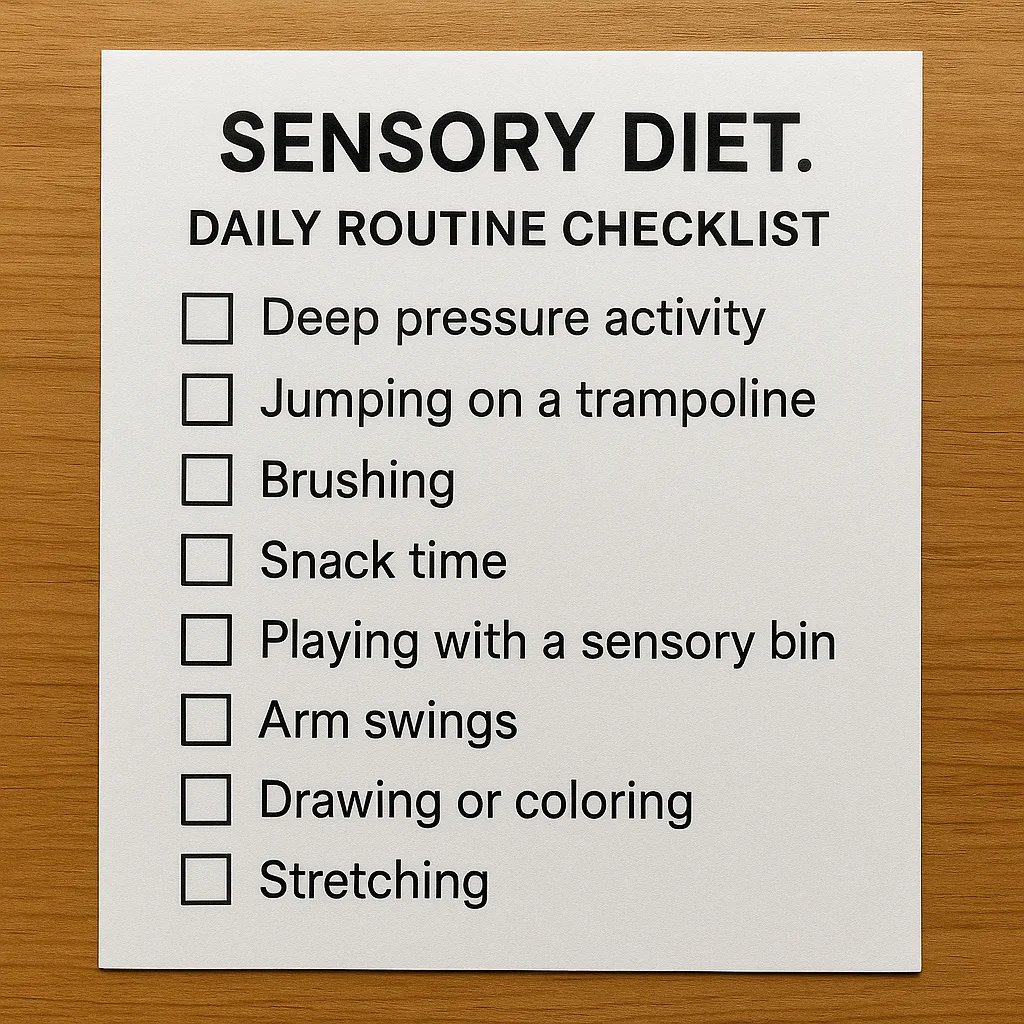

The secret to a balanced day isn’t more discipline; it’s a proactive sensory diet daily routine that feeds your brain the exact input it needs before chaos strikes. Instead of waiting for a meltdown to happen, you can strategically weave alerting, organizing, and calming activities into your schedule to keep everyone in their “just right” zone.
Imagine a morning where your child doesn’t melt down over a sock tag, or an afternoon where you don’t feel like your brain is running on 1% battery. That’s the power of a well-crafted routine.
Did you know that nearly 1 in 6 children has sensory processing challenges, yet most schools and homes operate on a “one-size-fits-all” schedule that ignores these needs? We’ve seen families transform their entire household dynamic just by swapping a 10-minute “calm down” session for a 5-minute “heavy work” burst before homework.
Key Takeaways
- Proactive is Better: A successful sensory diet daily routine prevents meltdowns by addressing sensory needs before they escalate, rather than reacting to them.
- Balance is Key: Effective routines mix Red (alerting), Green (organizing), and Blue (calming) activities throughout the day to match energy levels.
- Heavy Work Wins: Incorporating proprioceptive input (pushing, pulling, carrying) is often the most powerful tool for immediate regulation.
- Customization Matters: There is no perfect template; your routine must be tailored to your specific sensory profile, whether you are seeking or avoiding input.
Table of Contents
- ⚡️ Quick Tips and Facts
- 🧠 Sensory Diet 101: What It Is and Why Your Brain Craves One
- 📜 The History of Sensory Integration: From Ayres to Modern OT
- 🥗 Building Your Custom Sensory Diet Daily Routine: A Step-by-Step Guide
- 1. The Morning Wake-Up: Waking Up the Vestibular System
- 2. Breakfast Table Strategies: Oral Motor and Proprioceptive Boosters
- 3. School or Work Survival: Discret Regulation Techniques for the Day
- 4. The Afternoon Slump: Combating Sensory Overload and Fatigue
- 5. Dinner Time De-escalation: Transitioning from High to Low Arousal
- 6. The Bedtime Wind-Down: Creating a Calming Sensory Environment
- 🛠️ Sensory Tools and Equipment: What Actually Works (and What’s Just Noise)
- Weighted Blankets and Lap Pads: The Science of Deep Pressure
- Fidgets, Chewelry, and Oral Sensory Aids
- Movement Breaks: Swing Sets, Trampolines, and Balance Boards
- Noise-Canceling Headphones and Visual Timers
- 🏠 Sensory Diet at Home: Transforming Your Living Space into a Regulation Station
- 🏫 Sensory Diet at School: Advocating for Accomodations and Classroom Strategies
- 📱 Screen Time and Sensory Processing: Managing Digital Overload
- 🤔 Troubleshooting: When Your Sensory Diet Isn’t Working
- 👨 👩 👧 👦 Sensory Diets for Different Ages: Todlers, Teens, and Adults
- 🧩 Sensory Integration Therapy vs. Sensory Diet: Understanding the Difference
- 📊 7 Signs Your Child (or You) Needs a Sensory Diet Immediately
- 🚀 10 Creative Sensory Activities to Spice Up Your Routine
- 💡 Quick Tips and Facts: The “Aha!” Moments You Need to Know
- 🏁 Conclusion: Finding Your Rhythm in the Chaos
- 🔗 Recommended Links: Trusted Resources and Tools
- ❓ FAQ: Your Burning Questions About Sensory Diets Answered
- 📚 Reference Links: Where We Got Our Info
⚡️ Quick Tips and Facts
Before we dive into the nitty-gritty of building a routine that actually sticks, let’s hit the rewind button on some common misconceptions. If you think a sensory diet involves a strict menu of kale smoothies and quinoa bowls, you’re in the wrong kitchen! 🥗❌
Here is the tea: A sensory diet is a personalized plan of activities designed to meet a child’s (or adult’s) specific sensory needs. It’s about feeding the brain the right amount of input to stay in that “just right” zone of regulation.
- It’s Not About Food: Despite the name, you won’t be meal-prepping sensory snacks (unless they happen to be crunchy carrots for oral motor input). It’s about movement, touch, sound, and sight.
- Proactive vs. Reactive: The best sensory diets are proactive. Think of it like checking the weather before leaving the house. You don’t wait for the storm to hit to grab an umbrella; you use sensory tools before the meltdown to prevent the chaos.
- The “Just Right” State: The ultimate goal isn’t to make a child “calm” all the time. Sometimes you need to be alert to learn math, and other times you need to be calm to read a book. The diet helps you toggle between these states.
- Duration Matters: As noted in our research, the effect of a sensory activity can last for hours, but some tools (like a quick chew or a deep breath) work in seconds. Knowing the difference is the secret sauce.
Pro Tip from the Daily Checklist™ Team: Start small. Trying to overhaul your entire life in one day is a recipe for burnout. Use our Daily Checklist to track just one new sensory habit at a time.
🧠 Sensory Diet 101: What It Is and Why Your Brain Craves One
Imagine your brain is a smartphone. If you have too many apps running in the background, the battery drains, the phone gets hot, and it freezes. That’s sensory overload. Now, imagine you have zero apps running. The screen is black. You’re bored, sluggish, and can’t focus. That’s sensory under-arousal.
A sensory diet is the app management system for your brain. It ensures you have exactly the right number of apps open to keep the battery life optimal and the performance smooth.
Why Do We Need One?
For neurotypical brains, this regulation happens almost automatically. You yawn when tired, stretch when stiff, or tune out background noise without thinking. But for individuals with Sensory Processing Disorder (SPD), autism, ADHD, or anxiety, this internal thermostat is broken.
- The Overwhelmed Brain: Might react to a tag on a shirt like it’s a spider crawling on skin, or hear the hum of a refrigerator as a jet engine.
- The Sluggish Brain: Might need to spin in circles 50 times just to feel “awake” enough to tie shoelaces.
As Understood.org explains, the goal is to help children self-regulate, improve attention, and socialize effectively. It’s not about “fixing” the child; it’s about giving them the tools to navigate a world that often feels too loud, too bright, or too boring.
Curiosity Gap: But how do you know which activities your brain actually craves? Is it jumping? Is it squeezing? Is it silence? We’ll decode your specific sensory profile in the next section, but first, let’s look at where this whole idea came from.
📜 The History of Sensory Integration: From Ayres to Modern OT

The concept of a “sensory diet” wasn’t invented by a wellness guru on Instagram. It has deep roots in Occupational Therapy (OT) and the groundbreaking work of Dr. A. Jean Ayres.
In the 1960s and 70s, Dr. Ayres, an occupational therapist and psychologist, developed Sensory Integration Theory. She observed that children who struggled with learning and behavior often had underlying difficulties processing sensory information. She coined the term “Sensory Integration” to describe how the brain organizes and interprets sensory input.
The Evolution of the “Diet”
The term “sensory diet” was later popularized by Patricia Wilbarger and her husband, John Wilbarger, in the 1980s. They realized that just as our bodies need a balanced diet of nutrients to function, our brains need a balanced “diet” of sensory input.
- Then: Therapy was often clinic-based, involving swinging on a swing set in a dark room.
- Now: We know that sensory integration happens everywhere—at the breakfast table, in the classroom, and on the bus. The modern approach focuses on functional routines rather than isolated therapy sessions.
Today, organizations like the STAR Institute continue to refine these practices, emphasizing that a balanced schedule is crucial for 9.9% of children who benefit from clear, predictable routines.
🥗 Building Your Custom Sensory Diet Daily Routine: A Step-by-Step Guide
Okay, let’s get our hands dirty. Building a sensory diet isn’t about picking random activities from a Pinterest board. It’s about strategic timing and specific input.
Think of it like a nutritionist creating a meal plan. You wouldn’t give a marathon runner a heavy steak right before a race, and you wouldn’t give a sedentary office worker a plate of kale for breakfast if they need energy to start the day.
The Red, Green, Blue Framework
To build a truly effective routine, we use the Red/Green/Blue framework developed by sensory experts. This color-coding helps you balance the day.
| Color | Sensory State | Goal | Example Activities |
|---|---|---|---|
| 🔴 Red | Alerting | Wake up the brain, burn energy | Jumping jacks, swinging, running, loud music |
| 🟢 Green | Organizing | Focus, attention, “just right” | Deep pressure, linear swinging, heavy work, crafts |
| 🔵 Blue | Calming | Relax, wind down, sleep | Weighted blankets, dim lights, slow breathing, quiet reading |
The Golden Rule: A balanced day needs a mix of all three, but the ratio changes based on the time of day and the individual’s needs.
Step 1: Identify Your Triggers and Needs
Before writing a single activity, you need to know what you’re fighting.
- Is your child (or you) constantly crashing into things? You likely need more proprioceptive input (heavy work).
- Do you get overwhelmed by fluorescent lights? You need visual regulation strategies.
- Is homework a battle? You might need alerting activities before sitting down.
Step 2: Map the Day
Let’s build a skeleton routine. We’ll fill in the details in the next sections, but here is the flow:
- Morning: Wake up the system (Red) -> Transition to focus (Green).
- Mid-Day: Sustain focus (Green) -> Reset if overwhelmed (Blue/Red).
- Afternoon: Release pent-up energy (Red) -> Prepare for evening (Green).
- Evening: Wind down (Blue) -> Sleep (Blue).
Daily Checklist™ Insight: Use our Habit Formation strategies to embed these activities. Don’t just “do” them; make them a non-negotiable part of the schedule, like brushing teeth.
1. The Morning Wake-Up: Waking Up the Vestibular System
Mornings are often the hardest. The transition from sleep (low arousal) to the chaos of the day (high arousal) can be jarring. If you skip this step, you might spend the whole day playing catch-up.
The Strategy: Start with Red activities to get the blood flowing and the vestibular system (balance) online.
- The “Jump Start”: Before getting out of bed, have your child (or yourself) do 10 big jumps on the mattress.
- The “Bear Walk”: Walk on hands and feet (bear crawl) from the bedroom to the bathroom. This engages the core and provides heavy proprioceptive input.
- The “Crash Course”: If you have a crash pad or a pile of pillows, let them crash into it immediately upon waking.
Why it works: These activities stimulate the vestibular system, which controls balance and spatial orientation. It tells the brain, “Hey, we are awake! Let’s go!”
Real Story: One of our planners, Sarah, struggled with her son’s morning meltdowns. They tried “gentle” wake-ups, but he was still sluggish. They switched to a 2-minute “obstacle course” in the hallway (jumping over pillows, crawling under chairs). The meltdowns vanished. He was ready for school before the coffee was even brewed. ☕️
2. Breakfast Table Strategies: Oral Motor and Proprioceptive Boosters
Breakfast is a sensory minefield. The smell of eggs, the texture of toast, the sound of clinking silverware. It’s no wonder many kids refuse to eat or get fussy.
The Strategy: Use the meal itself as a sensory tool.
- Chewy Foods: Offer bagels, jerky, or chewy fruit snacks. Chewing is a powerful calming (Blue) and organizing (Green) activity because it stimulates the jaw muscles, which have a direct connection to the brain’s arousal centers.
- Heavy Work at the Table: Have them carry their own plate from the fridge to the table. Even a light plate counts!
- Straw Drinking: If they drink juice or milk, use a thick straw or a sippy cup with resistance. Sucking against resistance is deeply organizing.
What to Avoid:
- ❌ Over-stimulating music at the table.
- ❌ Rushing them.
- ❌ Forcing textures they hate (unless it’s part of a gradual desensitization plan).
3. School or Work Survival: Discret Regulation Techniques for the Day
This is where most people fail. They build a great morning routine, but by 10:0 AM, the system crashes. The key is discrete regulation—strategies that don’t draw attention but keep the brain on track.
For Students:
- Fidget Tools: A TheraTots fidget or a Wobble Cushion can provide the movement the brain craves without leaving the desk.
- Heavy Work Jobs: Ask the teacher for “classroom jobs” that involve moving things: handing out papers, erasing the board, or carrying a stack of books.
- The “Quiet Corner”: If the classroom is too loud, negotiate a 2-minute break to sit in a quiet corner or use noise-canceling headphones.
For Adults/Remote Workers:
- Desk Push-ups: Push against the desk for 10 seconds.
- Resistance Bands: Loop a resistance band around the legs of your chair to push your feet against.
- Chewelry: Wear a discreet chewable necklace if you find yourself grinding your teeth or needing oral input.
Did you know? According to STAR Institute, a predictable schedule is crucial. If your child knows a “movement break” is coming at 10:30 AM, they can hold it together until then.
4. The Afternoon Slump: Combating Sensory Overload and Fatigue
The “afternoon slump” is real. After a day of holding it together, the brain is exhausted. This is often when sensory overload hits, leading to the dreaded “after-school meltdown.”
The Strategy: This is the time for Red activities to release the built-up tension, followed by Green activities to reset.
- The “Crash and Burn”: Let them run wild. Jump on the trampoline, wrestle with a sibling, or do 20 jumping jacks.
- The “Heavy Load”: Have them carry the laundry basket from the bedroom to the washer. The weight of the clothes provides deep pressure.
- The “Sensory Reset”: After the high energy, transition to a Green activity like building a fort or playing with playdough.
Why it works: You are “burning off” the excess energy that was causing the dysregulation. It’s like hitting the reset button on a frozen computer.
5. Dinner Time De-escalation: Transitioning from High to Low Arousal
Dinner is a social event, but it can also be a trigger. The noise of the kitchen, the smell of cooking, the expectation to sit still.
The Strategy: Use Blue and Green activities to lower the arousal level before sitting down.
- Pre-Dinner Calm: 10 minutes of quiet time before dinner. Maybe reading a book or listening to soft music.
- Heavy Work Setup: Have them help set the table. Carying the silverware or the heavy pot of soup provides proprioceptive input that calms the nervous system.
- Chewy Dinner: If possible, include a chewy component to the meal (e.g., steak, chewy veggies, or a chewy dessert).
Avoid:
- ❌ High-energy games right before dinner.
- ❌ Screaming or yelling at the table.
- ❌ Sudden changes in the menu (if they are sensitive to food textures).
6. The Bedtime Wind-Down: Creating a Calming Sensory Environment
Sleep is the ultimate goal. But for many, the transition from “awake” to “asleep” is a battle. The brain is still buzzing with the day’s input.
The Strategy: A strict Blue routine. Dim the lights, lower the voices, and use deep pressure.
- Weighted Blankets: A weighted blanket (usually 10% of body weight) can significantly improve sleep quality by providing deep pressure.
- The “Burito” Wrap: Wrap the child tightly in a blanket (like a burito) for a few minutes before bed.
- Deep Pressure Massage: A firm, slow massage on the arms and legs.
- White Noise: Use a white noise machine to mask sudden sounds.
Pro Tip: Consistency is key. Do the same routine every night. The brain loves predictability.
🛠️ Sensory Tools and Equipment: What Actually Works (and What’s Just Noise)
The market is flooded with sensory toys. Some are life-savers; others are just expensive clutter. Let’s break down what actually works based on science and user reviews.
Weighted Blankets and Lap Pads: The Science of Deep Pressure
Weighted items provide Deep Pressure Stimulation (DPS), which increases serotonin and melatonin while decreasing cortisol.
| Feature | Weighted Blanket | Weighted Lap Pad |
|---|---|---|
| Best For | Sleep, deep relaxation | Focus during homework, desk work |
| Weight Rule | ~10% of body weight + 1-2 lbs | ~5-10% of body weight |
| Pros | Promotes sleep, reduces anxiety | Discrete, portable |
| Cons | Can be hot, hard to move | Not for sleep (suffocation risk) |
Top Brands:
- Gravity Blankets: Known for their even distribution of weight.
- Harkla: Offers a variety of weighted products specifically for kids.
- Yogibo: Great for bean bag style deep pressure.
👉 CHECK PRICE on:
- Gravity Blanket: Amazon | Official Site
- Harkla Weighted Blanket: Amazon | Official Site
Fidgets, Chewelry, and Oral Sensory Aids
For those who need oral or tactile input, these tools are essential.
- Chewelry: Necklaces designed to be chewed on. Great for kids who chew on shirts or pencils.
Brand: Koolerz or TheraBand. - Fidgets: Must be non-distracting.
Brand: Fidget Factory or Therapy Fun.
👉 CHECK PRICE on:
- Chewelry: Amazon | Official Site
- Fidgets: Amazon | Official Site
Movement Breaks: Swing Sets, Trampolines, and Balance Boards
Movement is the most powerful sensory tool.
- Indoor Swings: Linear swings (back and forth) are calming; rotary swings (spinning) are alerting.
Brand: Therapy Swing. - Trampolines: Mini trampolines are great for burning energy.
Brand: Skywalker or JumpSport. - Balance Boards: Wobble boards for core strength and proprioception.
Brand: Togu or Gaiam.
👉 CHECK PRICE on:
- Indoor Swings: Amazon | Official Site
- Mini Trampolines: Amazon | Official Site
Noise-Canceling Headphones and Visual Timers
For auditory and visual regulation.
- Noise-Canceling Headphones: Essential for loud environments.
Brand: Peltor or Bose. - Visual Timers: Helps with time blindness and transitions.
Brand: Time Timer.
👉 CHECK PRICE on:
- Noise-Canceling Headphones: Amazon | Official Site
- Visual Timers: Amazon | Official Site
🏠 Sensory Diet at Home: Transforming Your Living Space into a Regulation Station
Your home doesn’t have to look like a sensory gym, but a few tweaks can make a world of difference.
Creating a “Calm Down Corner”
This isn’t a time-out corner. It’s a safe space where the child can go to regulate.
- What to include: A bean bag, weighted blanket, noise-canceling headphones, and a few favorite fidgets.
- Rules: No screens, no yelling. Just quiet.
Lighting and Sound
- Lighting: Swap harsh fluorescent bulbs for warm, dimable LED lights. Use lamps instead of overhead lights in the evening.
- Sound: Use white noise machines or soft music to mask background noises.
The “Heavy Work” Zone
Designate a spot for heavy work activities. A pile of pillows, a crash pad, or a corner with a trampoline. Make it clear that this is where you go to “let it out.”
🏫 Sensory Diet at School: Advocating for Accomodations and Classroom Strategies
School can be a sensory nightmare. Fluorescent lights, buzzing bells, crowded hallways. But with the right advocacy, you can make it manageable.
The IEP and 504 Plan
If your child has a formal diagnosis, work with the school to include sensory strategies in their IEP (Individualized Education Program) or 504 Plan.
- Examples: Permission to use a fidget, access to a quiet room, extra time for transitions, or a “movement break” pass.
Classroom Strategies
- Seating: Request a seat near the teacher or away from high-traffic areas.
- Tools: Allow the use of a wobble cushion or resistance bands on chair legs.
- Jobs: Ask for classroom jobs that involve heavy work (erasing the board, carrying books).
Tip: Don’t be afraid to advocate. Teachers want to help, but they need to know what works. Bring a copy of your child’s sensory diet plan to the teacher.
📱 Screen Time and Sensory Processing: Managing Digital Overload
Screens are a double-edged sword. They can be a great source of Blue (calming) input, but they can also be a major source of Red (overstimulating) input.
The Problem
- Blue Light: Disrupts sleep cycles.
- Fast Paced: Can overstimulate the brain, making it hard to transition to quiet activities.
- Passive vs. Active: Passive scrolling is different from active gaming.
The Solution
- The 20-20-20 Rule: Every 20 minutes, look at something 20 feet away for 20 seconds.
- Screen-Free Zones: No screens in the bedroom or at the dinner table.
- Transition Warnings: Give a 5-minute warning before turning off the screen. Use a visual timer.
Daily Checklist™ Tip: Use our Digital Detox strategies to create a balanced screen time routine.
🤔 Troubleshooting: When Your Sensory Diet Isn’t Working
You’ve built the routine, bought the tools, but the meltdowns are still happening. What gives?
Common Pitfalls
- Too Many Activities: Don’t overwhelm the child with 10 different tools. Start with one or two.
- Wrong Timing: If you use a calming tool when the child needs to be alert, it will backfire.
- Inconsistency: If you only do the diet on Tuesdays, it won’t work. It needs to be daily.
- Ignoring the Child’s Input: Ask the child what they need. Sometimes they know better than you.
When to Call a Pro
If the sensory diet isn’t working after a few weeks, it might be time to consult an Occupational Therapist (OT). They can do a full sensory assessment and tailor the plan specifically to your child’s needs.
👨 👩 👧 👦 Sensory Diets for Different Ages: Todlers, Teens, and Adults
Sensory needs change as we grow. A toddler’s diet looks very different from a teen’s.
Todlers (1-3 Years)
- Focus: Gross motor skills, exploration.
- Activities: Crawling, climbing, jumping, sensory bins.
- Tools: Balls, swings, playdough.
School-Age (4-12 Years)
- Focus: Focus, attention, social skills.
- Activities: Heavy work jobs, fidgets, movement breaks.
- Tools: Weighted lap pads, chewelry, visual timers.
Teens (13-18 Years)
- Focus: Independence, self-regulation, stress management.
- Activities: Exercise, yoga, deep breathing, music.
- Tools: Noise-canceling headphones, weighted blankets, stress balls.
Adults
- Focus: Work-life balance, stress management.
- Activities: Exercise, meditation, heavy work (gardening, cleaning).
- Tools: Fidgets, weighted blankets, white noise machines.
🧩 Sensory Integration Therapy vs. Sensory Diet: Understanding the Difference
These terms are often used interchangeably, but they are not the same.
- Sensory Integration Therapy: This is a clinical intervention provided by an OT. It involves specialized equipment (swings, crash pads) and is designed to improve the brain’s ability to process sensory information.
- Sensory Diet: This is a daily routine of activities that can be done at home, school, or work. It’s the “homework” that supports therapy.
Think of it this way: Sensory Integration Therapy is the physical therapy session; the Sensory Diet is the exercise routine you do at home to maintain the gains.
📊 7 Signs Your Child (or You) Needs a Sensory Diet Immediately
How do you know if you need one? Look for these red flags:
- Extreme Sensitivity: Overeacting to sounds, lights, textures, or smells.
- Sensory Seeking: Constantly touching things, jumping, spinning, or crashing into things.
- Poor Motor Skills: Clumsiness, difficulty with handwriting, or trouble with coordination.
- Emotional Dysregulation: Frequent meltdowns, difficulty calming down, or extreme anxiety.
- Sleep Issues: Trouble falling asleep, staying asleep, or waking up tired.
- Focus Problems: Difficulty concentrating, easily distracted, or hyperactive.
- Social Challenges: Difficulty making friends, avoiding eye contact, or struggling with social cues.
If you recognize several of these signs, it might be time to start building a sensory diet.
🚀 10 Creative Sensory Activities to Spice Up Your Routine
Bored of the same old jumping jacks? Here are 10 creative ideas to keep the routine fresh.
- The “Burito” Wrap: Wrap the child tightly in a blanket and roll them around.
- Obstacle Course: Set up a course with pillows, chairs, and tape on the floor.
- Water Play: Fill a bin with water and let them splash, pour, and squeeze.
- Playdough Sculpting: Use playdough to make shapes, animals, or letters.
- Sensory Bins: Fill a bin with rice, beans, or sand and hide small toys inside.
- Dance Party: Put on music and dance like nobody’s watching.
- Yoga Poses: Try simple poses like “Downward Dog” or “Tree Pose.”
- Heavy Work Chores: Vacuuming, sweeping, or carrying groceries.
- Chewy Snacks: Offer bagels, jerky, or chewy fruit snacks.
- Quiet Time: Read a book in a quiet corner with a weighted blanket.
💡 Quick Tips and Facts: The “Aha!” Moments You Need to Know
Let’s recap the most important takeaways from our research.
- Consistency is King: A sensory diet only works if you do it every day.
- Individualization: What works for one child might not work for another. Tailor the plan to your specific needs.
- Proactive is Better: Don’t wait for the meltdown. Use the tools before the dysregulation starts.
- Heavy Work is Magic: Pushing, pulling, and lifting are the most effective ways to regulate the nervous system.
- It’s Not Just for Kids: Adults with sensory processing issues can benefit just as much.
Final Thought: Remember, the goal isn’t perfection. It’s progress. Some days will better than others, and that’s okay. The important thing is to keep trying.
🏁 Conclusion: Finding Your Rhythm in the Chaos

We started this journey with a question: How do you find your rhythm in a world that feels too loud, too bright, or too chaotic?
The answer lies in the sensory diet. It’s not a magic cure, but it is a powerful tool. By understanding your unique sensory needs and building a routine that supports them, you can transform chaos into calm, and overwhelm into focus.
Whether you’re a parent navigating the school system, a teacher trying to keep a classroom on track, or an adult struggling to manage your own sensory overload, the principles remain the same: Listen to your body, respect your needs, and build a routine that works for you.
Our Recommendation: Start small. Pick one activity from this list and try it tomorrow. Use our Daily Checklist to track your progress. And remember, you don’t have to do it alone. Reach out to an Occupational Therapist if you need help.
The path to regulation is a journey, not a destination. But with the right tools and a little bit of patience, you can find your “just right” state.
🔗 Recommended Links: Trusted Resources and Tools
Here are some of the best resources and tools we mentioned in this article.
Books
- The Out-of-Sync Child by Carol Stock Kranowitz – A classic guide to sensory processing.
- Sensational Kids by Lucy Jane Miller – A comprehensive guide for parents.
Products
- Weighted Blankets: Gravity Blanket | Harkla
- Chewelry: TheraBand | Koolerz
- Fidgets: Fidget Factory | Therapy Fun
- Visual Timers: Time Timer
- Noise-Canceling Headphones: Bose | Peltor
Organizations
- STAR Institute – Leading research and treatment center for sensory processing.
- Understood.org – Great resources for learning and attention issues.
- Harkla – OT-approved activities and schedules.
❓ FAQ: Your Burning Questions About Sensory Diets Answered

How do I create a sensory diet daily routine for my child?
Start by observing your child’s behaviors. What calms them? What excites them? Then, map out a day that includes a mix of Red (alerting), Green (organizing), and Blue (calming) activities. Use a visual schedule to help them understand the routine. Consult with an Occupational Therapist for a personalized plan.
What are the best sensory activities to include in a morning checklist?
Mornings need Red activities to wake up the brain. Try jumping jacks, bear walks, or crashing into pillows. Follow up with Green activities like carrying heavy objects or chewing crunchy foods to transition into focus.
Read more about “12-Step ADHD Daily Routine Visual Schedule Guide (2026) 🗓️”
How often should sensory breaks be scheduled throughout the day?
This depends on the individual, but a good rule of thumb is every 45-60 minutes. If your child is struggling, you might need breaks every 20 minutes. The key is to be proactive, not reactive.
Read more about “Master Your Day: 6 Daily Checklist Essentials! ✨”
Can a sensory diet help with focus and homework completion?
Absolutely! By providing the right amount of sensory input, you can help your child reach a “just right” state for learning. This might include using a wobble cushion, taking movement breaks, or using a weighted lap pad during homework.
What sensory tools are essential for a successful daily routine?
There is no one-size-fits-all, but common essentials include:
- Weighted blankets for sleep and calm.
- Fidgets for focus.
- Chewelry for oral input.
- Visual timers for transitions.
- Noise-canceling headphones for auditory regulation.
How do I adjust a sensory diet for different ages and needs?
- Todlers: Focus on gross motor and exploration.
- School-Age: Focus on focus, attention, and social skills.
- Tens/Adults: Focus on independence, stress management, and self-regulation.
Always tailor the activities to the individual’s specific sensory profile.
Where can I find printable sensory diet checklists for daily use?
You can find many free printable checklists on sites like Understood.org and STAR Institute. You can also create your own using our Daily Checklist templates.
📚 Reference Links: Where We Got Our Info
- Understood.org: Sensory Diet Treatment – Definition, goals, and implementation strategies.
- STAR Institute: Sensory Balanced Schedules – Red/Green/Blue framework and detailed activity lists.
- Harkla: Sensory Diet for Autism – OT-approved activities and schedules.
- American Occupational Therapy Association – General information on sensory integration.
- Mayo Clinic: Sensory Processing Disorder – Medical overview and symptoms.