Support our educational content for free when you purchase through links on our site. Learn more

🚀 How Do You Have a Productive Workday? 15 Steps to Master Your Time (2026)
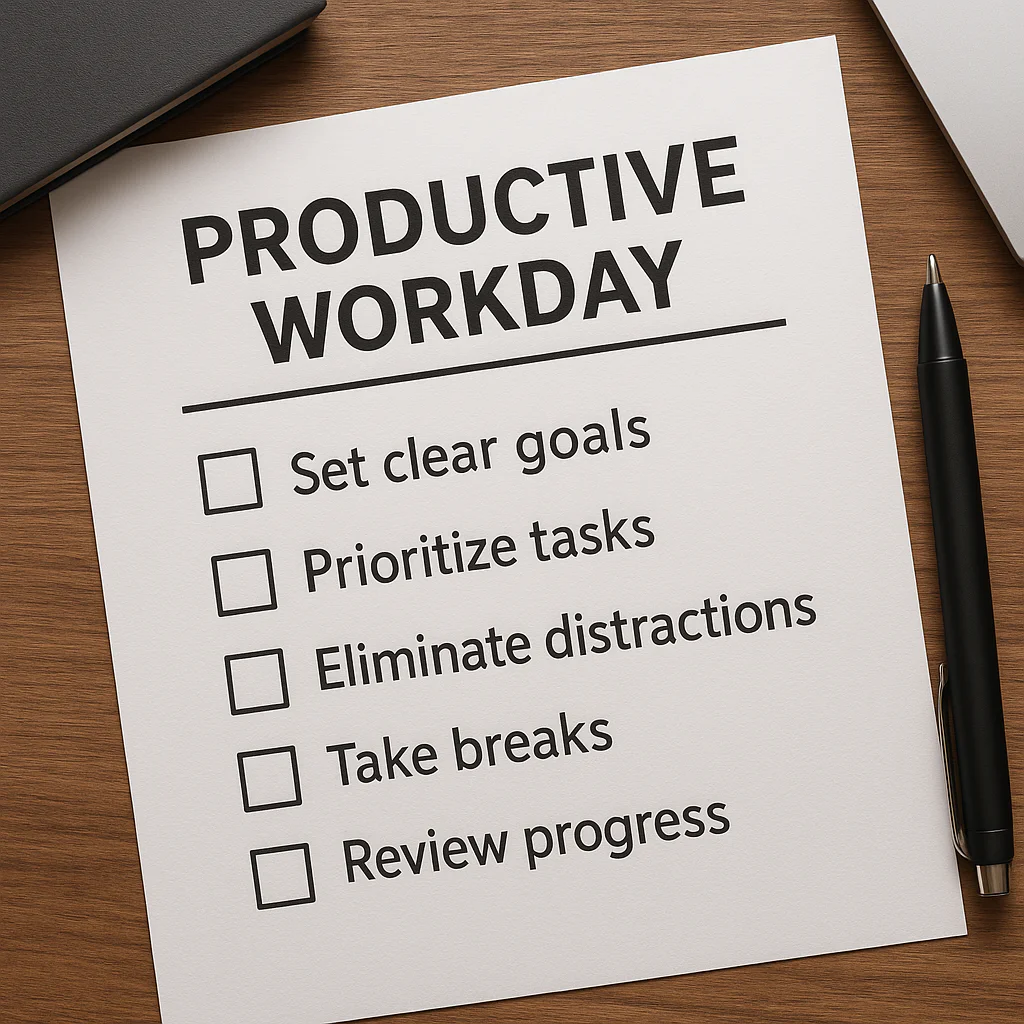

The secret to a productive workday isn’t grinding harder; it’s designing your day so your brain works with you, not against you. If you’re wondering how do you have a productive workday, the answer lies in protecting your peak energy hours for deep focus while ruthlessly batching distractions.
Most of us treat our schedules like a game of whack-a-mole, reacting to every ping and email until we’re exhausted by noon. But data from the DeskTime app reveals that the top 10% of performers work intense 52-minute bursts followed by 17-minute breaks, a rhythm that keeps their minds sharp all day long.
Imagine starting your morning not by checking your phone, but by executing a pre-planned “Top 3” list that moves the needle on your biggest goals. That shift from reactive chaos to proactive flow is exactly what transforms a stressful grind into a symphony of output.
Key Takeaways
- Design, Don’t Drift: A productive day is intentionally planned the night before, not improvised in the morning.
- Protect Your Peak: Schedule your most demanding deep work during your natural energy high points, not just when the clock says 9 AM.
- Embrace the Break: Strategic rest is non-negotiable; the 52/17 rule proves that stepping away boosts overall output.
- Master the Art of No: Saying no to low-value tasks is the only way to say yes to your most important goals.
- Focus on the Top 3: Limit your daily checklist to three critical priorities to prevent decision fatigue and ensure progress.
Table of Contents
- ⚡️ Quick Tips and Facts
- 📜 The Evolution of Efficiency: A Brief History of the Productive Workday
- 🧠 Mastering Your Morning: How to Start Your Day Right for Peak Performance
- 📅 The Ultimate Guide to Time Blocking and Scheduling Your Day
- 🚀 15 Proven Strategies to Crush Your To-Do List and Boost Daily Output
- 🧘 ♀️ Beating Burnout: Essential Techniques for Maintaining Focus and Energy
- 🏠 Optimizing Your Workspace: Ergonomics, Tools, and Environment Hacks
- 📱 Digital Detox: Managing Distractions and Mastering Deep Work
- 🤝 Collaboration vs. Solitude: Finding the Right Balance for Team Productivity
- 📉 The Art of Saying No: Prioritization and Boundary Setting
- 🔄 Evening Routines: How to Wind Down and Prepare for Tomorrow’s Success
- 📊 Measuring Success: Key Metrics and Tools to Track Your Progress
- 🍎 Some Fruit Won’t Wait: Handling Urgent Tasks Without Losing Your Mind
- 🎯 SUMMER REPLAY: KEN COLEMAN: Find the Work You’re Wired To Do
- 📒 The Full Focus Planner™: A Deep Dive into Structured Planning
- 🏃 Get Started: Your First 30 Days to a Transformed Work Routine
- 🐠 Ted Lasso Was Wrong: Don’t Be a Goldfish and Forget Your Goals
- 🛠️ Rescue Your Schedule From “Busy”: Reclaiming Your Time
- 🚶 Step Back to Press On: The Power of Strategic Pauses
- 🏡 Habits for Better Work-From-Home Balance
- 💡 More from Productivity
- 🏁 Conclusion
- 🔗 Recommended Links
- ❓ FAQ
- 📚 Reference Links
⚡️ Quick Tips and Facts
Before we dive into the nitty-gritty of transforming your workday from a chaotic scramble into a symphony of efficiency, let’s hit the fast-forward button on the basics. You might think productivity is about grinding harder, but at Daily Checklist™, we’ve learned it’s actually about working smarter, not harder.
Here are the non-negotiables that separate the pros from the procrastinators:
- The 80/20 Rule is Real: Roughly 80% of your results come from 20% of your efforts. If you aren’t identifying that critical 20%, you’re just busy, not productive.
- Decision Fatigue is a Killer: The average executive makes 35,000 remotely conscious decisions a day. By automating your morning routine, you save brainpower for the big stuff.
- Multitasking is a Myth: Switching tasks can cost you up to 40% of your productive time. Your brain isn’t a browser with 50 tabs open; it’s a single-core processor that needs to focus.
- The 52/17 Rule: Data from the DeskTime app suggests the most productive workers work for 52 minutes and break for 17 minutes. It’s not about the clock; it’s about the rhythm.
- Sleep is Non-Negotiable: Skimping on sleep reduces cognitive performance to the level of being legally drunk. No amount of coffee can fix a sleep debt.
If you’re feeling overwhelmed, don’t panic. We’ve got a specific How do you have a productive day checklist that breaks all this down into actionable steps. You can grab it right here: How do you have a productive day checklist?.
📜 The Evolution of Efficiency: A Brief History of the Productive Workday

You might think the 9-to-5 grind is a timeless tradition, but it’s actually a relatively modern invention. The concept of the “productive workday” has shifted as dramatically as the tools we use to measure it.
The Factory Floor Origins
In the late 19th century, Frederick Winslow Taylor introduced “Scientific Management.” His goal? To maximize efficiency by breaking tasks into tiny, repetitive motions. It worked for factories, but it treated humans like cogs. The standard 8-hour day was a compromise between labor unions and industrialists, famously championed by Henry Ford in 1926, who discovered that shorter hours actually increased output.
The Knowledge Worker Shift
Fast forward to the digital age. The workday isn’t about moving widgets anymore; it’s about moving ideas. Cal Newport, author of Deep Work, argues that in an economy of distraction, the ability to focus without interruption is a superpower. The modern struggle isn’t physical exhaustion; it’s cognitive overload.
“The ability to perform deep work is becoming increasingly rare at exactly the same time it is becoming increasingly valuable in our economy.” — Cal Newport
Why History Matters to You
Understanding this evolution helps us realize that the “standard” workday is a construct, not a law. We can rewrite the rules. Whether you’re an early bird or a night owl, your productivity doesn’t have to fit a factory schedule. It needs to fit your biology.
🧠 Mastering Your Morning: How to Start Your Day Right for Peak Performance
We’ve all been there: the alarm blares, you hit snooze, roll out of bed, and immediately check your phone. By the time you’ve had your coffee, you’re already reacting to other people’s agendas. This is the trap.
The “First 30” Routine
Inspired by high-performers, the First 30 routine is about reclaiming the first half-hour of your workday.
- Secure the Time: Block 30 minutes before your first meeting. If you don’t have meetings, block it before you start “real” work.
- Align Tasks: Open your calendar and your to-do list side-by-side.
- Triage: Scan emails and Slack for emergencies only. Do not reply yet. Just flag.
- Plan: Decide exactly what you will do for the next 90 minutes.
The Night-Before Setup
As the experts at Full Focus say, “It’s all in the setup.” If you wake up and have to decide what to do, you’ve already lost energy.
- The Top Three: Identify three non-negotiable tasks the night before.
- Digital Prep: Close all tabs and apps. Leave your computer in a state that invites work, not distraction.
- Physical Prep: Lay out your workout clothes or set up your workspace.
Pro Tip: If you’re struggling to stick to a morning routine, check out our guide on Habit Formation. It’s not about willpower; it’s about design.
Why Your Morning Matters
Your morning sets the emotional tone for the entire day. If you start with a win (even a small one), you build momentum. If you start with a crisis, you spend the whole day putting out fires.
📅 The Ultimate Guide to Time Blocking and Scheduling Your Day
Time blocking isn’t just a calendar trick; it’s a philosophy. It’s the act of assigning a specific task to a specific block of time, treating that time as a non-negotiable appointment with yourself.
How to Time Block Like a Pro
- Theme Your Days: Instead of doing a little bit of everything every day, dedicate days to specific themes (e.g., Monday for Admin, Tuesday for Deep Work, Wednesday for Meetings).
- Buffer Zones: Never schedule back-to-back meetings. Leave 15-minute buffers to breathe, grab water, and reset.
- The “Eat the Frog” Method: Tackle your most dreaded task first thing in the morning. Once it’s done, the rest of the day feels lighter.
Chronotypes: Are You a Lion, Bear, Wolf, or Dolphin?
Not everyone peaks at 8 AM. Michael Breus, a clinical psychologist, categorizes people into four chronotypes.
- Lions (Early Birds): Peak in the morning. Schedule hard tasks before noon.
- Bears (Most People): Follow the sun. Peak mid-morning to early afternoon.
- Wolves (Night Owls): Peak late. Save deep work for the evening.
- Dolphins (Insomniacs): Light sleepers. Need structured breaks and short bursts of work.
| Chronotype | Peak Energy | Best Time for Deep Work | Best Time for Meetings |
|---|---|---|---|
| Lion | 6 AM – 12 PM | 7 AM – 10 AM | 1 PM – 4 PM |
| Bear | 10 AM – 4 PM | 10 AM – 2 PM | 2 PM – 5 PM |
| Wolf | 4 PM – 10 PM | 4 PM – 8 PM | 1 PM – 3 PM |
| Dolphin | 12 PM – 4 PM | 12 PM – 3 PM | 4 PM – 6 PM |
Source: Adapted from The Power of When by Michael Breus
🚀 15 Proven Strategies to Crush Your To-Do List and Boost Daily Output
You asked for a list, and we’re delivering. But these aren’t just random tips; they are battle-tested strategies from the trenches of productivity.
- The Not-To-Do List: Before you list what you will do, list what you won’t. No checking email before 10 AM. No meetings on Fridays.
- Focus Triggers: Create a ritual that signals your brain it’s time to work. It could be a specific playlist, a scent, or a cup of tea.
- Start on Hard Mode: Tackle the hardest task first. The dopamine hit from finishing it fuels the rest of the day.
- Be Hard to Reach: Turn off notifications. Use “Do Not Disturb” mode. Make yourself unavailable so you can be present.
- Turn Up the Pressure: Set artificial deadlines. Urgency drives action.
- Train Your Algorithm: Curate your social media feed. Unfollow accounts that drain your energy.
- Design Your Perfect Week: Map out your ideal week on a Sunday. Stick to it like glue.
- Gamify Your Work: Use apps like Habitica to turn tasks into RPG quests.
- Manage Your Energy, Not Time: If you’re tired, take a break. Pushing through fatigue leads to mistakes.
- Find Your Flow: Eliminate distractions until you hit that state of deep immersion.
- The Two-Minute Rule: If a task takes less than two minutes, do it now. Don’t write it down.
- Batch Similar Tasks: Group emails, calls, and errands together to reduce context switching.
- Use the Pomodoro Technique: 25 minutes work, 5 minutes break. Repeat.
- The 52/17 Rule: Work for 52 minutes, break for 17.
- Review and Reflect: End your day by reviewing what worked and what didn’t.
Wait, is that it? You might be thinking, “That’s a lot to remember.” Don’t worry. We’ll break down how to implement these without burning out in the next section.
🧘 ♀️ Beating Burnout: Essential Techniques for Maintaining Focus and Energy
Burnout isn’t just being tired; it’s a state of emotional, physical, and mental exhaustion caused by excessive and prolonged stress. It happens when you feel overwhelmed, emotionally drained, and unable to meet constant demands.
Signs You’re Burning Out
- Cynicism: You start resenting your work.
- Detachment: You feel disconnected from your colleagues or tasks.
- Inefficacy: You feel like nothing you do matters.
Recovery Strategies
- Micro-Breaks: Step away from the screen every hour. Look at something 20 feet away for 20 seconds (the 20-20-20 rule).
- Digital Detox: Take a complete break from screens for at least one hour before bed. Check out our Digital Detox category for more tips.
- The Power of “No”: Protect your time fiercely. If it’s not a “Hell Yes,” it’s a “No.”
Remember: You can’t pour from an empty cup. Rest is not a reward for work; it’s a requirement for work.
🏠 Optimizing Your Workspace: Ergonomics, Tools, and Environment Hacks
Your environment shapes your behavior. If your desk is cluttered, your mind will be cluttered. If your chair hurts, your focus will suffer.
The Ergonomic Essentials
- Monitor Height: The top of your screen should be at eye level.
- Chair Support: Your feet should be flat on the floor, and your knees at a 90-degree angle.
- Lighting: Natural light is best. If not, use warm, indirect lighting to reduce eye strain.
Tools of the Trade
- Noise-Canceling Headphones: Essential for open offices or noisy homes.
- Standing Desks: Alternating between sitting and standing can boost energy.
- White Noise Machines: To mask distracting sounds.
👉 Shop Ergonomic Gear on:
- Amazon: Ergonomic Office Chairs | Standing Desks
- Walmart: Office Furniture
- Brand Official: Herman Miller | Steelcase
📱 Digital Detox: Managing Distractions and Mastering Deep Work
In the age of the smartphone, attention is the new currency. And we are all being robbed.
The Science of Distraction
Every time you check a notification, it takes an average of 23 minutes to get back on track. That’s why the “quick check” is actually a productivity killer.
Strategies for Deep Work
- App Blockers: Use tools like Freedom, Cold Turkey, or Forest to block distracting apps.
- Grayscale Mode: Turn your phone screen to black and white. It makes it less stimulating.
- The “Do Not Disturb” Zone: Create a physical or digital zone where phones are not allowed.
Curiosity Check: You might be wondering, “But what if I miss an emergency?” We’ll address that in the FAQ section, but the short answer is: true emergencies are rare, and your team knows how to reach you if it’s critical.
🤝 Collaboration vs. Solitude: Finding the Right Balance for Team Productivity
Productivity isn’t just a solo act. Sometimes, the best work happens in a huddle. Other times, it happens in silence.
When to Collaborate
- Brainstorming: Diverse perspectives spark innovation.
- Problem Solving: Complex issues often need a team approach.
- Alignment: Ensuring everyone is on the same page.
When to Go Solo
- Deep Work: Writing, coding, or designing requires uninterrupted focus.
- Reflection: Processing information and planning.
- Execution: Getting the actual work done.
The Hybrid Approach
Use Asynchronous Communication (like Slack or email) for updates and Synchronous Communication (like Zoom or in-person) for collaboration. This reduces the “meeting fatigue” that plagues modern teams.
📉 The Art of Saying No: Prioritization and Boundary Setting
If you say “yes” to everything, you’re saying “no” to your most important goals.
How to Say No Gracefully
- The “Not Now” Technique: “I can’t do that right now, but I can look at it next week.”
- The “Priority” Pivot: “I’d love to help, but I’m currently focused on [Project X]. Can we revisit this?”
- The “No” Script: “I don’t have the capacity to take this on right now.”
Pro Tip: Saying no is a skill. Practice it. It gets easier every time.
🔄 Evening Routines: How to Wind Down and Prepare for Tomorrow’s Success
The end of your workday is just as important as the beginning. It’s the bridge between work and rest.
The Shutdown Ritual
- Review: Check off completed tasks.
- Plan: Write down the Top 3 for tomorrow.
- Clean: Tidy your workspace.
- Disconnect: Close all tabs, shut down the computer, and physically leave the workspace.
The Wind-Down
- No Screens: Avoid blue light at least an hour before bed.
- Relaxation: Read, meditate, or take a warm bath.
- Gratitude: Write down three things you’re grateful for.
📊 Measuring Success: Key Metrics and Tools to Track Your Progress
You can’t improve what you don’t measure. But be careful not to get obsessed with metrics.
What to Track
- Deep Work Hours: How many hours of focused work did you get?
- Task Completion Rate: How many items on your to-do list did you finish?
- Energy Levels: Rate your energy on a scale of 1-10 at different times of the day.
Tools for Tracking
- Toggl Track: For time tracking.
- RescueTime: For automatic activity tracking.
- Notion: For custom dashboards.
👉 Shop Productivity Tools on:
- Amazon: Time Trackers | Planners
- Brand Official: Toggl | RescueTime
🍎 Some Fruit Won’t Wait: Handling Urgent Tasks Without Losing Your Mind
Sometimes, the plan goes out the window. A client calls, a server crashes, a family emergency. This is the “fruit that won’t wait.”
The Triage Protocol
- Assess: Is this truly urgent? Or just loud?
- Delegate: Can someone else handle it?
- Delay: Can it wait until tomorrow?
- Do: If it must be done now, drop everything else and focus.
Remember: Urgent does not always mean important. Don’t let the urgent crowd out the important.
🎯 SUMMER REPLAY: KEN COLEMAN: Find the Work You’re Wired To Do
Productivity isn’t just about doing more; it’s about doing the right things. Ken Coleman, a productivity expert and author, emphasizes finding the work you’re wired to do.
The 3 Questions
- What am I good at? (Skills)
- What do I love? (Passion)
- What does the world need? (Purpose)
When these three overlap, you find your Ikigai. This is where true productivity lives. If you’re doing work that drains you, no amount of time management will make it sustainable.
📒 The Full Focus Planner™: A Deep Dive into Structured Planning
The Full Focus Planner is a tool designed to help you prioritize and execute. It’s based on the “Big 3” concept: three major goals for the year, quarter, and week.
Why It Works
- Clarity: It forces you to focus on what matters.
- Structure: It provides a framework for daily planning.
- Accountability: It helps you track progress.
👉 Shop Full Focus Planner on:
- Amazon: Full Focus Planner
- Brand Official: Full Focus Planner
🏃 Get Started: Your First 30 Days to a Transformed Work Routine
Ready to change your life? Here’s your 30-day plan.
- Week 1: Focus on the morning routine and the Top 3.
- Week 2: Implement time blocking and the Pomodoro technique.
- Week 3: Tackle your “Not-To-Do” list and set boundaries.
- Week 4: Review your progress and adjust.
Challenge: Can you stick to this for 30 days? We think you can.
🐠 Ted Lasso Was Wrong: Don’t Be a Goldfish and Forget Your Goals
Ted Lasso taught us to be curious, but he also taught us to be resilient. However, in the context of productivity, we need to be more than just curious; we need to be consistent.
The Goldfish Myth
The idea that we have a 9-second attention span is a myth. But the reality is that our attention is fragile. We need to actively protect it.
Building Long-Term Focus
- Set Clear Goals: Know where you’re going.
- Track Progress: Celebrate small wins.
- Stay Flexible: Adapt to changes without losing sight of the goal.
🛠️ Rescue Your Schedule From “Busy”: Reclaiming Your Time
“Busy” is a badge of honor in many workplaces, but it’s a lie. Being busy doesn’t mean being productive.
The “Busy” Trap
- Reactive Work: Responding to emails and calls all day.
- Low-Value Tasks: Doing things that don’t move the needle.
- Lack of Prioritization: Doing everything and nothing.
How to Escape
- Audit Your Time: Track how you spend your time for a week.
- Eliminate: Cut out low-value tasks.
- Automate: Use tools to handle repetitive tasks.
- Delegate: Hand off tasks that others can do.
🚶 Step Back to Press On: The Power of Strategic Pauses
Sometimes, the best thing you can do is stop.
The Power of the Pause
- Reset: A short break can refresh your mind.
- Reflect: Step back to see the big picture.
- Recharge: Rest is essential for sustained performance.
Remember: You can’t drive a car forever without stopping for gas. Your brain is no different.
🏡 Habits for Better Work-From-Home Balance
Working from home blurs the lines between work and life. Here’s how to keep them separate.
Create Boundaries
- Physical: Have a dedicated workspace.
- Temporal: Set strict start and end times.
- Digital: Turn off work notifications after hours.
The Commute Hack
Create a “fake commute.” Walk around the block before and after work to signal the start and end of the day.
💡 More from Productivity
Want more tips? Check out our other articles on Life Hacks and Habit Formation.
🏁 Conclusion

So, there you have it. The secret to a productive workday isn’t a magic pill or a secret app. It’s a combination of intentional planning, strategic rest, and relentless focus.
We started by asking: How do you have a productive workday? The answer is simple yet profound: You design it. You don’t wait for productivity to happen; you build it, brick by brick, with your morning routine, your time blocks, and your boundaries.
Remember the Full Focus philosophy: “It’s all in the setup.” If you set yourself up the night before, you’re already winning. If you protect your morning, you’re already ahead. If you prioritize your Top 3, you’re already on track.
But here’s the catch: Consistency is key. You can’t do this once and expect a miracle. You have to do it every day. And that’s where the real magic happens.
We’ve covered a lot of ground, from the history of efficiency to the nitty-gritty of time blocking. We’ve talked about burnout, digital detox, and the art of saying no. We’ve even debunked the myth of the 9-second attention span.
The question now is: What’s your first step? Will you start with the morning routine? Will you try the Pomodoro technique? Or will you finally say “no” to that unnecessary meeting?
Whatever you choose, remember: You are the architect of your day. Build it wisely.
🔗 Recommended Links
Essential Tools & Products
- Full Focus Planner: Amazon | Official Site
- Nozbe Task Manager: Official Site
- Herman Miller Aeron Chair: Amazon | Official Site
- Toggl Track: Official Site
- Freedom App: Official Site
Recommended Books
- Deep Work by Cal Newport: Amazon
- The Power of When by Michael Breus: Amazon
- Atomic Habits by James Clear: Amazon
- The 5 AM Club by Robin Sharma: Amazon
❓ FAQ

How can I be productive day by day?
Being productive day by day requires a consistent routine. Start with a morning ritual that sets the tone, identify your Top 3 priorities, and use time blocking to protect your focus. Remember, productivity is a habit, not a one-time event.
Read more about “🚀 How to Make Your Daily Day Productive: The 12-Step Blueprint (2026)”
How can I improve my workday?
To improve your workday, focus on energy management rather than just time management. Take regular breaks, optimize your workspace, and eliminate distractions. Use tools like the Pomodoro Technique to maintain focus.
How can I have a productive day off work?
A productive day off is about recharging. Engage in activities that bring you joy, disconnect from work, and spend time with loved ones. A well-rested mind is more productive when it returns to work.
Read more about “How to Make a Really Good Checklist: 7 Steps to Mastery (2026) 🚀”
How do you have a perfect workday?
There is no such thing as a “perfect” workday. Instead, aim for a fulfilling workday where you accomplish your priorities, maintain a healthy work-life balance, and feel a sense of progress.
What are the best daily checklists to boost productivity?
The best daily checklists are those that are customized to your needs. They should include your Top 3 priorities, time blocks, and breaks. Tools like the Full Focus Planner or digital apps like Todoist can help.
Read more about “15 Essential Tasks for Your Daily Checklist (2026) 📝”
How can I create a simple morning routine for a productive day?
A simple morning routine should include:
- Hydrate: Drink a glass of water.
- Move: Do some light stretching or exercise.
- Plan: Review your Top 3 priorities.
- Focus: Start with your most important task.
Read more about “How Do I Track Daily Activity on My iPhone? 7 Must-Know Tips 📱”
What tools help me stay organized and focused at work?
Tools like Toggl Track for time management, Freedom for blocking distractions, and Notion for project management can help you stay organized and focused.
Read more about “🚀 How to Create a Daily Routine on iPhone: 27 Automations for 2026”
How do I prioritize tasks effectively using a daily checklist?
Use the Eisenhower Matrix to categorize tasks by urgency and importance. Focus on important but not urgent tasks first. Limit your daily checklist to your Top 3 priorities to avoid overwhelm.
Read more about “✅ What is a Daily Checklist? The 12-Step Productivity Hack (2026)”
📚 Reference Links
- Syracuse University: The Most Productive Way to Schedule Your Day
- Full Focus: Strategies for a Productive Workday
- LinkedIn: The “First 30” Routine for a Productive Workday
- American Psychological Association: The Psychology of Productivity
- Bureau of Labor Statistics: Work from Home Statistics
- Gallup: Remote Work Trends
- DeskTime: The 52/17 Rule
- Cal Newport: Deep Work
- Michael Breus: The Power of When
- Ken Coleman: Find the Work You’re Wired To Do
how to find gama blast