Support our educational content for free when you purchase through links on our site. Learn more

🚀 What Does a Productive Day Consist Of? (2026 Guide)
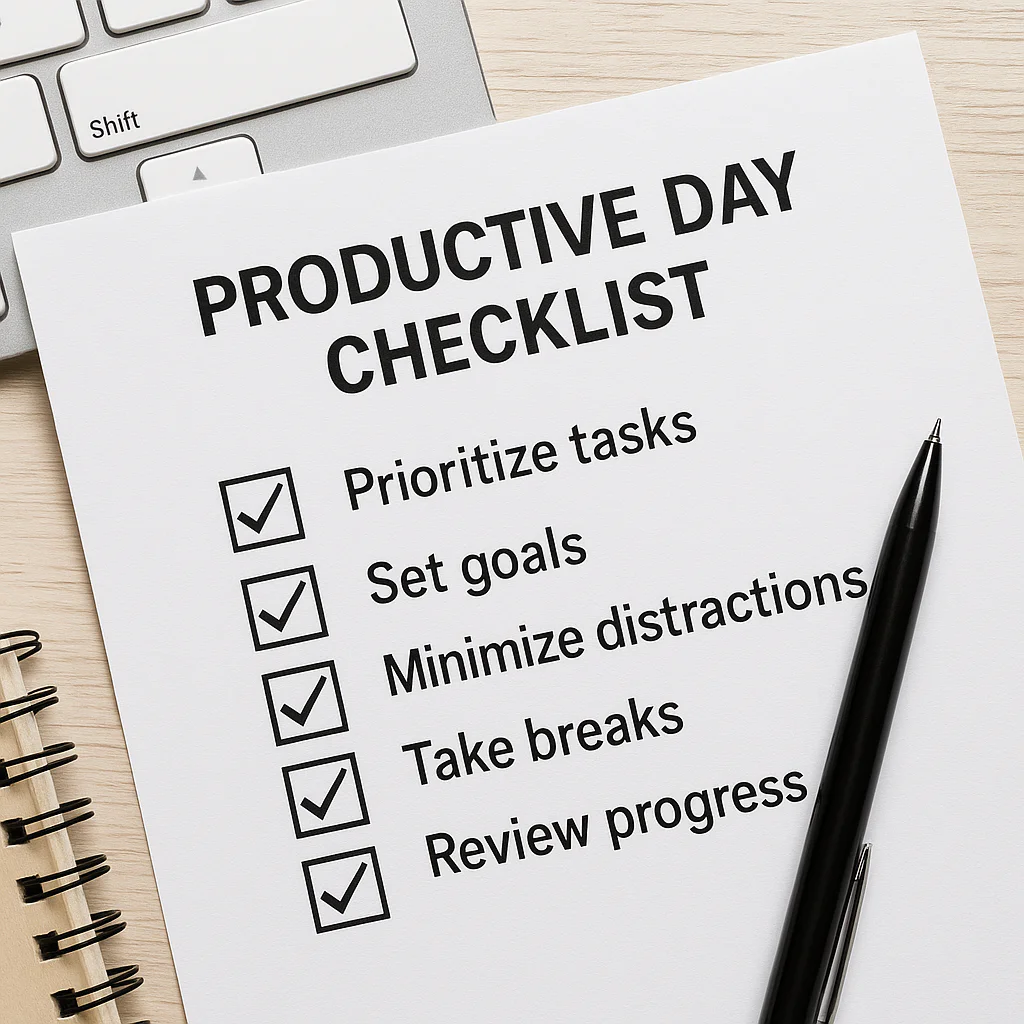
A truly productive day consists of protecting your morning focus, executing your top three priorities before noon, and respecting your brain’s natural 90-minute energy cycles. If you’ve ever asked yourself, “What does a productive day consist of?” while drowning in a sea of busywork, the answer isn’t about doing more—it’s about doing the right things with intentional clarity.
We’ve all been there: waking up with a to-do list a mile long, only to spend the entire day reacting to emails and Slack messages, feeling exhausted but unaccomplished. It turns out, the average knowledge worker loses 2.5 hours every day to context switching and distractions. That’s nearly a full work week wasted on “busy” instead of “effective.”
Imagine starting your day by tackling your hardest project while your brain is fresh, rather than letting the world dictate your agenda. That shift from reactive chaos to proactive flow is the secret sauce.
Key Takeaways
- Prioritize Ruthlessly: A productive day hinges on completing your Top Three Wins before checking email or social media.
- Respect Your Biology: Align your hardest tasks with your Ultradian Rhythms (90-minute focus blocks) to maximize cognitive output.
- Define the End: Success isn’t just about starting; it’s about ending with a Shutdown Ritual to ensure rest and preparation for tomorrow.
- Subtract, Don’t Add: Eliminate low-value distractions and “busy” tasks to create space for Deep Work.
Table of Contents
- ⚡️ Quick Tips and Facts
- 🕰️ The History and Evolution of the Productive Day
- 🧠 The Neuroscience Behind a High-Performance Routine
- 🌅 Crafting the Perfect Morning Ritual for Peak Energy
- 🚀 10 Essential Habits That Define a Truly Productive Day
- 1. Prioritize Your Top Three Wins Before Noon
- 2. Master the Art of Deep Work Blocks
- 3. Schedule Strategic Breaks to Avoid Burnout
- 4. Eliminate Digital Distractions with Intent
- 5. Leverage Time-Blocking for Maximum Efficiency
- 6. Practice Single-Tasking Over Multitasking
- 7. Align Tasks with Your Ultradian Rhythms
- 8. Set Clear Boundaries Between Work and Life
- 9. Review and Reflect on Daily Progress
- 10. End the Day with a Shutdown Ritual
- 📉 Rescue Your Schedule From the Trap of “Busy”
- 🐠 Why Being a Goldfish Won’t Save Your Productivity
- 💰 How to Invest Your Hours Like Money
- 📅 The Full Focus Planner™: A Tool for Clarity
- 🛠️ The Only Solution to “Too Much to Do and Not Enough Time”
- 🌙 Designing a Restorative Evening Routine
- 🍽️ Nutrition and Hydration: Fueling Your Productive Day
- 🏃 ♂️ The Role of Movement and Exercise in Daily Output
- 🧘 Mindfulness and Mental Clarity Strategies
- 🤝 Balancing Professional Goals with Personal Fulfillment
- 📊 Common Pitfalls That Sabotage Your Daily Success
- 📈 Measuring and Tracking Your Productivity Metrics
- 🎒 Get Started: Your First Step Toward a Better Day
- 🏁 Conclusion
- 🔗 Recommended Links
- ❓ FAQ
- 📚 Reference Links
⚡️ Quick Tips and Facts
Before we dive into the nitty-gritty of crafting a day that feels less like a hamster wheel and more like a smooth jazz improvisation, let’s hit the ground running with some hard truths and actionable nugets straight from the Daily Checklist™ war room.
We’ve seen thousands of checklists, and the ones that actually stick share a common DNA. It’s not about doing more; it’s about doing the right things with intentional focus.
- The 80/20 Rule is Real: Roughly 80% of your results come from just 20% of your efforts. If you’re busy but not productive, you’re likely working on the wrong 80%. Learn more about the Pareto Principle here.
- Decision Fatigue is a Killer: The average person makes about 35,0 remotely conscious decisions each day. By 2 PM, your brain is fried. This is why morning routines are non-negotiable; they automate the early decisions so you have energy for the big stuff later.
- Multitasking is a Myth: You aren’t multitasking; you’re task-switching, and it costs you up to 40% of your productive time. Read the science on task-switching costs.
- The “Tractor Pull” of Distraction: As noted by productivity experts, the internet acts like a tractor pull on your attention. Once you start, it’s incredibly hard to stop. Protect your morning at all costs.
- Sleep is Non-Negotiable: You cannot hack your way out of sleep deprivation. A productive day starts with a restorative night.
If you’re wondering, “How do I even start building this?”, you’re not alone. Many of us get stuck in the planning phase. That’s exactly why we created a specific guide: How do you have a productive day checklist? to help you bridge the gap between theory and execution.
🕰️ The History and Evolution of the Productive Day

You might think the concept of a “productive day” is a modern invention born from the hustle culture of Silicon Valley. Wrong. The struggle to maximize our hours is as old as civilization itself, but the definition of productivity has shifted dramatically.
From Sunup to Sundown
In the agrarian era, a productive day was dictated by the sun. You worked until the light faded. It was physical, rhythmic, and largely unmeasured by the clock. If you harvested the field, you were productive. Simple.
The Industrial Revolution and the Clock
Then came the factory whistle. Suddenly, time was money. The 8-hour workday became the standard, and productivity was measured in units produced per hour. This era birthed Time and Motion Studies by Frederick Winslow Taylor, who broke tasks down into microscopic movements to squeeze out efficiency. While this boosted manufacturing, it often stripped work of its soul, turning humans into cogs.
The Knowledge Economy Shift
Fast forward today. We don’t move boxes; we move data. The metric of success shifted from “how much did you do?” to “how well did you think?” The modern productive day is less about physical output and more about cognitive output.
“The soul never thinks without a picture.” — Aristotle
This ancient wisdom rings truer now than ever. In the information age, a productive day consists of deep work, creative problem-solving, and strategic planning. It’s not about being busy; it’s about being effective.
We’ve moved from the “hustle harder” mentality to the “work smarter” philosophy. The tools have changed—from quill pens to Notion and Todoist—but the core challenge remains: How do we align our limited energy with our highest priorities?
🧠 The Neuroscience Behind a High-Performance Routine
Why does 9 AM feel like a rocket launch for some and a swamp for others? It’s not just willpower; it’s biology.
The Prefrontal Cortex vs. The Amygdala
Your prefrontal cortex is the CEO of your brain. It handles planning, decision-making, and focus. However, it’s a high-energy consumer. Your amygdala, the alarm bell, is on high alert for threats (like that unread email notification).
When you start your day by checking social media, you’re handing the keys to the amygdala. You’re triggering a stress response that depletes the glucose your prefrontal cortex needs for deep work.
Ultradian Rhythms: The 90-Minute Cycle
Contrary to the belief that we can focus for 4 hours straight, our brains operate on Ultradian Rhythms. These are natural cycles of high alertness followed by a dip, occurring roughly every 90 to 120 minutes.
- Peak Phase: High focus, high energy. This is when you tackle your hardest tasks.
- Trough Phase: Brain fog, restlessness. This is when you should take a break, walk, or hydrate.
Ignoring these rhythms is like trying to drive a car with no gas. You’ll stall. A truly productive day respects these biological cycles, scheduling deep work during peaks and administrative fluff during troughs.
Dopamine and the Reward Loop
Every time you check a box on your list, your brain releases a hit of dopamine. This is the “feel-good” chemical that motivates you to keep going. However, cheap dopamine from scrolling TikTok or checking emails creates a false sense of accomplishment that actually drains your motivation for real work.
We need to rewire our brains to get that dopamine hit from completion, not consumption.
🌅 Crafting the Perfect Morning Ritual for Peak Energy
Let’s be honest: how you start your morning dictates how the rest of your day unfolds. If you wake up and immediately grab your phone, you’ve already lost. You’ve let the world dictate your priorities before you’ve even set your own.
The “No-Phone” Zone
The first 30 to 60 minutes of your day should be phone-free. This isn’t just a suggestion; it’s a strategic move to protect your mental clarity.
- Why? Checking email or news floods your brain with other people’s agendas.
- The Fix: Keep your phone in another room or on “Do Not Disturb” until you’ve completed your morning ritual.
The Full Focus Planner™ Approach
One of our favorite strategies, inspired by the Full Focus Planner™, is the “Night Before” setup.
“It’s all in the setup.”
By defining your Top Three “Must-Dos” the night before, you wake up with a clear map. You don’t waste precious morning energy deciding what to do; you just do it.
The 4-Step Morning Ritual
- Hydrate: Drink a large glass of water immediately. Your brain is dehydrated after 8 hours of sleep.
- Move: Get your blood flowing. A 10-minute walk or some stretching signals to your body that it’s time to wake up.
- Meditate or Journal: Spend 5 minutes clearing the mental clutter.
- Execute the First “Must-Do”: Tackle your hardest task first. This is known as “eating the frog.”
If you’re struggling to build this habit, check out our guide on Habit Formation to learn how to make these rituals stick.
🚀 10 Essential Habits That Define a Truly Productive Day
We’ve analyzed hundreds of high-performers, and while their routines vary, these 10 core habits are the common denominator. These aren’t just “nice-to-haves”; they are the non-negotiables of a day that actually gets things done.
1. Prioritize Your Top Three Wins Before Noon
Don’t let the “urgent” crowd out the “important.” Identify your Top Three tasks the night before. These are the tasks that, if completed, would make the day a success regardless of what else happens.
- The Rule: Do not check email or Slack until these three are done.
- The Tool: Use an app like Nozbe or a physical planner to list them in priority order.
2. Master the Art of Deep Work Blocks
Cal Newport’s concept of Deep Work is the holy grail of productivity. This is distraction-free concentration that pushes your cognitive capabilities to their limit.
- How to do it: Block out 90-minute chunks. Turn off notifications. Close all tabs except the one you need.
- The Result: You’ll produce in 2 hours what usually takes 8.
3. Schedule Strategic Breaks to Avoid Burnout
Your brain isn’t a machine; it’s a muscle. It needs rest to recover. Schedule breaks every 90 minutes.
- What to do: Step away from the screen. Walk outside. Stretch.
- What NOT to do: Scroll social media. This doesn’t rest your brain; it just changes the stimulus.
4. Eliminate Digital Distractions with Intent
Notifications are the enemy of focus. Be hard to reach.
- Action: Turn off all non-essential notifications.
- Tool: Use apps like Freedom or Cold Turkey to block distracting websites during work blocks.
5. Leverage Time-Blocking for Maximum Efficiency
Time-blocking is the practice of planning your day into blocks of time, each dedicated to a specific task or group of tasks.
- Why it works: It forces you to be realistic about how long things take and prevents “Parkinson’s Law” (work expands to fill the time available).
- Pro Tip: Color-code your calendar for visual clarity.
6. Practice Single-Tasking Over Multitasking
Multitasking is a lie. It’s just rapid task-switching, which kills efficiency.
- The Shift: Focus on one thing at a time.
- The Benefit: Higher quality work, less stress, and faster completion.
7. Align Tasks with Your Ultradian Rhythms
As we discussed earlier, your energy fluctuates. Match your tasks to your energy levels.
- High Energy: Creative work, complex problem solving.
- Low Energy: Admin, emails, meetings.
8. Set Clear Boundaries Between Work and Life
A productive day must have an end. Without boundaries, work bleds into personal time, leading to burnout.
- The Shutdown Ritual: At the end of the day, review what you did, plan for tomorrow, and close your laptop.
- The Mindset: “I am done for today.”
9. Review and Reflect on Daily Progress
Take 10 minutes at the end of the day to review.
- Questions to ask: What went well? What didn’t? What can I improve tomorrow?
- The Goal: Continuous improvement.
10. End the Day with a Shutdown Ritual
This is the final step to ensure you can disconnect.
- Action: Close all tabs, tidy your desk, and write down your Top Three for tomorrow.
- The Result: You sleep better, knowing you’re ready for the next day.
📉 Rescue Your Schedule From the Trap of “Busy”
There is a dangerous trap that many of us fall into: the Trap of “Busy”. It’s the feeling of being constantly on the go, answering every email, attending every meeting, yet feeling like you’ve accomplished nothing of substance.
The Illusion of Productivity
Being busy is often a form of procrastination. It’s easier to answer emails than to write that report. It’s easier to attend a meeting than to do the deep work.
“Do creative work first, reactive work second.” — Jonathan Milligan
How to Break Free
- Audit Your Time: Track your time for a week. You’ll be shocked at how much is wasted on low-value activities.
- Say “No”: Protect your time. If it doesn’t align with your Top Three, it’s a no.
- Batch Low-Value Tasks: Group emails, calls, and admin tasks into specific time blocks. Don’t let them interrupt your deep work.
🐠 Why Being a Goldfish Won’t Save Your Productivity
You’ve probably heard the myth that goldfish have a 3-second attention span. (Spoiler: They don’t; it’s closer to 9 months). But the metaphor stands: we are becoming goldfish.
The Attention Economy
Tech companies are in a war for your attention. Every notification, every red dot, every infinite scroll is designed to hijack your focus.
The Cost of Fragmentation
When your attention is fragmented, you lose the ability to think deeply. You become reactive instead of proactive.
How to Reclaim Your Focus
- Create Focus Triggers: Associate a specific location, sound, or scent with deep work.
- Train Your Algorithm: Curate your social media feed to show you content that inspires you, not distracts you.
- Start on “Hard Mode”: Don’t rely on easy wins. Tackle the hard stuff first to build momentum.
As one expert put it, “Success is a subtractive process, not an additive process.” Stop adding more apps and more tasks. Start subtracting the distractions.
💰 How to Invest Your Hours Like Money
Think of your time as your most valuable currency. You can’t earn more of it, and you can’t save it. You can only spend it.
The ROI of Time
Every hour you spend has a Return on Investment (ROI).
- High ROI: Deep work, learning, strategic planning, building relationships.
- Low ROI: Mindless scrolling, unnecessary meetings, reactive email checking.
The Investment Strategy
- Audit Your Spending: Where are you “spending” your time?
- Cut the Losses: Eliminate low-ROI activities.
- Double Down on Winners: Invest more time in high-ROI activities.
“Wouldn’t it be great if, in response to the question, ‘What does a productive day actually look like?,’ you quickly responded with, ‘Like today!'” — Jones Loflin
📅 The Full Focus Planner™: A Tool for Clarity
Sometimes, the best way to organize your life is to get it out of your head and onto paper. The Full Focus Planner™ is a tool designed to help you do exactly that.
Why It Works
- Quarterly Goals: It forces you to think long-term.
- Weekly Planning: It breaks down big goals into actionable steps.
- Daily Focus: It highlights your Top Three priorities.
Features
- Lifescore Assessment: Helps you balance work and life.
- Shutdown Ritual: Guides you through the end-of-day review.
- Habit Tracking: Helps you build consistency.
👉 Shop Full Focus Planner on:
🛠️ The Only Solution to “Too Much to Do and Not Enough Time”
The feeling of being overwhelmed is universal. But there is a solution, and it’s not about working faster. It’s about working differently.
The Solution: Intentionality
The only way to solve the “too much to do” problem is to decide what NOT to do.
- Define Your North Star: What is the one thing that matters most?
- Eliminate the Rest: If it doesn’t serve the North Star, cut it.
- Execute with Focus: Do the one thing, and do it well.
As the video summary suggests, “Most people don’t have any downside if they don’t hit their goal. If you don’t hit your goal, you don’t have to do anything.” This is a powerful mindset shift. If there are no consequences, why are you doing it?
🌙 Designing a Restorative Evening Routine
A productive day doesn’t end when you close your laptop. It ends when you rest.
The Importance of Rest
Sleep is when your brain consolidates memories and clears out toxins. Without it, your productivity the next day is compromised.
The Evening Ritual
- Wind Down: Start your wind-down routine 1 hour before bed.
- No Screens: Blue light disrupts melatonin production.
- Reflect: Review your day and plan for tomorrow.
- Relax: Read, meditate, or take a warm bath.
🍽️ Nutrition and Hydration: Fueling Your Productive Day
You wouldn’t put cheap fuel in a Ferrari, so why put junk in your brain?
The Brain-Food Connection
- Hydration: Even mild dehydration can impair cognitive function. Drink water throughout the day.
- Nutrition: Focus on whole foods, healthy fats, and protein. Avoid sugar crashes.
Meal Timing
- Breakfast: Fuel your morning with protein and healthy fats.
- Lunch: Keep it light to avoid the afternoon slump.
- Snacks: Choose nuts, fruits, or veggies.
🏃 ♂️ The Role of Movement and Exercise in Daily Output
Exercise isn’t just for fitness; it’s for productivity.
The Benefits
- Increased Blood Flow: More oxygen to the brain.
- Stress Reduction: Lowers cortisol levels.
- Energy Boost: Releases endorphins.
How to Fit It In
- Morning Workout: Jumpstart your day.
- Walking Meetings: Take calls while walking.
- Micro-Breaks: Do a quick stretch every hour.
🧘 Mindfulness and Mental Clarity Strategies
In a world of constant noise, mindfulness is a superpower.
What is Mindfulness?
It’s the practice of being present in the moment, without judgment.
Techniques
- Meditation: 5-10 minutes a day can make a huge difference.
- Breathing Exercises: Use box breathing to calm your nervous system.
- Single-Tasking: Focus one thing at a time.
🤝 Balancing Professional Goals with Personal Fulfillment
A productive day isn’t just about work. It’s about life.
The Double Win
Strive for a “Double Win” where you achieve your professional goals while maintaining a fulfilling personal life.
Strategies
- Set Boundaries: Protect your personal time.
- Prioritize Relationships: Spend quality time with loved ones.
- Pursue Hobbies: Engage in activities that bring you joy.
📊 Common Pitfalls That Sabotage Your Daily Success
Even with the best plans, we can stumble. Here are the most common pitfalls:
- Perfectionism: Waiting for the “perfect” time to start.
- Procrastination: Delaying important tasks.
- Lack of Planning: Winging it every day.
- Ignoring Energy Levels: Trying to do deep work when you’re exhausted.
📈 Measuring and Tracking Your Productivity Metrics
What gets measured gets managed.
Key Metrics
- Deep Work Hours: How many hours of focused work did you do?
- Top Three Completion: Did you finish your top three tasks?
- Energy Levels: How did you feel throughout the day?
Tools
- RescueTime: Tracks your digital activity.
- Togl: Time tracking for tasks.
- Habitica: Gamifies your habits.
🎒 Get Started: Your First Step Toward a Better Day
Ready to transform your day? Start small.
- Pick One Habit: Choose one of the 10 habits above.
- Commit for 7 Days: Do it every day for a week.
- Reflect: How did it feel? What changed?
Remember, progress is happiness. You don’t have to be perfect; you just have to be intentional.
🏁 Conclusion

So, what does a productive day actually consist of? It’s not a rigid schedule of back-to-back meetings or a frantic race against the clock. It’s a deliberate design of your time, energy, and attention.
From the neuroscience of Ultradian Rhythms to the psychological power of Top Three priorities, we’ve explored the anatomy of a day that works for you. We’ve debunked the myth of multitasking, highlighted the importance of deep work, and emphasized that rest is just as crucial as action.
The journey to a productive day isn’t about adding more to your plate; it’s about subtracting the noise. It’s about protecting your morning, investing your hours like money, and ending your day with a clear mind.
Our Confident Recommendation: Start tonight. Write down your Top Three for tomorrow. Set your phone to “Do Not Disturb.” And tomorrow morning, when the world tries to pull you into its chaos, stay the course. You’ve got this.
🔗 Recommended Links
Here are the tools and resources we mentioned that can help you build your productive day:
- Full Focus Planner™: The ultimate tool for clarity and focus.
- Shop on Amazon | Full Focus Official Website
- Nozbe: A powerful task management app for prioritizing your Top Three.
- Nozbe Official Website
- Freedom: Block distracting websites and apps.
- Freedom Official Website
- RescueTime: Track your time and productivity.
- RescueTime Official Website
- Books:
Deep Work by Cal Newport: Amazon Link
Juggling Elephants by Jones Loflin: Amazon Link
The Power of Habit by Charles Duhigg: Amazon Link
❓ FAQ

What is included in productive hours?
Productive hours are those spent on high-value activities that align with your long-term goals. This includes deep work, strategic planning, creative problem-solving, and meaningful relationship building. It excludes low-value tasks like mindless scrolling or reactive email checking.
How should a productive day look like?
A productive day should have a clear structure: a morning ritual to set the tone, deep work blocks for your most important tasks, strategic breaks to maintain energy, and a shutdown ritual to ensure a clear transition to personal time. It should feel intentional, not frantic.
Read more about “📋 What Is a Checklist at Work? The 7-Step Blueprint for 2026”
What constitutes a productive day?
A productive day is defined by completion, not busyness. It consists of achieving your Top Three priorities, maintaining mental clarity, and ending the day with a sense of fulfillment rather than exhaustion.
How to create a daily checklist for productivity?
- Identify your Top Three: What are the most important tasks?
- Time-block your day: Assign specific times for each task.
- Include breaks: Schedule rest periods.
- Add habits: Include morning and evening routines.
- Review: Reflect on your progress at the end of the day.
Read more about “📱 7-Step Minimalist Phone Setup for Focus (2026)”
What are the habits of a highly productive person?
Highly productive people prioritize deep work, practice single-tasking, maintain consistent sleep schedules, hydrate regularly, and review their progress daily. They also set clear boundaries and protect their morning routines.
How to prioritize tasks in a daily planner?
Use the Eisenhower Matrix to categorize tasks by urgency and importance. Focus on important but not urgent tasks first. Always identify your Top Three priorities and tackle them before anything else.
Read more about “7 Daily Task List Templates to Master Your Day (2026) 🚀”
Why do daily checklists improve time management?
Daily checklists reduce decision fatigue by automating choices. They provide clarity and focus, ensuring you spend your time on what truly matters. They also serve as a visual reminder of your progress, boosting motivation.
Read more about “✅ What is the Value of a Checklist? (2026)”
📚 Reference Links
- Investopedia: The Pareto Principle (80/20 Rule)
- American Psychological Association: Multitasking: Switching Costs
- Full Focus: Productive Day Strategies
- LinkedIn: What a Productive Day Actually Looks Like
- Quora: What does a productive and satisfying day consist of for you?
- Daily Checklist™: Habit Formation
- Daily Checklist™: Life Hacks
- Daily Checklist™: Digital Detox
- Daily Checklist™: How do you have a productive day checklist?