Support our educational content for free when you purchase through links on our site. Learn more

What Should Be Included in a Morning Checklist? 13 Essentials ☀️
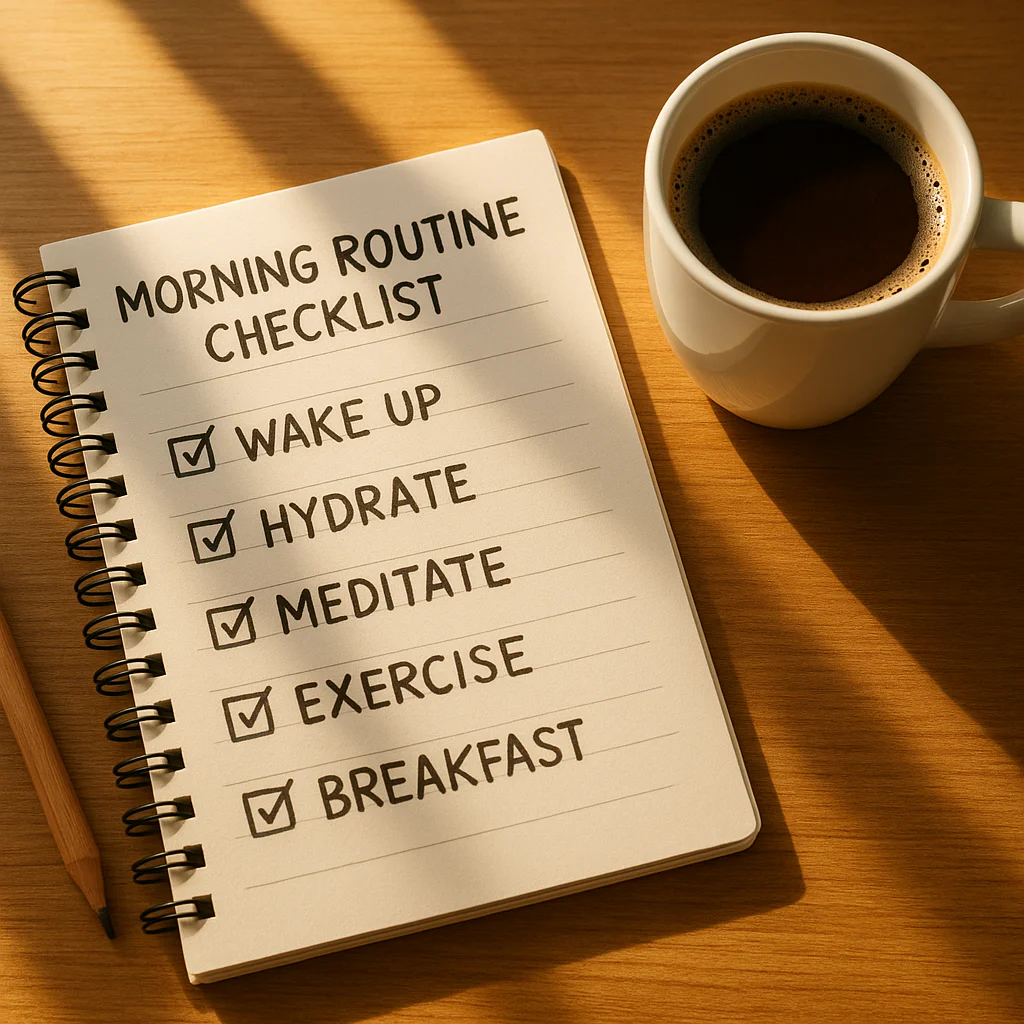
What should be included in a morning daily checklist? Start with the essentials: wake up, get ready, take prescribed medication as directed, check your schedule, and gather what you need for the day. Add breakfast, movement, mindfulness, or other habits only if they fit your needs and time.
We’ve found that the best checklist isn’t the most ambitious one. It’s the one you can follow on an ordinary Tuesday, when the alarm feels personal and one shoe has vanished. Build a short “minimum” routine for busy mornings, then add optional steps when you have more time.
Key Takeaways
- Start with essentials: personal care, prescribed medication, your schedule, and anything you need to leave or begin work.
- Add only useful habits: breakfast, movement, daylight, or reflection should support your day—not make it harder to start.
- Make it fit your real schedule: protect adequate sleep and include a little transition time.
- Use a short and flexible checklist: create a minimum version for rushed mornings and adjust it as your needs change.
- Prepare the night before: setting out clothes and packing essentials can reduce morning decisions.
Table of Contents
- ⚡ Quick Tips and Facts
- 🌅 How Morning Checklists Became a Daily Habit
- 🧠 Why a Morning Routine Checklist Can Help
- ✅ What to Include in a Morning Daily Checklist
- 1. Wake Up at a Consistent Time
- 2. Make Your Bed and Get Ready
- 3. Drink Water and Take Prescribed Medication
- 4. Get Natural Light and Move Your Body
- 5. Eat a Nourishing Breakfast
- 6. Practice Mindfulness, Prayer, or Gratitude
- 7. Review Your Calendar and Priorities
- 8. Choose Your Most Important Task
- 9. Prepare Your Workspace and Essentials
- 10. Connect With Family, Friends, or Pets
- 11. Check Messages at a Deliberate Time
- 12. Build in Personal Care and Getting Dressed
- 13. Add a Flexible Buffer Before You Leave
- 🖨️ A Printable Morning Checklist: Full and Quick Versions
- The 10-Minute Minimum Routine
- A Balanced 30-Minute Morning Routine
- A Longer Routine for Unhuried Mornings
- ⏰ Morning Routine Ideas for Different Schedules
- For Early Risers and Night Owls
- For Busy Parents and Families
- For Students and Remote Workers
- For Shift Workers and Unpredictable Days
- 🛠️ How to Build a Morning Checklist That Sticks
- Start Small and Choose Habits That Fit Your Goals
- Set a Realistic Timeline and Leave Room to Adjust
- Use Paper, a Planner, or a Checklist App
- Track Consistency Without Chasing Perfection
- 🌙 Set Up Tomorrow With a Simple Evening Routine
- 🚫 Common Morning Checklist Mistakes to Avoid
- ❓ Frequently Asked Questions About Morning Daily Checklists
- What is the best morning routine order?
- How many items should a morning checklist have?
- How long should a morning routine take?
- What should I do first thing in the morning?
- Should I check my phone when I wake up?
- How can I stick to a morning routine when I feel tired?
- 🏁 Conclusion
- 🔗 Recommended Links
- 📚 Reference Links
⚡ Quick Tips and Facts
A morning daily checklist should make the start of your day clearer, calmer, and easier to repeat—not turn breakfast into a military inspection. At Daily Checklist™, we recommend choosing a few actions that support your health, responsibilities, and mood, then putting them in an order that works for your mornings. Our daily checklist guide has more ideas for simplifying everyday tasks.
| Quick fact | What it means for your checklist |
|---|---|
| There’s no universally ideal routine length. | Start with the time you actually have, even if that’s 10 minutes. |
| A checklist is a prompt, not a performance score. | Miss an item? Continue with the next one; no dramatic restart required. |
| Sleep is part of the routine. | Don’t sacrifice adequate sleep just to claim an early-morning badge. The CDC recommends adults get at least seven hours of sleep. |
| Consistency beats complexity. | A small sequence you can repeat is more useful than an ambitious list you abandon by Thursday. |
| The best first steps are personal. | Water, medication as prescribed, getting dressed, or checking your schedule may be more useful to you than journaling or a workout. |
A practical starting checklist:
- ☐ Get up at a reasonably consistent time.
- ☐ Use the bathroom, wash up, and get dressed.
- ☐ Drink water if you’re thirsty; take any medication as prescribed.
- ☐ Get some daylight or gentle movement if it fits your health and schedule.
- ☐ Eat breakfast if you like or need it.
- ☐ Check your calendar and choose one priority.
- ☐ Pack what you need and leave a little buffer.
Want a calmer start? Put your phone aside until you’ve completed one or two basics. For more ideas on building routines that last, explore our habit-formation resources and digital-detox tips. 📵
🌅 How Morning Checklists Became a Daily Habit
Most people already have a morning routine, even if it’s an accidental one: silence the alarm, scroll through messages, wonder where the clean socks went. As Styl’d Grace points out, “Even if you haven’t intentionally thought about your morning routine, you have one.” The useful question is whether that routine serves you.
A morning checklist makes recurring actions visible. It can be as short as getting dressed, eating breakfast, and reviewing the day, or include spiritual practice, exercise, family preparation, and focused planning. The goal isn’t to copy someone else’s picture-perfect routine. It’s to make your own more deliberate.
Styl’d Grace favors an easy, effective routine, recommends writing it down somewhere visible, and suggests starting with familiar habits such as water, breakfast, getting dressed, gratitude, and a must-do list. Those basics are a sound starting point. We’d add one important caveat: a routine should fit your sleep, health, work schedule, and caregiving responsibilities. A 5 a.m. wake-up isn’t a virtue if it leaves you chronically underslept.
For a short visual walkthrough, the featured video, “Morning Routine Checklist: A Guide To Your Best Mornings” by Kathy Schneider discusses building a morning routine checklist. Watch it for ideas, then tailor the list to the realities of your own calendar.
🧠 Why a Morning Routine Checklist Can Help
A checklist can reduce the number of small decisions you have to make while you’re still negotiating with your pillow. It gives familiar tasks a predictable order and can help you remember essentials before the day gets noisy.
The practical benefits
- Fewer forgotten tasks: A visible reminder can help you remember lunch, keys, medication, or school materials.
- A steadier transition: Repeating a few steps may make the shift from sleep to work, school, or caregiving feel less abrupt.
- Clearer priorities: Looking at your calendar and choosing one important task helps separate “must do today” from “could do someday.”
- More room for personal habits: A short checklist can reserve time for movement, reflection, breakfast, or another activity you value.
- A useful cue for habit building: Repeating a behavior in a consistent context can help it become more automatic. The National Institutes of Health’s overview of habit formation discusses how repetition and stable contexts contribute to habits.
| If your morning often feels… | A checklist can help by… | Keep in mind |
|---|---|---|
| Rushed | Making the order of tasks visible | It can’t create time that isn’t there; simplify the list too |
| Distracted | Giving you a short sequence to follow | Consider delaying nonessential notifications |
| Forgetful | Listing things to pack or check | Put the list where the task happens |
| Unfocused | Including a calendar review and one priority | Avoid turning planning into a 30-minute detour |
| Overloaded | Showing which tasks can be removed or moved to evening | A shorter list is often the better fix |
A checklist supports your choices; it does not guarantee productivity or a particular mood. If mornings are difficult because of ongoing sleep issues, health concerns, or significant distress, a longer checklist may not be the answer. Consider professional guidance when appropriate.
✅ What to Include in a Morning Daily Checklist
There’s no magic number of boxes to tick. Build from essentials, then add only the habits that make your day better. We suggest organizing items into four simple groups:
| Group | Examples |
|---|---|
| Wake and care | Get up, wash, get dressed, take prescribed medication |
| Fuel and movement | Breakfast, water as needed, light activity |
| Mind and priorities | Reflection, calendar, one main task |
| Ready to go | Pack essentials, check weather or transport, leave buffer |
Here’s the full menu. Treat it like a buffet, not an all-you-can-do challenge. 🍽️
1. Wake Up at a Consistent Time
A reasonably regular wake time can make the day easier to plan, but consistency shouldn’t come at the cost of adequate rest. The CDC’s sleep guidance recommends adults get at least seven hours of sleep, while individual needs vary by age and health.
Try this:
- Choose a wake-up time that works with your obligations.
- Count backward to make room for enough sleep.
- Keep your wake time reasonably steady when your schedule allows.
- If you’re repeatedly exhausted, adjust bedtime or seek advice rather than simply setting an earlier alarm.
Skip the “successful people wake at 4 a.m.” contest. Your best wake-up time is one that leaves you rested enough to function.
2. Make Your Bed and Get Ready
A quick bed-making step can signal that sleep time is over, but it’s optional—not a moral achievement. More useful essentials may be washing your face, brushing your teeth, showering if you prefer, and getting dressed.
Styl’d Grace recommends planning an outfit the night before to remove one morning decision. That’s especially helpful when the closet is full but somehow contains “nothing to wear.”
- ☐ Wash up and brush your teeth.
- ☐ Choose comfortable, appropriate clothing.
- ☐ Prepare clothes in the evening if mornings feel rushed.
- ☐ Make the bed if it helps you feel settled.
For children, keep the sequence simple and visible: brush teeth, get dressed, eat breakfast. The right checklist is one they can understand and follow.
3. Drink Water and Take Prescribed Medication
A glass of water can be a convenient way to respond to thirst after sleep. But you don’t need an elaborate hydration ritual, a special bottle, or a claim that water “detoxes” your body. Follow your healthcare professional’s advice for your own needs.
If you take medication, use it exactly as prescribed. Some medicines have specific instructions about timing, food, or other medicines, so don’t change the routine based on a generic checklist. Ask your pharmacist or prescriber if you’re unsure.
- ☐ Keep water accessible if that helps you remember.
- ☐ Use a medication reminder only as a prompt, not a substitute for medical instructions.
- ☐ Add a checkbox for any prescribed device or care task you need to remember.
4. Get Natural Light and Move Your Body
If practical, opening the curtains, stepping outside, or taking a short walk can be a pleasant way to begin the day. Movement can be gentle: stretch, walk the dog, do mobility exercises, or dance while the kettle boils. You don’t need to turn every morning into a full workout.
The U.S. Department of Health and Human Services’ physical activity guidelines recommend regular physical activity for health; they don’t require you to cram a demanding workout into the morning. Choose activity that fits your ability and schedule.
Try the two-minute version: stand, stretch, and walk to a window. If that feels good, continue. If not, you still completed the habit.
5. Eat a Nourishing Breakfast
Breakfast can be part of your checklist if you enjoy it, need it for medication or energy, or find it helps you get through the morning. It doesn’t have to be complicated. The U.S. Department of Agriculture’s MyPlate offers practical guidance for balanced food choices.
Fast options include:
- Oatmeal with fruit or nuts.
- Yogurt with fruit and cereal.
- Eggs with toast.
- A banana and nut butter.
- Leftovers, if that’s what works for you.
Not hungry early? You don’t have to force a meal just because a checklist says so. Consider packing something for later, and follow any individual medical or nutritional guidance you’ve received.
6. Practice Mindfulness, Prayer, or Gratitude
A few quiet minutes can create space before messages and tasks start competing for attention. You might pray, read a devotional passage, meditate, write down one thing you appreciate, or simply sit with your coffee without multitasking.
Styl’d Grace suggests spending five minutes on gratitude and shares reading a Bible passage as a personal practice. Those may suit you; another person may prefer breathing exercises, a brief journal entry, or silence.
Try a low-pressure prompt:
- What would make today feel meaningful?
- What’s one thing I’m grateful for?
- What can wait until later?
- What do I need to be kind to myself about today?
If you want the habit to stick, link it to something you already do: after brushing your teeth, write one line of gratitude. More habit-building ideas are in our habit-formation collection.
7. Review Your Calendar and Priorities
A quick glance at your calendar can help you spot appointments, deadlines, and travel time before they surprise you. Keep this step short: you’re checking the plan, not reorganizing your entire life before breakfast.
- Check today’s calendar.
- Note any fixed-time commitments.
- Identify what needs preparation or travel.
- Choose one priority that matters most.
- Move lower-priority tasks to a realistic time—or another day.
Styl’d Grace recommends making a must-do list. We like that approach, with one adjustment: write down a small number of genuine essentials rather than labeling everything urgent. A list of 27 “musts” is just a to-do list wearing a fake mustache.
8. Choose Your Most Important Task
Pick one task that would make the day feel meaningfully complete. It might be preparing a presentation, making an appointment, studying for an exam, or completing a household task you’ve been putting off.
Ask:
- What has a real deadline?
- What will take the most focus?
- What can I do next—not just worry about?
- What is realistically possible today?
Write the task as an action: “Draft the introduction” is clearer than “work on report.” If you have competing responsibilities, identify a work priority and a personal priority rather than pretending your life has only one lane.
9. Prepare Your Workspace and Essentials
Before you leave or begin working, gather the things you’ll need. A quick check can prevent the classic halfway-to-the-door realization that your laptop is still charging at home.
- ☐ Keys, wallet, transit card, or access badge.
- ☐ Phone and charger, if needed.
- ☐ Lunch, water bottle, or snacks.
- ☐ Work or school materials.
- ☐ Childcare, pet-care, or appointment essentials.
- ☐ Weather-appropriate outerwear.
If you work from home, set out what you need and close unrelated tabs before starting. For practical shortcuts that reduce daily friction, see our life hacks.
10. Connect With Family, Friends, or Pets
A morning checklist can include the people and animals who depend on you. Feed the cat, take the dog out, check that a child has their backpack, or share a kind word before everyone scaters.
Keep the task specific:
- ☐ Feed and refresh water for pets.
- ☐ Pack a child’s lunch or check their school bag.
- ☐ Confirm who is handling pickup or drop-off.
- ☐ Take a moment to connect before the day gets busy.
For families, shared checklists can reduce repeated reminders. Let children own age-appropriate steps, and keep the list short enough that they can see what “done” looks like.
11. Check Messages at a Deliberate Time
You may need to check messages early for work, caregiving, or urgent logistics. If you don’t, consider starting with your own priorities before opening a feed designed to serve someone else’s.
A useful rule:
- Check essential alerts if someone may need you.
- Delay nonurgent email and social media until a planned time.
- Turn off unnecessary notifications that pull you into other people’s agendas.
This isn’t an all-or-nothing phone ban. It’s a choice about when your attention becomes available. Explore our digital-detox resources for more ways to set boundaries around screens. 📱
12. Build in Personal Care and Getting Dressed
Personal care is individual. Your checklist might include a shower, skincare, hair care, shaving, or getting dressed for work. It may also include assistive devices or health-related routines. Add only what’s relevant, and leave enough time for it to be comfortable rather than frantic.
Styl’d Grace recommends a shower and planning outfits the night before. Those are practical options, not universal requirements. A quick wash and a comfortable outfit may be exactly right on a busy day.
13. Add a Flexible Buffer Before You Leave
A buffer is the unglamorous hero of the morning checklist. It gives you room for a missing shoe, a delayed bus, a spilled drink, or the mysteriously vanishing permission slip.
- ☐ Check the time you need to leave.
- ☐ Allow a few minutes for transitions.
- ☐ Check weather or travel conditions if relevant.
- ☐ Decide what can be skipped if time runs short.
Protect the essentials first. If you’re late, don’t skip medication instructions, needed care, or safety steps just to complete optional journaling or bed-making.
🖨️ A Printable Morning Checklist: Full and Quick Versions
Print this list, copy it into a planner, or turn it into a note on your phone. Keep only the items you’ll use. A checklist is easier to follow when it’s visible where the routine happens: beside the bed, near the bathroom mirror, or by the door.
The 10-Minute Minimum Routine
For rushed mornings, choose a few essentials:
- ☐ Get up and use the bathroom.
- ☐ Wash up and get dressed.
- ☐ Take prescribed medication as directed.
- ☐ Check the day’s first appointment or obligation.
- ☐ Gather keys, phone, wallet, and must-have items.
A Balanced 30-Minute Morning Routine
Adjust the timing to your needs; this is a sample, not a stopwatch challenge.
| Approximate time | Checklist item |
|---|---|
| First 5 minutes | Wake up, use the bathroom, open curtains |
| Next 10 minutes | Wash, get dressed, take prescribed medication as directed |
| Next 5 minutes | Water, breakfast or a packed snack |
| Next 5 minutes | Review calendar and choose a priority |
| Final 5 minutes | Gather essentials and leave with a buffer |
A Longer Routine for Unhuried Mornings
If you have the time and enjoy a slower start, add one or two options:
- ☐ Walk, stretch, or complete a planned workout.
- ☐ Read, pray, meditate, or journal.
- ☐ Prepare and enjoy breakfast.
- ☐ Review goals or a longer task list.
- ☐ Tidy one small area.
Don’t add everything because it sounds impressive. Add what gives you a real benefit.
⏰ Morning Routine Ideas for Different Schedules
A useful checklist bends around your life. A parent getting children ready, a student commuting across town, and a night-shift worker may need completely different first steps.
| Schedule | Helpful checklist focus | Consider skipping |
|---|---|---|
| Early start | Prep clothes and essentials the night before | Extra tasks that cut into sleep |
| Busy family morning | Shared, visible steps for each person | Long instructions and repeated reminders |
| Student schedule | Materials, transport, deadlines, breakfast | Checking every app before leaving |
| Remote work | Get dressed, set up workspace, choose priority | Leting household chores swallow work time |
| Shift work | A routine tied to your wake time, not the clock | Assuming “morning” must mean sunrise |
For Early Risers and Night Owls
If you naturally wake early, use the quiet time for a task you value. If you’re a night owl, don’t force an extremely early start unless your obligations require it. Prioritize sufficient sleep and build your checklist around the wake time you can sustain.
For Busy Parents and Families
Make the steps visible and concrete. For younger children, use a short sequence with simple language; for older kids, involve them in choosing the order. Put shared essentials—bags, lunch containers, permission slips—near the exit the night before.
Styl’d Grace similarly recommends a straightforward children’s routine: brush teeth, get dressed, eat breakfast. That’s a strong foundation; add other steps only when the family can manage them without turning every morning into a negotiation summit.
For Students and Remote Workers
Students may benefit from checking the day’s class schedule, packing materials, and confirming transport. Remote workers can use a short “start work” routine: get dressed, prepare water or breakfast, open the calendar, and identify the first task.
For both groups, keep personal tasks separate from work or study tasks. The checklist should help you transition—not make it feel as if work has already taken over the whole morning.
For Shift Workers and Unpredictable Days
Your “morning” is the time after you wake, even if it’s afternoon. Build a routine around sleep and work demands rather than a conventional clock. Keep a compact checklist for essentials, and make exercise, meals, and wind-down timing flexible enough to fit rotating schedules.
🛠️ How to Build a Morning Checklist That Sticks
The most reliable checklist is built from your actual day, not an influencer’s ideal Tuesday. Start with the tasks you already do, then improve one part of the sequence.
Start Small and Choose Habits That Fit Your Goals
- Write down your current routine. Include the helpful parts and the time sinks.
- Choose three to five essentials. Pick tasks that support health, responsibilities, or calm.
- Add one optional habit. Try a short walk, gratitude note, or calendar review.
- Put the steps in order. Group tasks by location or what needs to happen first.
- Test it for a week. Notice what feels useful and what keeps getting skipped.
- Edit without guilt. Remove steps that don’t fit.
This approach reflects the core advice from Styl’d Grace: choose something easy and effective, write it down, and practice it consistently. You can find more practical habit ideas in our habit-formation category.
Set a Realistic Timeline and Leave Room to Adjust
Estimate how long each step takes, then add transition time. If your checklist takes 45 minutes but you have 20, the problem isn’t your character. It’s the design.
Try three versions:
- Minimum: essential tasks for rushed or low-energy mornings.
- Standard: your normal routine.
- Extra time: optional habits for unhuried days.
This “flexible routine” is more resilient than an all-or-nothing list. You still have a plan when the alarm loses its argument.
Use Paper, a Planner, or a Checklist App
| Format | Best for | Potential drawback |
|---|---|---|
| Printed checklist | Easy visibility and no phone distraction | Needs updating by hand |
| Paper planner | Combining routine and daily priorities | Can become cluttered |
| Phone reminders | Timed prompts and portability | Notifications may pull you off task |
| Notes or task app | Easy editing and recurring checklists | Requires opening the device |
| Whiteboard | Shared household routines | Less portable |
For digital tools, products such as Todoist and Google Tasks can support recurring reminders; a simple paper list works just as well if you’ll actually see it. Choose the tool with the least friction, not the longest feature list.
Track Consistency Without Chasing Perfection
Use a simple mark for completion, or note which version you used: minimum, standard, or extra time. The aim is to learn what works—not to build a streak you feel afraid to break.
Ask yourself once a week:
- Which steps genuinely helped?
- Which ones were repeatedly skipped?
- Was the routine too long?
- Did it respect my sleep and other needs?
- What’s one small adjustment to try next?
🌙 Set Up Tomorrow With a Simple Evening Routine
A smoother morning often starts before bedtime. A few evening tasks can remove decisions and searching from the next day:
- ☐ Choose clothes and check the weather.
- ☐ Pack a bag, lunch, or school materials.
- ☐ Put keys and essentials in a consistent place.
- ☐ Review tomorrow’s first appointment.
- ☐ Set an alarm that allows enough sleep.
- ☐ Write down anything you’re worried about forgetting.
Styl’d Grace specifically recommends planning outfits the day before. We’d add packing essentials and checking the first commitment. These small preparations don’t guarantee a flawless morning, but they make it less likely that your keys will launch a solo career in hide-and-sek.
For more low-effort routines, explore our life hacks.
🚫 Common Morning Checklist Mistakes to Avoid
- ❌ Making the list too long: Every extra task needs time and attention. Start with essentials.
- ❌ Copying someone else’s routine: Their work hours, health, and household may be entirely different.
- ❌ Waking earlier at the expense of sleep: Protect rest before adding optional habits; see the CDC’s sleep recommendations.
- ❌ Treating every item as mandatory: Separate “must do” from “nice to do.”
- ❌ Starting with social media by default: Decide whether checking your phone serves a real need.
- ❌ Using the checklist as a guilt list: A skipped task is information about your routine, not a verdict on you.
- ❌ Ignoring other people’s needs: Shared family responsibilities deserve clear, realistic steps.
- ❌ Failing to update the list: Schedules change. Your checklist should, too.
One useful test: if your routine regularly makes you late or stressed, it needs editing—not more willpower.
❓ Frequently Asked Questions About Morning Daily Checklists
What should a simple morning checklist include?
A simple checklist can include getting up, washing and dressing, taking prescribed medication as directed, checking your schedule, and gathering essentials. Add water, breakfast, movement, or reflection if those habits suit you. Keep the list short enough to finish on a normal morning.
What’s the best way to keep it manageable?
Separate the list into essential and optional steps. That way, a busy morning still has a clear minimum version.
How do I create a morning checklist I can stick to?
Start with tasks you already do, choose three to five useful steps, and put them in a practical order. Write the list somewhere visible, try it for a week, and adjust the steps that feel unrealistic. Repetition in a consistent context can support habit formation, as discussed in this NIH review.
What if I miss a day?
Resume with the next step at the next opportunity. You don’t need to restart a streak, add punishment tasks, or wait for Monday.
What are the most important tasks to do first thing in the morning?
Prioritize what is time-sensitive and necessary for your wellbeing: personal care, medication as prescribed, essential caregiving, and preparation for your first commitment. After that, check your calendar and identify the day’s main priority. The exact order depends on your needs and schedule.
Should I exercise before breakfast?
There is no single rule that suits everyone. Choose the timing and activity that feel comfortable and align with any advice from your healthcare professional.
Should a morning checklist include personal and work tasks?
It can include both, but keep them visibly distinct. Personal essentials might include medication, breakfast, or childcare; work tasks might include checking a calendar or preparing materials. Separating the categories helps prevent a work list from swallowing every part of your morning.
How many work priorities should I list?
Start with one main task and any fixed-time commitments. Add more only when you’ve made room for them in your actual schedule.
How long should it take to complete a morning checklist?
As long as your circumstances allow. A checklist can be a few minutes of essentials or a longer routine with breakfast, exercise, and reflection. Choose a duration that fits your wake time, responsibilities, and sleep needs; don’t treat a sample 10- or 30-minute routine as a medical or productivity standard.
How can I make it shorter?
Move preparation to the evening, remove low-value steps, and create a minimum version for rushed days.
How can a morning checklist improve productivity?
It can make recurring steps easier to remember, reduce avoidable decisions, and help you identify a priority before distractions take over. It works best as a simple guide—not a promise that every day will be productive. Pair it with a realistic calendar and a clearly written next action.
Should I check email first?
Only if your role or responsibilities require it. Otherwise, consider completing one or two personal essentials before opening nonurgent email or social apps.
What should I add to my morning checklist to reduce stress?
Consider a short calendar review, a buffer before leaving, and a brief quiet activity such as prayer, breathing, journaling, or gratitude. Prepare clothes and essentials the night before. Keep the list short: adding seven “stress-reducing” tasks can become a fresh source of stress.
What if mornings still feel overwhelming?
Shrink the routine to essentials, check whether you’re allowing enough time for sleep, and identify which responsibilities can be prepared or shared. If distress or sleep problems persist, consider discussing them with a qualified professional.