Support our educational content for free when you purchase through links on our site. Learn more

15 Neurodivergent-Friendly Home Organization Hacks That Actually Work 🧠
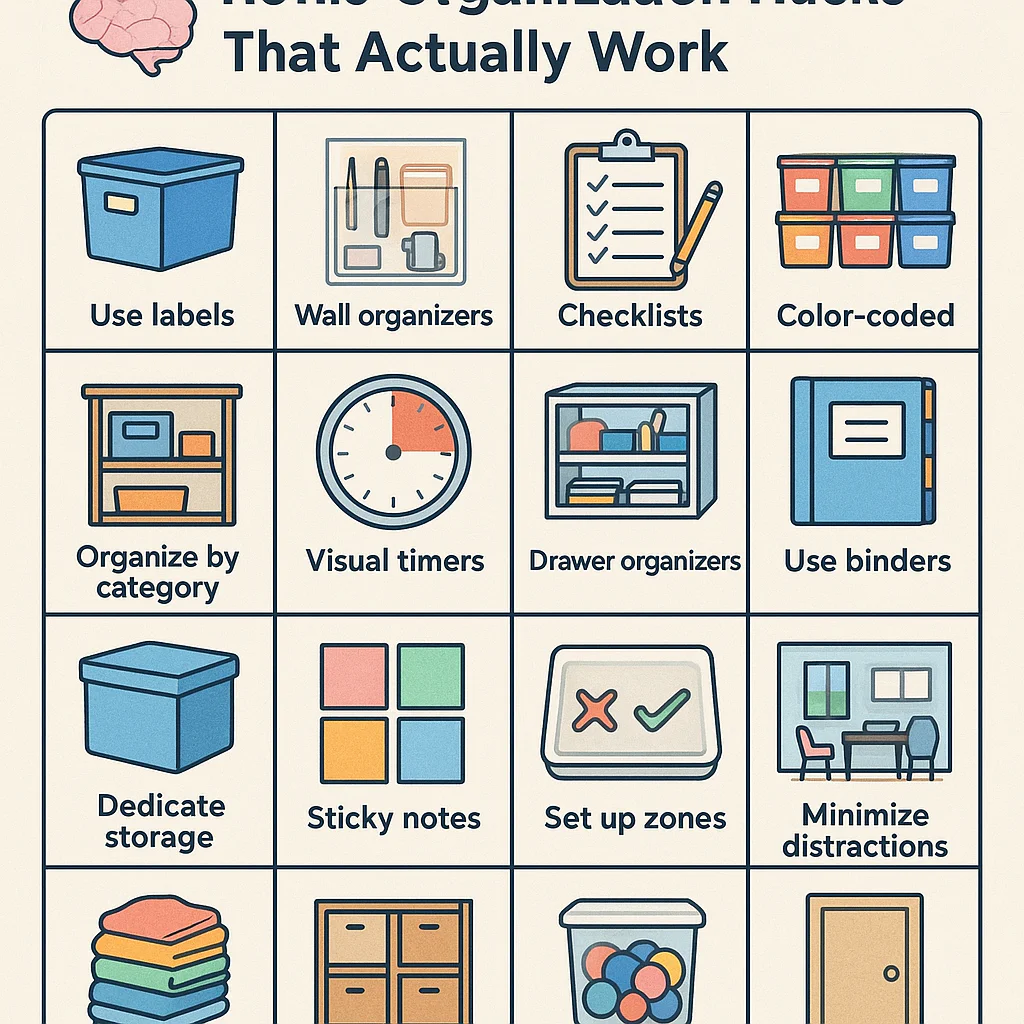
If you want a home that feels manageable and calm, the secret is to build systems that fit your brain, not force your brain to fit a cookie-cutter mold. Neurodivergent-friendly home organization means embracing simplicity, visibility, and flexibility to reduce overwhelm and make daily life smoother.
We’ve seen firsthand how traditional organizing advice often backfires for neurodivergent folks—because it assumes a “default” brain that can plan and execute flawlessly. Instead, small wins like creating landing zones, using clear storage, and setting realistic session goals can transform chaos into calm.
Fun fact: studies show that clutter can increase cortisol levels, the stress hormone, by up to 40%! That’s why designing a home that works with your unique wiring isn’t just about tidiness—it’s about reclaiming your peace of mind.
Key Takeaways
- Start small and set achievable goals — focus one zone or category per session to avoid overwhelm.
- Use clear, visible storage and purposeful landing zones to reduce decision fatigue and forgetfulness.
- Drop perfectionism and budget your energy, not just your time.
- Incorporate body doubling and external reminders to boost focus and motivation.
- Make maintenance simple and routine with quick daily resets and habit stacking.
- Accept relapse as part of the process and plan for it without guilt.
- Seek professional support if organizing feels persistently impossible.
Table of Contents
- ⚡️ Quick Tips and Facts for Neurodivergent-Friendly Home Organization
- 🧠 Understanding Neurodivergence and Home Organization Challenges
- ❌ Why Most Organizing Advice Misses the Mark for Neurodivergent Brains
- 🛠️ Preparing Your Mindset Before Tackling Clutter
- 🎯 Setting Realistic Session Goals Instead of Overwhelming Whole-Home Plans
- 🚫 Dropping the “Perfect Home” Myth: Embrace Your Unique Space
- 🤝 Using Body Doubling and External Focus Supports to Boost Productivity
- ⏳ Budgeting Energy Wisely Before Scheduling Organizing Time
- 🔄 Expecting the Middle Phase: When Things Get Messier Before They Get Better
- 🏠 Designate One Zone: How to Start Small and Win Big
- 📦 One Category at a Time: Simplify Sorting and Decision-Making
- ✔️ Keep Decisions Concrete: Avoid Overthinking with Clear Criteria
- 🔧 Building a Home That Matches Real Behavior and Needs
- 🍽️ Kitchen Counter Example: Practical Neurodivergent-Friendly Organization in Action
- 🗄️ Choosing Storage That Reduces Visual and Cognitive Clutter
- 🔍 Clear vs. Opaque Storage: Which Works Best for Neurodivergent Minds?
- 📍 Purposeful Landing Zones: Creating Drop-Off Spots That Work
- 🧩 Neuro-Friendly Storage Solutions: Brands and Products That Shine
- 🚫 What Usually Doesn’t Work: Common Storage Pitfalls to Avoid
- ⏲️ Use a 10-Minute Reset: Quick Maintenance Tricks to Keep Clutter at Bay
- 🔗 Attach Maintenance to Existing Habits: Make It Automatic
- ♻️ Make Relapse Part of the Plan: How to Bounce Back Without Guilt
- 😴 Keep Maintenance Boring on Purpose: Why Simplicity Wins
- 🚩 Signs It May Be Time to Seek Professional Support
- 🧩 Evaluations and Assessments: Finding What Fits Your Neurodivergent Needs
- 🤖 Sachs Center AI Assistant: Tech Tools for Personalized Organization
- 📞 Ongoing Support and Coaching: When to Call in the Experts
- 📬 Get in Touch: Resources and Communities for Neurodivergent Organizers
- 🔗 Recommended Links for Neurodivergent Home Organization
- 📚 Reference Links and Further Reading
- 🎉 Conclusion: Creating a Home That Works for Your Unique Brain
⚡️ Quick Tips and Facts for Neurodivergent-Friendly Home Organization
Welcome to your crash course in neurodivergent-friendly home organization! At Daily Checklist™, we’ve learned that organizing for neurodivergent brains isn’t about forcing square pegs into round holes. It’s about designing systems that work with your brain’s unique wiring. Here are some quick facts and tips to get you started:
- ✅ Visibility is key: Clear containers and open shelving help you see what you have, reducing forgetfulness.
- ✅ Designate “stop zones”: Instead of forcing items into traditional “homes,” create landing spots where you naturally pause.
- ✅ Keep decisions simple: Use concrete criteria like “Do I use this weekly?” to avoid decision fatigue.
- ✅ Start small: Pick one zone or one category to organize per session — no marathon cleaning sprints.
- ✅ Body doubling helps: Working alongside someone else can boost focus and motivation.
- ✅ Expect messiness mid-process: The middle of organizing often looks worse before it gets better.
- ✅ Maintenance beats perfection: A quick 10-minute daily reset is more sustainable than occasional deep cleans.
If you want to explore how daily checklists can simplify your routines, check out our Daily Checklist guide. It’s a game-changer for habit formation and keeping your space manageable.
🧠 Understanding Neurodivergence and Home Organization Challenges
Neurodivergence includes conditions like ADHD, autism, dyslexia, and more. These differences affect executive functioning — the brain’s ability to plan, organize, and regulate behavior. That’s why traditional organizing advice often feels like trying to run a marathon in flip-flops.
What makes organizing tricky?
- Difficulty prioritizing tasks
- Trouble with sustained attention and follow-through
- Sensory sensitivities that make certain storage solutions uncomfortable
- Executive dysfunction leading to overwhelm and procrastination
Understanding these challenges helps us design realistic, brain-friendly strategies rather than one-size-fits-all solutions.
❌ Why Most Organizing Advice Misses the Mark for Neurodivergent Brains
Most organizing tips assume a “default” brain — one that can easily plan, remember, and execute complex tasks. But as the Sachs Center points out, the real issue is a mismatch between the advice and neurodivergent needs, not laziness or lack of willpower.
Common pitfalls:
- Overly complex systems with too many steps
- Storage that hides items, making them “out of sight, out of mind”
- Advice to declutter ruthlessly without support, which can feel overwhelming
- Expecting perfection instead of progress
We’ve found that simplicity, visibility, and flexibility are the pillars of success.
🛠️ Preparing Your Mindset Before Tackling Clutter
Before you dive in, give your brain a pep talk:
- Drop the “perfect home” script. Your home doesn’t need to look like a magazine spread; it needs to work for you.
- Budget your energy, not just your time. Some days you’ll have more focus; others, less. Plan accordingly.
- Set a session goal, not a whole-house goal. For example, “Organize the mail pile” instead of “Clean the entire living room.”
This mindset shift reduces overwhelm and builds momentum.
🎯 Setting Realistic Session Goals Instead of Overwhelming Whole-Home Plans
Trying to organize the entire house in one go is like trying to eat an elephant in one bite — impossible and unpleasant. Instead, pick small, achievable goals:
- Designate a 20-minute session to sort your desk drawer.
- Tackle one category, like “all coffee supplies,” rather than all kitchen items.
- Use timers to keep sessions short and focused.
This approach respects your brain’s limits and builds confidence.
🚫 Dropping the “Perfect Home” Myth: Embrace Your Unique Space
We’ve all seen those Pinterest-perfect homes that look like they belong in a museum. But neurodivergent-friendly organization is about function over form.
- Your home should reflect how you live, not how you think you should live.
- Accept that some clutter is normal and okay.
- Celebrate progress, not perfection.
This mindset frees you from unrealistic expectations and guilt.
🤝 Using Body Doubling and External Focus Supports to Boost Productivity
Body doubling — working alongside another person — can be a powerful motivator. It adds accountability and external focus, which many neurodivergent folks find helpful.
- Invite a friend or family member to work with you virtually or in person.
- Use apps like Focusmate or Pomodoro timers to simulate body doubling.
- External reminders (alarms, sticky notes) also help keep you on track.
⏳ Budgeting Energy Wisely Before Scheduling Organizing Time
Energy fluctuates more than time. Some days you might have an hour but zero focus; others, 15 minutes but laser-sharp attention.
- Track your energy patterns over a week.
- Schedule organizing sessions during your peak energy times.
- Allow for breaks and low-energy days without guilt.
🔄 Expecting the Middle Phase: When Things Get Messier Before They Get Better
Here’s a secret: the middle of organizing often looks worse. You’ll pull everything out, creating a bigger mess before you can sort it.
- Don’t panic! This is normal.
- Take photos if needed to remember where things were.
- Celebrate the progress even if it looks chaotic.
🏠 Designate One Zone: How to Start Small and Win Big
Pick one area to organize — a countertop, a drawer, or a shelf.
- Make it manageable.
- Use a timer (try 15-20 minutes).
- Focus on creating a landing zone where items naturally belong.
📦 One Category at a Time: Simplify Sorting and Decision-Making
Sorting by category (e.g., all books, all mail) reduces decision fatigue.
- Pull all items of one type into one spot.
- Sort simply: keep, donate, trash.
- Use concrete criteria like “Have I used this in the last month?”
✔️ Keep Decisions Concrete: Avoid Overthinking with Clear Criteria
Indecision is a huge barrier. Use simple, concrete rules:
- “If I haven’t used it in 3 months, it goes.”
- “If it’s broken and can’t be fixed, toss it.”
- “If it has sentimental value but no use, store it separately.”
🔧 Building a Home That Matches Real Behavior and Needs
Your home should support how you actually live, not an idealized version.
- Observe your habits: where do you drop keys? Where do you prep food?
- Create storage and landing zones accordingly.
- Adjust as your routines evolve.
🍽️ Kitchen Counter Example: Practical Neurodivergent-Friendly Organization in Action
Imagine your kitchen counter is a clutter magnet. Here’s how to tame it:
- Create a landing zone near the door for mail and keys.
- Use clear bins for coffee supplies grouped by activity (coffee pods, mugs, sugar).
- Keep daily-use items visible and accessible.
- Store rarely used gadgets out of sight but easy to reach.
This setup reduces decision points and visual clutter.
🗄️ Choosing Storage That Reduces Visual and Cognitive Clutter
Storage should make your life easier, not harder.
- Clear containers help with visibility.
- Labels with pictures or words aid recall.
- Avoid opaque bins for frequently used items.
- Use open shelves for items you use daily.
🔍 Clear vs. Opaque Storage: Which Works Best for Neurodivergent Minds?
| Storage Type | Pros | Cons | Best Use Case |
|---|---|---|---|
| Clear | Easy to see contents, reduces forgetting | Can look messy if contents are cluttered | Daily-use items, craft supplies |
| Opaque | Hides clutter, cleaner look | Harder to find things, can cause forgetting | Seasonal items, rarely used stuff |
📍 Purposeful Landing Zones: Creating Drop-Off Spots That Work
Landing zones are intentional spots where you put items you use regularly.
- Near entryways: keys, bags, mail.
- Kitchen counters: coffee station, snack basket.
- Desk: chargers, notebooks.
Landing zones reduce the “where does this go?” question.
🧩 Neuro-Friendly Storage Solutions: Brands and Products That Shine
Here are some favorites from our team and community reviews:
| Product | Design (1-10) | Functionality (1-10) | Sensory Friendly (1-10) | Notes |
|---|---|---|---|---|
| IKEA KUGIS Boxes | 8 | 9 | 7 | Clear lids, stackable, affordable |
| The Container Store Clear Bins | 9 | 9 | 8 | Durable, great labels, various sizes |
| OXO Good Grips Storage | 7 | 8 | 9 | Easy to open, tactile-friendly |
| mDesign Stackable Bins | 8 | 8 | 7 | Versatile, clear, good for drawers |
👉 CHECK PRICE on:
- IKEA KUGIS on Amazon
- Container Store Clear Bins on Amazon
- OXO Good Grips Storage on Amazon
- mDesign Stackable Bins on Amazon
🚫 What Usually Doesn’t Work: Common Storage Pitfalls to Avoid
- ❌ Hidden storage for frequently used items
- ❌ Overly complex labeling systems
- ❌ Too many small containers causing decision fatigue
- ❌ Storage that’s hard to open or access due to sensory issues
⏲️ Use a 10-Minute Reset: Quick Maintenance Tricks to Keep Clutter at Bay
A daily 10-minute reset can prevent clutter from snowballing.
- Set a timer.
- Focus one landing zone or surface.
- Put items back in their homes.
- Celebrate the small win!
🔗 Attach Maintenance to Existing Habits: Make It Automatic
Pair organizing tasks with habits you already have:
- After brushing teeth, tidy the bathroom counter.
- While waiting for coffee to brew, sort mail.
- Before bed, do a quick living room reset.
This method leverages habit stacking for effortless upkeep.
♻️ Make Relapse Part of the Plan: How to Bounce Back Without Guilt
Slip-ups happen. Instead of guilt:
- Accept relapse as normal.
- Plan a “reset day” weekly or monthly.
- Use checklists to guide you back.
😴 Keep Maintenance Boring on Purpose: Why Simplicity Wins
Boring routines are sustainable. Avoid complicated systems that require high energy or motivation.
- Stick to simple, repetitive tasks.
- Use checklists with clear, concrete steps.
- Celebrate consistency over perfection.
🚩 Signs It May Be Time to Seek Professional Support
If organizing feels impossible despite your best efforts, consider:
- Executive function coaching
- Occupational therapy
- ADHD or autism evaluations
The Sachs Center in NYC offers specialized evaluations and support for neurodivergent adults. Learn more at Sachs Center.
🧩 Evaluations and Assessments: Finding What Fits Your Neurodivergent Needs
Getting a formal assessment can clarify your strengths and challenges.
- Helps tailor organizing strategies.
- Opens doors to accommodations.
- Provides validation and support.
🤖 Sachs Center AI Assistant: Tech Tools for Personalized Organization
The Sachs Center offers an AI assistant designed to help neurodivergent individuals create personalized organizing plans.
- Uses your input to suggest realistic goals.
- Reminds you of tasks.
- Adapts based on progress.
Tech like this can be a helpful external brain.
📞 Ongoing Support and Coaching: When to Call in the Experts
Sometimes, DIY isn’t enough. Professional organizers or coaches trained in neurodivergence can:
- Provide accountability
- Teach coping strategies
- Customize systems to your needs
📬 Get in Touch: Resources and Communities for Neurodivergent Organizers
Connect with others who get it:
- Online forums like Reddit’s r/ADHD
- Facebook groups such as Portland Blue ADHD Support
- Local support groups and workshops
Sharing struggles and wins builds motivation and ideas.
🔗 Recommended Links for Neurodivergent Home Organization
- Daily Checklist™ Habit Formation
- Daily Checklist™ Life Hacks
- Daily Checklist™ Digital Detox
- Sachs Center ADHD & Autism Support
- IKEA KUGIS Storage on Amazon
- OXO Good Grips Storage on Amazon
📚 Reference Links and Further Reading
- CHADD: ADHD and Home Organization Tips
- Understood.org: Organizing Tips for ADHD
- Sachs Center
- Portland Blue Facebook Group Post on ADHD-Friendly Home Organization
- First YouTube Video on ADHD Home Organization Hacks
🎥 Featured Video: ADHD-Friendly Home Organization Hacks
The first YouTube video embedded in this article highlights practical hacks tailored for ADHD brains, emphasizing visibility over aesthetics, activity-based organization, and low-energy systems that work even on tough days. It reminds us to “put things where you stop, not where they belong,” a mantra that resonates deeply with our approach here at Daily Checklist™.