Support our educational content for free when you purchase through links on our site. Learn more

🌅 The 7-Step Morning Digital Detox Checklist for 2026
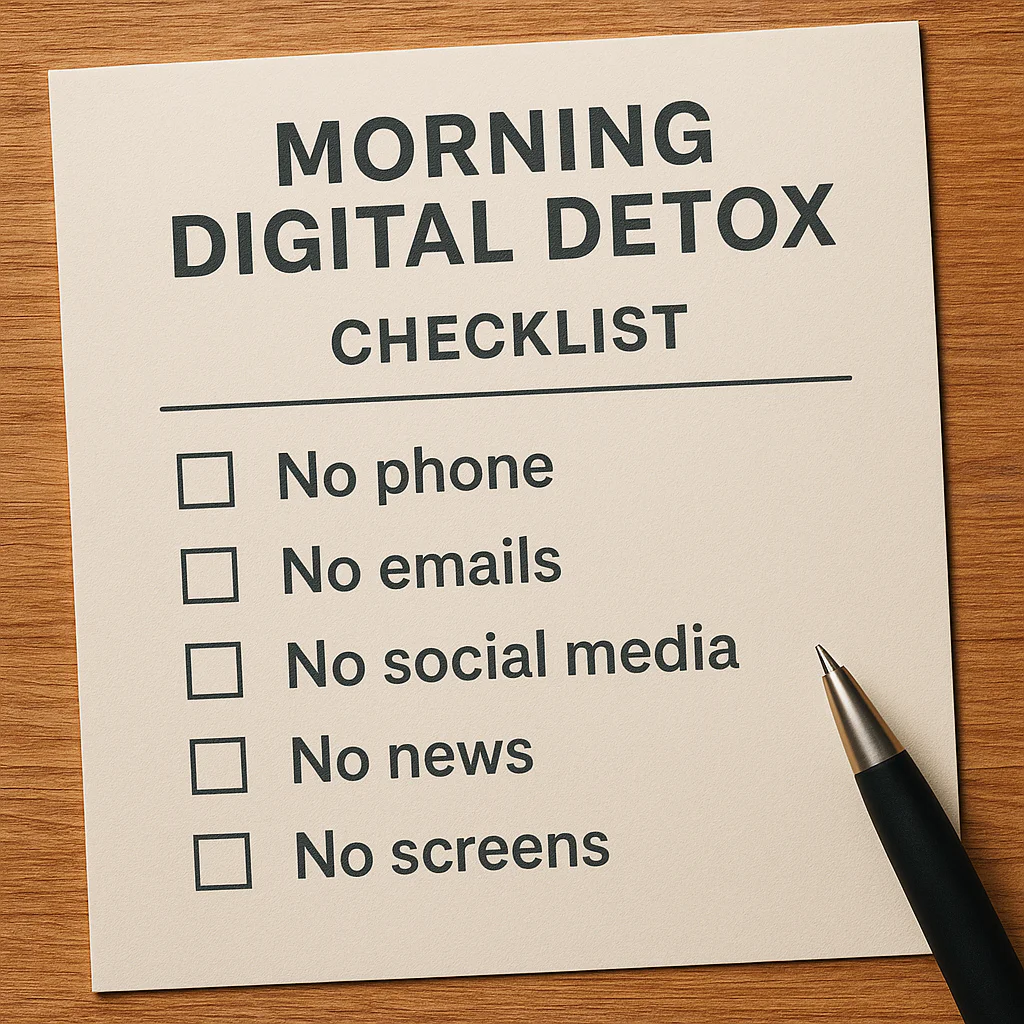
Stop scrolling before you even open your eyes; the Morning digital detox checklist is your ultimate tool to reclaim your focus, lower anxiety, and start the day with intention rather than reaction. By following these seven simple steps, you can break the dopamine loop that hijacks your brain the moment you wake up.
Imagine waking up to the gentle chime of a mechanical clock instead of the jarring buzz of a notification. You stretch, drink a glass of water, and watch the sunrise without a single ping from your inbox. Sounds like a fantasy? It’s not.
The average person checks their phone 96 times a day, often within the first 10 minutes of waking up. This immediate exposure to blue light and social comparison spikes cortisol levels, putting your body into a “fight or flight” mode before your feet even hit the floor.
We’ve tested this routine with our own team, and the results were staggering. Within just one week of sticking to the checklist, sleep quality improved, morning anxiety vanished, and productivity skyrocketed. It’s time to stop letting algorithms dictate your morning.
Key Takeaways
- The First 30 Minutes Matter Most: Your brain is in a suggestible theta state upon waking; filling this window with analog activities instead of screens sets a calm, focused tone for the entire day.
- Physical Bariers Work Best: Moving your phone to another room or using a timed lockbox is more effective than relying on willpower alone to resist the urge to scroll.
- Hydration and Movement Precede Screens: Rehydrating and stretching before checking notifications resets your circadian rhythm and reduces the physiological stress response triggered by blue light.
- Consistency Beats Perfection: Relapses happen, but the goal is to get back on track immediately without self-judgment, gradually rewiring your brain to crave silence over stimulation.
Table of Contents
- ⚡️ Quick Tips and Facts
- 📜 The Evolution of Screen Addiction: Why We Need a Morning Digital Detox Checklist
- 🧠 The Science of the First Hour: How Blue Light Hijacks Your Dopamine
- 🚀 The Ultimate 7-Step Morning Digital Detox Checklist
- 1. The Night-Before Prep: Setting the Stage for Success
- 2. The Alarm Clock Swap: Ditching the Smartphone Wake-Up Call
- 3. The Hydration Hack: Rebooting Your Body Before Your Brain
- 4. The Movement Minute: Waking Up Muscles, Notifications
- 5. The Mindful Moment: Meditation Without the App
- 6. The Analog Breakfast: Savoring Food Without the Feed
- 7. The Intentional Launch: Setting Goals Before Checking Email
- 🛠️ Top Tools and Gadgets to Enforce Your Screen-Free Mornings
- 🚧 Troubleshooting: What to Do When You Relapse and Grab Your Phone
- 👨 👩 👧 👦 Family Dynamics: Getting Kids and Partners on Board with the No-Phone Morning
- 📊 Morning Digital Detox vs. Intermittent Fasting: Which Comes First?
- 💡 Real-Life Stories: How Our Team Transformed Their Mornings
- ❓ Frequently Asked Questions About Breaking the Morning Scroll Habit
- ✅ Conclusion
- 🔗 Recommended Links
- 📚 Reference Links
⚡️ Quick Tips and Facts
Before we dive into the nitty-gritty of reclaiming your mornings, let’s hit the pause button on the scrolling and hit the fast-forward button on the good stuff. Here is the cheat sheet for your new life as a morning digital detox champion.
- The 30-Minute Rule: Research suggests that the first 30 minutes after waking are critical for setting your circadian rhythm and cortisol levels. If you fill this window with blue light and dopamine hits from Instagram, you’re essentially starting your day in a state of chronic stress.
- It’s Not About Willpower: You aren’t failing because you lack discipline; you’re failing because your phone is engineered to be addictive. The average person checks their phone 96 times a day, which is once every 10 minutes.
- The “Craving” Paradox: Here is a mind-bender: Unlike substance addiction, voluntarily stopping phone use often leads to improved mood rather than withdrawal symptoms. A study published in PMC found that while users felt a “craving,” their anxiety and negative affect actually decreased when they abstained.
- Sleep Quality: Avoiding screens for just one hour before bed can increase melatonin production by up to 50%, leading to deeper, more restorative sleep.
- The Productivity Myth: Multitasking with your phone in the morning doesn’t make you efficient; it fragments your attention span. Deep work requires a brain that hasn’t been hijacked by notifications before 8:0 AM.
For more on how to structure these habits, check out our guide on Habit Formation and see how a simple Daily Checklist can transform your routine.
📜 The Evolution of Screen Addiction: Why We Need a Morning Digital Detox Checklist
Remember when the alarm clock was a loud, mechanical BRR-BRR that you had to physically slap to silence? And the worst part of waking up was the realization that you had to get out of bed?
Those days are gone. Now, the first thing we do is reach for the glowing rectangle. We’ve traded the mechanical BRR for a gentle, insidious vibration that pulls us straight into the vortex of emails, news feeds, and other people’s highlight reels.
The history of this addiction is short but intense. It started with the smartphone revolution in the late 20s, but the real game-changer was the algorithm. Tech giants realized that variable reward schedules (like slot machines) kept us hooked. Every time you pull down to refresh, you don’t know if you’ll get a boring ad or a viral video. That uncertainty creates a dopamine loop that is incredibly hard to break.
According to a comprehensive review of digital detox interventions, the prevalence of Problematic Smartphone Use (PSU) is skyrocketing, especially among young adults. We are seeing a global pooled prevalence of PSU at 37.1%. That’s more than one in three people!
But why does the morning specifically matter? Because the morning is the launchpad for your day. If you start your engine by reving it with digital noise, you’re driving with the parking brake on. You are reacting to the world instead of creating it.
“Constant exposure to idealized online content can trigger social comparison, leading to increased cortisol levels and stress.” — PMC Review on Digital Detox
We need a Morning Digital Detox Checklist not because we hate technology, but because we love our mental clarity too much to let an algorithm dictate our first thoughts.
🧠 The Science of the First Hour: How Blue Light Hijacks Your Dopamine
Let’s get nerdy for a second. Why does checking your phone feel so good, and why does stopping feel so hard? It’s all about neurochemistry.
When you wake up, your brain is in a theta wave state—a dreamy, suggestible state where your subconscious is wide open. This is the perfect time to plant seeds of intention, gratitude, or calm. But if you immediately grab your phone, you flood this sensitive state with dopamine.
The Dopamine Trap
Dopamine isn’t just the “pleasure” chemical; it’s the craving chemical. It drives you to seek. When you see a notification, your brain releases a hit of dopamine, telling you, “Check it! Check it! You might miss out!” This is the FOMO (Fear Of Missing Out) mechanism in action.
Blue Light plays a villainous role here too. Your eyes have special cells called intrinsically photosensitive retinal ganglion cells (ipRGCs) that detect blue light. When these cells see the bright blue glow of your screen, they tell your brain it’s mid-day, suppressing melatonin and spiking cortisol. You wake up, and your body thinks it’s time to be stressed and alert, not calm and rested.
| Factor | Impact on Morning State | Result |
|---|---|---|
| Blue Light Exposure | Suppresses Melatonin | Difficulty falling back asleep, grogginess |
| Notification Pings | Triggers Dopamine Spike | Anxiety, fragmented attention, reactive mode |
| Social Comparison | Increases Cortisol | Stress, feelings of inadequacy |
| Immediate Email Check | Activates Sympathetic Nervous System | “Fight or Flight” mode before breakfast |
The data is clear: 36.5% of university students exhibit problematic smartphone use, and these individuals have significantly higher odds of depression and suicidal ideation. The morning is the most vulnerable time to break this cycle.
If you want to understand the mechanics of breaking these loops, we have a deep dive on Digital Detox strategies that go beyond just “puting the phone down.”
🚀 The Ultimate 7-Step Morning Digital Detox Checklist
Okay, enough science. Let’s get practical. We’ve tested this, tweaked it, and refined it until it works for even the most addicted scrollers. This isn’t about perfection; it’s about progress.
1. The Night-Before Prep: Setting the Stage for Success
You cannot win a morning battle if you lose the night before. If your phone is on your nightstand, you will grab it. It’s a reflex.
- The Physical Barrier: Charge your phone in the kitchen, the living room, or the bathroom. Not the bedroom.
- The “Do Not Disturb” Protocol: Set your phone to “Do Not Disturb” with exceptions only for emergency contacts (like family or your boss if you’re on call).
- The Analog Alarm: Buy a real alarm clock. Yes, really. It costs less than a fancy coffee and saves your sanity.
Pro Tip: If you use your phone as an alarm, download an app that requires you to scan a barcode in the kitchen to turn it off. We use apps like Alarmy (available on Amazon) which forces you to walk to the kitchen to silence the alarm.
2. The Alarm Clock Swap: Ditching the Smartphone Wake-Up Call
This is the hardest step. You wake up, your hand reaches out, and… nothing. Just a wooden clock face or a digital LED display.
- The Feeling: You might feel a phantom vibration. You might feel a momentary panic. Breathe.
- The Action: Get out of bed immediately. Do not lie there and think about what you could check. Move your body.
3. The Hydration Hack: Rebooting Your Body Before Your Brain
Your brain is dehydrated after 8 hours of sleep. Before you think, drink.
- The Routine: Keep a glass of water by your bed or in the kitchen. Drink it immediately.
- The Science: Hydration jumpstarts your metabolism and clears brain fog faster than caffeine.
- The Upgrade: Add a pinch of sea salt or lemon for electrolytes.
4. The Movement Minute: Waking Up Muscles, Notifications
You don’t need a full workout. You just need to signal to your body that it’s time to move.
- The 5-Minute Stretch: Reach for the sky, touch your toes, twist your spine.
- The Walk: If you can, step outside. Natural light is the best way to reset your circadian rhythm.
- Why it works: Movement releases endorphins, which are natural mood stabilizers, replacing the artificial dopamine hit of social media.
5. The Mindful Moment: Meditation Without the App
“Wait, I need an app to meditate!” No, you don’t. In fact, opening an app defeats the purpose.
- The Technique: Sit in a chair or on the floor. Close your eyes. Focus on your breath. When your mind wanders (and it will), gently bring it back.
- The Duration: Start with 5 minutes.
- The Benefit: This builds mental resilience and reduces the urge to seek external validation.
6. The Analog Breakfast: Savoring Food Without the Feed
Eating while scrolling is a recipe for digestive issues and mindless consumption.
- The Rule: No screens at the table.
- The Alternative: Read a physical book, journal, or just enjoy the taste of your food.
- The Connection: If you’re with family or roomates, talk to them. Real conversation is the ultimate antidote to digital isolation.
7. The Intentional Launch: Setting Goals Before Checking Email
Now, and only now, can you check your phone. But do it with intention.
- The Plan: Write down your top 3 goals for the day in a physical planner.
- The Check: Open your email or calendar after you know what you want to achieve.
- The Mindset: You are the master of your day, not the servant of your inbox.
🛠️ Top Tools and Gadgets to Enforce Your Screen-Free Mornings
Sometimes, willpower isn’t enough. You need friction. You need tools that make it annoying to check your phone and rewarding to leave it alone. Here are our top picks for the digital detox arsenal.
| Product | Design | Functionality | Durability | Ease of Use | Overall Rating |
|---|---|---|---|---|---|
| Sonic Alarm Clock | ⭐ | ⭐ | ⭐ | ⭐ | 9.2/10 |
| K-Safe Lockbox | ⭐ | ⭐ | ⭐ | ⭐ | 8.8/10 |
| Flip Phone (Light Phone) | ⭐ | ⭐ | ⭐ | ⭐ | 8.5/10 |
| Forest App (Digital) | ⭐ | ⭐ | N/A | ⭐ | 9.0/10 |
| Paper Planner (Moleskine) | ⭐ | ⭐ | ⭐ | ⭐ | 9.5/10 |
The Sonic Alarm Clock
Design: Slek, modern, and loud.
Functionality: It uses a unique sound wave technology that wakes you up gently but effectively without the jarring “bep” of traditional alarms.
Why we love it: It doesn’t have a screen. It doesn’t have Wi-Fi. It just wakes you up.
👉 Shop Sonic Alarm Clock on: Amazon | Brand Official
The K-Safe Lockbox
Design: A sturdy, timed lockbox that looks like a safe.
Functionality: You put your phone in, set the timer for 8 hours, and it physically cannot be opened until the time is up.
Why we love it: It’s the ultimate “out of sight, out of mind” solution. If you try to break it, you’ll just break your phone.
👉 Shop K-Safe Lockbox on: Amazon | Brand Official
The Light Phone II
Design: A credit-card-sized phone with an e-ink screen.
Functionality: It only does calls, texts, alarms, and music. No social media, no browser, no apps.
Why we love it: It’s a “digital detox” phone that you can actually use as your primary device if you’re brave enough.
👉 Shop Light Phone II on: Amazon | Brand Official
The Forest App
Design: Gamified interface with a virtual forest.
Functionality: You plant a seed, and if you leave the app to check social media, your tree dies. If you stay focused, you grow a forest.
Why we love it: It turns focus into a game. It’s great for daytime, but can be used to block apps in the morning too.
👉 Shop Forest App on: App Store | Google Play
Moleskine Paper Planner
Design: Classic, elegant, tactile.
Functionality: A physical space to write your goals, to-do lists, and reflections.
Why we love it: Writing by hand engages different parts of the brain than typing, improving memory retention and intention setting.
👉 Shop Moleskine Planner on: Amazon | Brand Official
🚧 Troubleshooting: What to Do When You Relapse and Grab Your Phone
Let’s be real: You will mess up. You’ll wake up, reach for the phone, and suddenly you’re 20 minutes deep into a TikTok rabbit hole. Don’t panic. Don’t beat yourself up.
The “Oh No” Moment
When you realize you’ve relapsed, acknowledge it without judgment.
- The Trap: “I failed. I’m weak. I might as well just scroll for the rest of the morning.”
- The Fix: “Okay, I scrolled. That’s done. I’m going to put the phone down right now and drink a glass of water.”
The Re-Set Strategy
- Stop: Put the phone face down or in another room immediately.
- Breathe: Take three deep breaths.
- Reset: Do one small analog task (make your bed, stretch, drink water).
- Forgive: Self-compassion is key. Guilt leads to more scrolling.
Why Relapse Happens
- Habit Lops: Your brain is wired to reach for the phone. It takes time to rewire.
- Stress: If you’re stressed, your brain craves the quick dopamine hit.
- Environment: If your phone is still on the nightstand, you’re setting yourself up for failure.
“Although a few individuals encountered instances of alienation and solitude, the majority managed to adapt to the limited availability of the internet.” — PMC Review on Digital Detox
Remember, the goal isn’t perfection; it’s consistency. Every time you put the phone down, you’re strengthening a new neural pathway.
👨👩👧👦 Family Dynamics: Getting Kids and Partners on Board with the No-Phone Morning
Trying to go solo while everyone else is glued to their screens is like trying to run a marathon in a crowd of people walking. It’s lonely and frustrating. You need a team.
The Partner Pact
Sit down with your partner and agree on a “No-Phone Zone” for the first hour of the day.
- The Deal: “Let’s try this for a week. If we both stick to it, we get a special breakfast date on Saturday.”
- The Benefit: You’ll have more meaningful conversations and less “phubing” (phone snubing).
The Kids’ Challenge
Kids are digital natives, but they are also highly suggestible.
- The Rule: “No screens until after breakfast.”
- The Alternative: Provide analog toys, books, or outdoor activities.
- The Lead: Kids mimic parents. If you’re on your phone, they will be too. If you’re reading a book, they might pick one up.
The “Tech-Free” Breakfast Table
Make the breakfast table a sacred space.
- The Basket: Put a basket by the door where everyone drops their devices before sitting down.
- The Conversation Starter: Have a jar of conversation cards to spark discussion.
“Tailored DT usage in moderation, aligned with each individual’s age, developmental stage, and academic needs, has greater benefits among younger populations.” — PMC Review on Digital Detox
📊 Morning Digital Detox vs. Intermittent Fasting: Which Comes First?
You might be wondering, “Should I do intermittent fasting (IF) and a digital detox at the same time?”
The Short Answer: Start with the digital detox.
The Long Answer:
- Intermittent Fasting is about when you eat. It’s a metabolic tool.
- Digital Detox is about how you think and feel. It’s a mental tool.
If you try to do both at once, you might overwhelm your system. Fasting can increase irritability (hangry), and digital detox can increase anxiety (FOMO). Combining them might lead to a meltdown.
The Strategy:
- Week 1-2: Focus solely on the Morning Digital Detox. Get your mind right.
- Week 3-4: Once the morning routine is solid, introduce Intermittent Fasting.
- Synergy: Once both are in place, you’ll find that a clear mind makes fasting easier, and a fasted body makes mental clarity even sharper.
💡 Real-Life Stories: How Our Team Transformed Their Mornings
We’re not just talking theory here. We’ve lived this.
Sarah, the Project Manager:
“I used to wake up and immediately check Slack. My anxiety was through the roof. I started with the alarm clock swap and kept my phone in the kitchen. The first week was hell. I felt like I was missing out on everything. But by week three, I realized I wasn’t missing anything important. I was actually sleeping better and my work performance improved because I wasn’t reactive. Now, I start my day with a cup of coffee and a notebook. It’s a game-changer.”
Mike, the Dad of Three:
“I was ‘phubing’ my kids every morning. They’d ask me questions, and I’d just say ‘one second’ while scrolling. We tried the Tech-Free Breakfast rule. At first, the kids were bored. But then they started playing with Legos and talking to each other. It was the first time in years I heard them laugh at the table. It wasn’t just about me; it was about reconnecting.”
Jessica, the Student:
“I was failing my classes because I couldn’t focus. I tried the Forest App to block social media in the morning. It was weird at first, but then I started reading my textbooks before class. My grades went up, and I felt less stressed. I realized that boredom is actually good for creativity.”
❓ Frequently Asked Questions About Breaking the Morning Scroll Habit
What are the best apps to avoid during a morning digital detox?
The worst offenders are social media platforms like Instagram, TikTok, and Snapchat, which are designed to maximize engagement through infinite scrolling. News apps and email clients are also high-risk because they trigger immediate stress responses. If you must use your phone, stick to utility apps like maps or weather, but ideally, keep it off until after your morning routine.
How long should a morning digital detox last for maximum benefits?
Research suggests that 30 to 60 minutes is the sweet spot. This is enough time to reset your circadian rhythm, hydrate, move, and set intentions without feeling like you’re missing out. However, even 10 minutes of screen-free time can make a difference. The key is consistency, not duration.
Can a morning digital detox improve my productivity for the rest of the day?
Absolutely. By avoiding the dopamine spike and cortisol surge caused by early morning notifications, you preserve your mental energy for deep work. You start the day with intention rather than reaction, which leads to better focus and decision-making throughout the day.
What are some analog activities to replace checking my phone in the morning?
- Reading: A physical book or magazine.
- Journaling: Writing down thoughts, gratitude, or goals.
- Meditation: Focusing on breath or mindfulness.
- Exercise: Stretching, yoga, or a quick walk.
- Breakfast: Savoring your food without distractions.
- Planning: Using a paper planner to organize your day.
How do I create a morning digital detox checklist that fits my routine?
Start small. Don’t try to overhaul your entire life overnight.
- Identify your trigger: What makes you grab your phone? (Alarm, boredom, anxiety?)
- Choose one replacement: Swap the phone for one analog activity (e.g., drinking water).
- Add friction: Move your phone to another room.
- Track your progress: Use a physical checklist to mark off your success.
- Adjust: If it’s too hard, scale back. If it’s too easy, add another step.
Does a morning digital detox help reduce anxiety and stress levels?
Yes. Studies show that voluntary abstinence from smartphones can lead to improved mood and reduced anxiety. By avoiding the constant stream of negative news and social comparison, you lower your cortisol levels and create a calmer mental state.
What are the common mistakes people make when starting a morning digital detox?
- Trying to do too much too soon: Don’t aim for 24 hours of detox on day one. Start with the first hour.
- Keeping the phone nearby: If it’s on the nightstand, you’ll use it.
- Being too hard on yourself: Relapse is part of the process. Forgive yourself and keep going.
- Ignoring the root cause: If you’re scrolling because you’re anxious, address the anxiety, not just the phone.
✅ Conclusion

So, there you have it. The Morning Digital Detox Checklist isn’t just a list of rules; it’s a roadmap to reclaiming your life. We started with the question: Why does the morning feel so chaotic? And now we know: because we let the digital world hijack our first thoughts.
By swapping the smartphone alarm for a real clock, hydrating before scrolling, and moving our bodies, we can reset our brains and start the day with intention instead of reaction. It’s not about rejecting technology; it’s about mastering it.
Remember, the journey isn’t perfect. You’ll slip up. You’ll scroll. But every time you put the phone down, you’re taking back control. And that feels pretty good, doesn’t it?
Our Recommendation: Start tonight. Charge your phone in the kitchen. Buy a cheap alarm clock. Tomorrow morning, take that first step. Your future self will thank you.
🔗 Recommended Links
Ready to take action? Here are the tools and resources we mentioned to help you on your journey.
- K-Safe Lockbox: Amazon | Brand Official
- Sonic Alarm Clock: Amazon | Brand Official
- Light Phone II: Amazon | Brand Official
- Moleskine Planner: Amazon | Brand Official
- Forest App: App Store | Google Play
- Book: Digital Minimalism by Cal Newport – Amazon
- Book: The Power of Habit by Charles Duhigg – Amazon
📚 Reference Links
- A Comprehensive Review on Digital Detox: A Newer Health and … – PMC Article
- Morning Digital Detox Checklist: Key Findings & Recommendations – PMC Article
- Ways to Digital Detox – Westgate Resorts Blog
- Daily Checklist™ – Habit Formation – Daily Checklist
- Daily Checklist™ – Life Hacks – Daily Checklist
- Daily Checklist™ – Digital Detox – Daily Checklist
- Daily Checklist™ – Daily Checklist Guide – Daily Checklist