Support our educational content for free when you purchase through links on our site. Learn more

Low-Stimulation Morning Routine: 12 Steps to Start Calmly 🌅
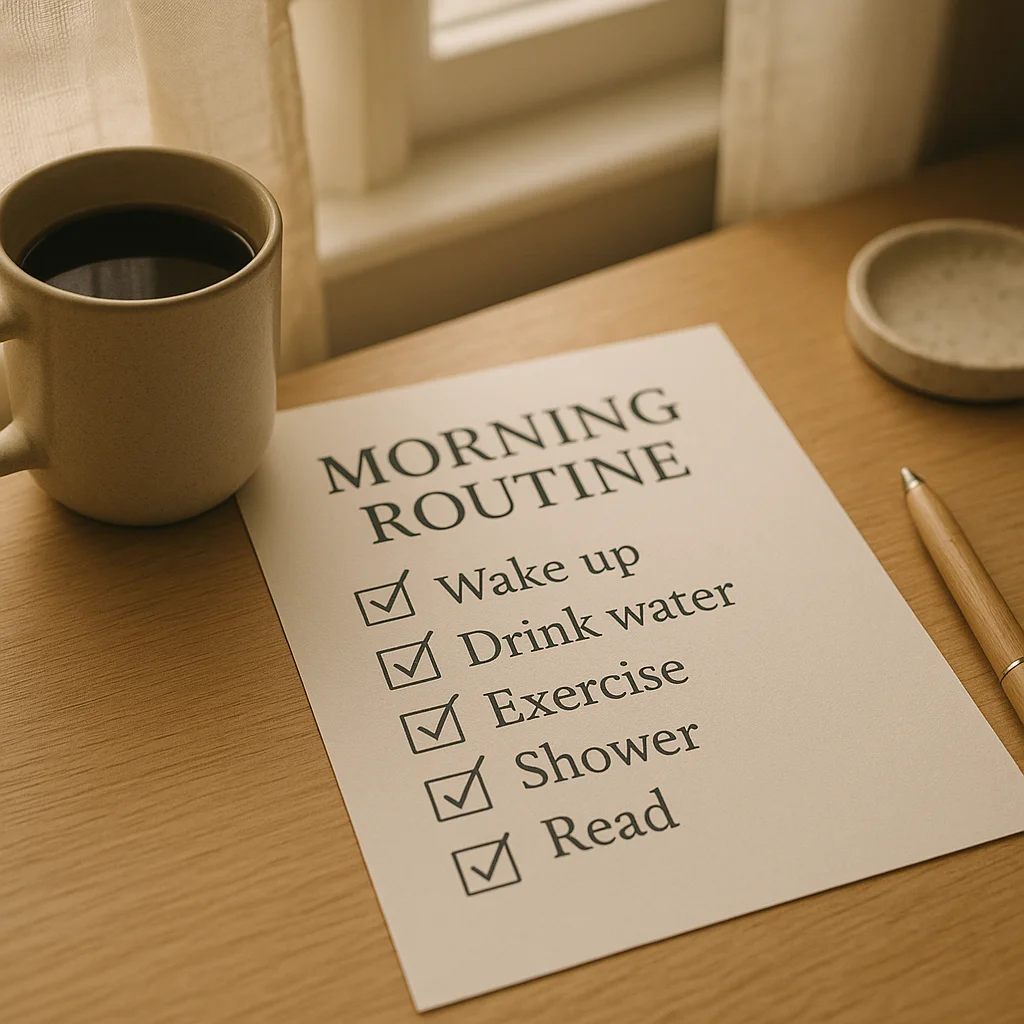

A low-stimulation morning routine reduces unnecessary noise, notifications, and decisions while keeping the cues that help you feel awake and ready. Start with two or three small changes—like setting out clothes, delaying nonessential alerts, or choosing a simple breakfast—and adjust based on how you actually feel.
The goal isn’t a perfectly silent, candlelit morning. One of us once tried removing every “distraction,” only to discover that a familiar playlist was the thing that helped get dressed on time. Low stimulation should mean less overwhelm, not less of whatever helps you function.
Key Takeaways
- Make the routine personal: Quiet works for some; music, movement, or other gentle stimulation works better for others.
- Start small: Choose two or three steps you can repeat, then build only if they help.
- Prepare to reduce morning decisions: Set out essentials or use a short, visible checklist.
- Treat “low dopamine morning” claims cautiously: A low-stimulation routine is a practical environmental choice, not a proven way to control dopamine.
- Keep flexibility: Create a short fallback routine for rushed or low-energy mornings, and seek professional advice for persistent sleep or health concerns.
Table of Contents
- ⚡️ Quick Tips and Facts
- 🌅 What Is a Low-Stimulation Morning Routine?
- Low stimulation doesn’t mean zero stimulation
- Low stimulation vs. a “low dopamine morning”
- 🧠 Why Mornings Can Feel Overwhelming
- Sensory overload, decision fatigue, and the morning rush
- What sleep, stress, and screen time have to do with it
- 📚 The Background: Sensory-Friendly Routines and ADHD
- Do ADHD brains need stimulation and dopamine?
- Why a slower start can help some people—and not others
- ✅ 12 Steps to Build a Calmer Morning Routine
- 1. Prepare a few things the night before
- 2. Wake up with a gentle alarm
- 3. Get natural light at your own pace
- 4. Keep your phone quiet and out of reach
- 5. Drink water and take prescribed medication as directed
- 6. Choose comfortable, low-sensory clothes
- 7. Make breakfast simple and satisfying
- 8. Use calming movement or gentle stretching
- 9. Reduce noise, clutter, and bright lights
- 10. Pick your top priority for the day
- 11. Add one enjoyable, grounding activity
- 12. Leave a realistic buffer before you go
- 🪴 Low-Stimulation Morning Routine Examples
- A 5-minute reset for rushed mornings
- A 15-minute routine for a gentler start
- A 30-minute routine with room to breathe
- A routine for workdays, school days, and weekends
- 🎧 Sensory-Friendly Swaps for ADHD and Sensory Sensitivity
- When silence feels uncomfortable
- When you need more movement or stimulation
- When light, sound, food, or clothing feels like too much
- 📵 Screens, Caffeine, Breakfast, and Morning Habits
- Should you check your phone first thing?
- Caffeine timing and a calmer start
- Do you need to eat breakfast?
- 🛠️ How to Make a Morning Routine Stick
- Start small and build around existing habits
- Use visual cues, checklists, and prepared choices
- Create a low-energy version for difficult mornings
- Adjust your routine instead of aiming for perfection
- ⚠️ When a Low-Stimulation Routine Backfires
- Signs your routine is too quiet, strict, or time-consuming
- When persistent morning fatigue needs professional support
- ❓ Low-Stimulation Morning Routine Questions, Answered
- Is a low-stimulation morning routine good for ADHD?
- Can a calm morning improve focus and mood?
- What if I hate waking up early?
- How long should a morning routine take?
- What if my household is noisy or busy?
- ✨ Conclusion
- 🔗 Recommended Links
- 📖 Reference Links
⚡️ Quick Tips and Facts
A low-stimulation morning isn’t a contest to see who can sit in silence longest. It’s a personalized way to reduce unnecessary sensory and decision-making demands so you can start the day with more steadiness—and still get moving.
At Daily Checklist™, we’ve found that the most useful routine is less “perfect morning makeover” and more a short sequence you can repeat when you’re sleepy. If you’re building a practical daily system, our guide to a daily checklist can help you keep the steps visible without turning your morning into a project.
| Quick fact | What it means for your morning |
|---|---|
| Low stimulation is personal | Quiet helps some people; gentle music, movement, or conversation helps others. |
| You don’t need a long routine | A repeatable five-minute sequence can be more useful than an ambitious hour-long plan. |
| Preparation reduces choices | Setting out clothes, breakfast items, or a bag the night before can lighten the morning load. |
| Screens are optional, not automatically harmful | If scrolling makes you feel rushed or scattered, delay it; if a device supports an essential task, use it intentionally. |
| A routine is a tool, not a rule | Change or skip steps when your needs, health, or schedule change. |
Try this three-step starter:
- Choose one thing to prepare tonight.
- Pick one gentle first activity—such as opening the curtains, drinking water, or washing your face.
- Decide on your minimum viable morning: the smallest set of steps that helps you feel ready.
For habit ideas you can adapt rather than copy wholesale, see our habit formation resources. And one question to keep in mind as you read: Does “low stimulation” mean doing less—or choosing stimulation more deliberately? We’ll unpack that distinction shortly.
🌅 What Is a Low-Stimulation Morning Routine?
A low-stimulation morning routine is a flexible sequence that limits avoidable noise, sensory input, interruptions, and rapid-fire decisions as you wake up. The goal isn’t to suppress all activity. It’s to make the first part of the day feel more manageable.
Your version might include dimer lighting, a quiet breakfast, and a few minutes away from notifications. Someone else might feel calmer with a familiar playlist and a brisk walk. Both can count. The useful question is not “Is this quiet enough?” but “Does this help me start in a way I can sustain?”
The Centers for Disease Control and Prevention (CDC) describes sleep as important for health and well-being, while the National Institute of Mental Health (NIMH) recommends regular routines as one part of self-care. Neither source prescribes one ideal morning routine—because your schedule, needs, and circumstances matter. See the CDC’s sleep guidance and NIMH’s self-care tips.
Low stimulation doesn’t mean zero stimulation
A room with no light, sound, or movement can feel restful to one person and uncomfortable to another. Low stimulation means reducing what feels distracting or overwhelming—not removing everything that gives you energy or comfort.
| If this feels like too much… | Consider trying… | But keep what genuinely helps |
|---|---|---|
| A loud alarm | A gentler alarm or gradual-volume setting | A reliable alarm you can hear |
| Bright overhead lights | A bedside lamp or natural daylight | Enough light to dress and move safely |
| Morning news or social feeds | A screen-free first few minutes | A needed calendar, transit, or weather check |
| Multiple breakfast decisions | A familiar breakfast option | Food that suits your appetite and health needs |
| Silence that makes you restless | Soft music, an audiobook, or steady background sound | Comfortable, purposeful stimulation |
The best test is your own response over time. If a “calming” choice leaves you groggy, frustrated, or behind schedule, it may not be calming for you.
Low stimulation vs. a “low dopamine morning”
These phrases are often mixed together online, but they don’t mean the same thing. Low stimulation describes the environment and pace you choose. Dopamine is a neurotransmitter involved in several brain functions; it isn’t a simple morning fuel tank that you can empty or reset with a routine.
The article linked as “What Low Dopamine in the Morning Really Does” raises the popular “low dopamine morning” framing. We can’t verify its detailed claims from the supplied page content, so we won’t treat that label as established medical guidance. For a more dependable overview of dopamine’s role, see the National Institute of Neurological Disorders and Stroke and consult a qualified clinician about concerns involving mood, attention, or medication.
Practical takeaway: You can create a lower-stimulation morning without trying to manipulate dopamine. Focus on observable needs—less noise, fewer choices, steadier pacing, or more movement.
🧠 Why Mornings Can Feel Overwhelming
Waking up can mean moving from sleep into light, sound, decisions, messages, deadlines, and other people’s needs in a remarkably short stretch of time. If that transition feels rough, it doesn’t automatically mean you’re doing mornings “wrong.”
The CDC notes that insufficient or poor-quality sleep can affect how people feel and function during the day. A packed schedule, stress, caregiving, pain, medication effects, or an irregular sleep pattern can all shape how a morning feels. A routine may help organize the transition, but it cannot solve every cause of fatigue or distress.
Sensory overload, decision fatigue, and the morning rush
You might be choosing clothes while the kettle boils, a child asks a question, and your phone reports that three emails need attention. None of those inputs is necessarily a problem by itself. Together, they can make the first hour feel like a pinball machine.
A few choices can be simplified ahead of time:
- Put tomorrow’s clothes in one place.
- Choose a default breakfast for busy days.
- Keep everyday essentials in a consistent spot.
- Use one short checklist instead of several competing reminders.
- Decide which messages can wait until after you’re dressed or fed.
We’ve seen checklists work best when they remove memory work without adding bureaucracy. If the list needs its own list, it’s probably too ambitious.
What sleep, stress, and screen time have to do with it
A morning routine starts before the alarm: sleep duration, sleep quality, work demands, and household rhythms all influence what feels possible. The CDC’s guidance on sleep offers general recommendations and encourages people to discuss persistent sleep difficulties with a healthcare professional.
Screens are another variable, not a universal villain. A quick weather check might be useful; opening a social feed can expose you to a stream of content before you’ve had a chance to orient yourself. For practical ways to make phone use more intentional, visit our digital detox collection.
Try a small experiment for a week: notice what you do first, how you feel afterward, and whether that first activity helps or hinders your next step. No moral judgment required. Your phone is a tool; it just doesn’t have to be your morning manager.
📚 The Background: Sensory-Friendly Routines and ADHD

Predictable sequences can make repeated tasks easier to remember, especially when you’re tired or managing a busy household. That doesn’t mean everyone needs the same routine—or that a particular morning format treats ADHD, anxiety, or sensory sensitivity.
The CDC’s ADHD information describes ADHD as a neurodevelopmental disorder and outlines the importance of professional assessment and care. Strategies such as visual reminders and simplified steps may be useful in daily life, but they are practical supports, not a diagnosis or substitute for treatment.
A useful way to think about a routine is as a path with clear landmarks. You don’t need to make the path silent. You need to make the next step easier to see.
Do ADHD brains need stimulation and dopamine?
People with ADHD vary. Some may find background sound or movement helps them focus; others may want fewer competing inputs, especially soon after waking. A recommendation to remove all stimulation would miss that diversity.
The National Institute of Mental Health’s ADHD overview explains ADHD symptoms, diagnosis, and treatment. It does not endorse a single “dopamine morning” formula. If you take ADHD medication, follow your prescriber’s instructions; don’t change medication timing or dosage to fit a routine trend.
Try asking yourself:
- Do I feel under-aroused, overstimulated, or simply tired?
- Does quiet help me begin—or make it harder to start?
- Would one predictable sensory cue, like a familiar playlist, make the next task easier?
- Is the routine compatible with my medication and care plan?
There’s a difference between chosing a helpful cue and chasing a theory about your brain chemistry.
Why a slower start can help some people—and not others
A slower start may offer a little space between waking and demands. It can be especially helpful when your usual morning begins with repeated alerts, hurried decisions, or a rush out the door.
But “slow down” can backfire if it means delaying essential tasks, removing a sound or movement cue you rely on, or creating a routine that doesn’t fit your work or caregiving schedule. One child-care educator’s routine may not be right for a shift worker. One person’s calm bedroom may be another person’s sensory dead end.
The first video referenced in this article presents a child-focused perspective: predictable steps such as washing, dressing, eating, and packing can support independence, while stretching or “bely breaths” may help some children prepare for the day. See it at #featured-video. That’s a useful example, not proof that every child or adult needs the same sequence.
Use the principle—clear, predictable steps—without assuming the exact routine must fit everyone.
✅ 12 Steps to Build a Calmer Morning Routine
You don’t need to adopt all 12 steps. Pick the ones that solve your actual morning friction. We recommend starting with two or three, then adjusting after a few days.
1. Prepare a few things the night before
Choose one or two decisions to move out of the morning:
- Set out clothes and any essentials you need.
- Put keys, glasses, wallet, or work badge in a designated spot.
- Prepare a breakfast item, lunch, or water bottle if that helps.
- Write down the first task you need to remember tomorrow.
The aim is not to build a midnight productivity ritual. Give yourself a brief landing strip, then stop. For simple preparation ideas, browse our life hacks and habit formation tips.
2. Wake up with a gentle alarm
If a sudden, loud alarm leaves you tense, try adjusting its volume, tone, or placement. Keep it reliable enough to wake you, and avoid relying on a setup you might sleep through.
- Choose a sound that is audible but not startling, if possible.
- Keep a backup alarm for high-stakes mornings.
- Avoid placing the phone where you’ll immediately start scrolling.
A gentle alarm is a preference, not a medical sleep intervention. If waking is consistently difficult despite adequate time in bed, consider discussing sleep concerns with a healthcare professional.
3. Get natural light at your own pace
Open the curtains or step near a window if comfortable. Daylight can provide a clear cue that the day has begun, but you don’t have to force yourself outdoors in unpleasant weather or unsafe conditions.
The National Institute for Occupational Safety and Health discusses light as an important factor in circadian rhythms in its work and sleep information. If you have a health condition affected by light or are considering a light therapy device, ask a clinician whether it’s appropriate for you.
4. Keep your phone quiet and out of reach
Try switching off nonessential notifications or using Focus/Do Not Disturb until you’re ready to check messages. Keep access to important calls, medical alerts, or caregiving notifications as needed.
A useful compromise: decide in advance what the phone is for—alarm, calendar, transit, or music—and open only that tool. If your phone routinely pulls you into a scroll before you’re ready, our digital detox strategies offer more ways to set boundaries.
5. Drink water and take prescribed medication as directed
A glass of water can be a simple cue to begin the day. Medication is different: follow the label and your prescriber’s directions, including any food or timing instructions.
Don’t change, delay, or skip medication based on social-media advice about dopamine or morning routines. Ask your pharmacist or clinician if you’re unsure how a medication fits with breakfast, caffeine, or other daily habits.
6. Choose comfortable, low-sensory clothes
If tags, seams, or fabric texture distract you, prepare clothes that feel comfortable and suit the day’s requirements. Keep a small set of reliable options together rather than re-evaluating your entire wardrobe at 7 a.m.
This isn’t about buying a special “sensory wardrobe.” Use what you already own and notice what reduces friction. Comfort, temperature, dress codes, mobility needs, and personal preference all matter.
7. Make breakfast simple and satisfying
Breakfast needs vary. Some people are hungry soon after waking; others aren’t. Choose an option that fits your appetite, schedule, culture, access to food, and health needs.
Simple combinations might include yogurt and fruit, oatmeal, toast with a protein source, or leftovers. The first video’s child-focused routine suggests familiar foods such as oatmeal with banana or yogurt and fruit; that can be a practical example, not a universal nutrition prescription. For individualized dietary advice, consult a registered dietitian or clinician.
8. Use calming movement or gentle stretching
A brief stretch, walk around the room, or a few shoulder rolls can help you transition into movement. Keep it comfortable and appropriate for your body.
- Try one or two gentle stretches.
- Pause if movement causes pain, dizziness, or unusual symptoms.
- Choose a short walk, music, or another form of movement if stillness feels uncomfortable.
You don’t need an elaborate workout. The best activity is one you can do safely and without turning “calm” into another performance target.
9. Reduce noise, clutter, and bright lights
Adjust the environment where you can:
- Use a lamp instead of overhead lighting if that feels better.
- Put frequently used items where you can find them.
- Reduce background audio that competes with conversation.
- Keep a clear spot for bags, keys, or breakfast items.
For shared households, use small, realistic changes rather than expecting everyone else to become silent. A designated corner, a predictable order, or one agreed-upon quiet window may be easier to maintain.
10. Pick your top priority for the day
Write down one important task or the first action you need to take. A short prompt—“What needs to happen first?”—can be more useful than a full day’s plan before you’ve had breakfast.
If choosing one task feels hard, list the essentials and circle the one with the clearest deadline. Keep the list visible, then move on. A morning checklist should support your attention, not demand constant attention.
11. Add one enjoyable, grounding activity
A calmer routine doesn’t have to be joyless. Try a favorite mug, a few minutes with a pet, a familiar song, or a short reading break. If breathing exercises feel comfortable, take a few slow breaths and notice how your body feels.
The child-focused video’s “Monster Meditation” uses attention to belly movement as a simple breathing cue. Some people may find that grounding; others dislike focusing on their breath. Choose a grounding activity that feels safe and comfortable, and skip it if it increases distress.
12. Leave a realistic buffer before you go
Build in a small margin for the predictable surprises: a missing shoe, a delayed bus, or a breakfast spill that apparently required a full committee meeting.
If adding a buffer means waking much earlier and sacrificing sleep, reconsider the plan. The goal is a more manageable transition—not an earlier alarm at any cost. Adjust the routine around your actual schedule and responsibilities.
🪴 Low-Stimulation Morning Routine Examples
These sample routines are starting points, not scorecards. The right length depends on your schedule, energy, access to food, care responsibilities, and personal preferences.
| Routine | Possible steps | Best for |
|---|---|---|
| 5 minutes | Open curtains, drink water, check the essentials list | Busy or low-energy mornings |
| 15 minutes | Wash up, dress, eat or pack a snack, review one priority | A steadier work or school morning |
| 30 minutes | Add breakfast, gentle movement, and a quiet transition | People with more time who enjoy a slower pace |
A 5-minute reset for rushed mornings
- Minute 1: Sit up, open the curtains or switch on a comfortable light.
- Minute 2: Drink water or take another small first step that suits you.
- Minute 3: Get dressed using clothes prepared earlier.
- Minute 4: Check only essential items: keys, bag, medication as prescribed.
- Minute 5: Look at your first commitment and head toward it.
This is a reset, not an idealized morning. If eating, washing, medication, or caring for someone requires more time, plan for that reality rather than forcing it into five minutes.
A 15-minute routine for a gentler start
- 0–3 minutes: Wake, orient yourself, and choose light or sound that feels comfortable.
- 3–7 minutes: Wash up, brush your teeth, and get dressed.
- 7–11 minutes: Eat a prepared breakfast or pack something to eat later if that suits your needs.
- 11–13 minutes: Review your top priority and essential items.
- 13–15 minutes: Leave a small buffer, stretch, or take a few comfortable breaths.
Swap the order if another sequence works better. For a child, the video’s sequence—bathroom, handwashing, teeth, breakfast, dressing, hair, and packing—shows how a clear visual order can make recurring tasks easier to follow. Use a child’s own needs and developmental stage to set the steps, and check with caregivers or clinicians when appropriate.
A 30-minute routine with room to breathe
A longer routine can create space, but only if it doesn’t steal sleep or become burdensome.
- Wake with a reliable alarm and use comfortable lighting.
- Wash up and get dressed.
- Eat breakfast if you’re hungry and have time.
- Add gentle stretching, a short walk, or a quiet hobby.
- Check your calendar and choose one priority.
- Pack essentials and leave a realistic buffer.
Keep two versions: your regular routine and a short fallback version. That way, a late night or unexpected morning doesn’t turn the whole plan into a failure.
A routine for workdays, school days, and weekends
Workdays: Put clothes and essentials in one place, keep notifications quiet until you’re ready, and identify the first work task before opening your inbox.
School days: Use a simple visual sequence for repeated tasks. If children are involved, offer choices where possible—such as choosing between two outfits—while keeping essential steps predictable.
Weekends: Let the routine loosen. Keep any steps that support comfort or health, but don’t force a workday schedule onto a day that doesn’t require it. Consistency can mean preserving a few helpful anchors, not copying every weekday minute.
🎧 Sensory-Friendly Swaps for ADHD and Sensory Sensitivity
A low-stimulation routine should fit your sensory preferences. Use this as a menu, not a prescription.
| Sensory challenge | Possible swap | Perspective to keep in mind |
|---|---|---|
| Suden noise | Adjust alarm tone or volume | The alarm still needs to wake you reliably |
| Bright overhead lighting | Try a lamp or natural light | Enough visibility matters for safety |
| Too many decisions | Use prepared defaults | Keep flexibility for changing needs |
| Silence feels uncomfortable | Try a familiar playlist or steady sound | Sound can be supportive, not a failure |
| Sitting still feels difficult | Add a short walk or gentle movement | Movement should be comfortable and safe |
| Clothing feels distracting | Choose familiar comfortable clothes | Work, weather, and access needs still apply |
When silence feels uncomfortable
You don’t have to ban music, a podcast, or background noise to qualify for a low-stimulation morning. Try one familiar audio source at a comfortable volume rather than having several competing streams.
Some people prefer spoken audio while dressing; others find it harder to process. Notice whether the sound helps you complete the next step or keeps you stuck listening. If you use a speaker or headphones, keep awareness of your surroundings, particularly when preparing children or heading outside.
When you need more movement or stimulation
A lower-stimulation morning can still include energy. Try a brief walk, standing while you review your checklist, or a song that helps you get dressed. For some people, movement or familiar sound can make starting easier.
If a slower routine leaves you feeling more fogy or restless, add one purposeful cue before removing more input. The goal is regulation and readiness, not maximum quiet. For ADHD-specific concerns, discuss strategies with a qualified clinician who understands your situation.
When light, sound, food, or clothing feels like too much
Make one change at a time so you can tell what helps:
- Light: Adjust curtains or choose a softer lamp.
- Sound: Reduce overlapping audio, or use a familiar low-volume sound.
- Food: Keep an easy option available, or plan a later snack if breakfast doesn’t appeal.
- Clothing: Set out a comfortable outfit with appropriate layers.
- Touch: Keep grooming products or towels that feel comfortable within reach.
Sensory preferences can change from day to day. If sensory distress significantly affects daily functioning, a clinician or occupational therapist may help you explore appropriate supports.
📵 Screens, Caffeine, Breakfast, and Morning Habits
A routine can be influenced by the first few choices you make: whether to check messages, when to drink coffee, and whether food feels appealing. There is no single best sequence for everyone, so start with what matters for your comfort, health, and schedule.
Should you check your phone first thing?
If your phone helps you wake up, access a calendar, or manage a health need, it can be part of your routine. If notifications make you feel hurried, try checking only what’s essential before opening social or news feeds.
A workable boundary might be:
- Keep the phone in Focus or Do Not Disturb mode overnight.
- Allow essential contacts or alerts through if needed.
- Use the calendar or weather app directly rather than opening a feed.
- Set a time or task cue for when you’ll review messages.
You can personalize these settings in Apple’s Focus guide or Google’s Digital Wellbeing information. Our digital detox resources offer additional ways to shape screen habits without demanding total disconnection.
Caffeine timing and a calmer start
Coffee and tea can be enjoyable parts of a morning. How caffeine affects you depends on factors such as sensitivity, amount, medication, and sleep. The U.S. Food and Drug Administration provides general information on caffeine and its effects.
If caffeine seems to worsen jiters or interfere with sleep, consider tracking your intake and discussing concerns with a clinician. Don’t stop or change a prescribed treatment because of a routine trend. For personalized advice, ask a healthcare professional who knows your health history.
Do you need to eat breakfast?
People differ in appetite, daily schedule, health conditions, and food preferences. You don’t have to force a meal simply because a sample routine includes one. If you’re hungry, a familiar, convenient option can reduce morning decisions; if you aren’t, consider what supports your body and schedule.
The U.S. Department of Agriculture’s MyPlate resources offer general nutrition guidance. For specific needs—such as diabetes management, food allergies, eating disorder recovery, or medication instructions—seek individualized medical or dietic advice.
🛠️ How to Make a Morning Routine Stick
The routine that sticks is usually the one that asks you to remember less, not the one with the most impressive checklist. A review of habit formation research published in the British Journal of General Practice describes habits as behaviors strengthened through repetition in consistent contexts; it does not promise a universal number of days for a habit to form. Read the review at PubMed Central.
Start small and build around existing habits
Attach a new step to something you already do:
- After turning off the alarm, open the curtains.
- After brushing your teeth, check the essentials list.
- After pouring coffee or tea, review one priority.
Choose one anchor and repeat it before adding another. Our habit formation category has more ideas for making everyday actions easier to repeat.
Use visual cues, checklists, and prepared choices
A short checklist can offload memory. Keep it visible where you need it—by the door, on the fridge, or beside your bag—and use clear verbs:
- Wash up
- Get dressed
- Pack essentials
- Check calendar
- Leave
For children, pictures or simple sequence cards may be easier to follow than a paragraph of instructions. The first video linked at #featured-video shows why task order can matter for young children learning self-care. For adults, the same principle applies: make the next step obvious, but keep the list short enough to scan.
Create a low-energy version for difficult mornings
Write a fallback routine before you need it. For example:
- Wake up.
- Complete essential hygiene or care tasks.
- Take medication according to instructions.
- Gather essentials.
- Eat or pack food if appropriate.
- Leave.
The fallback isn’t a failure mode. It’s a practical plan for ordinary disruptions: poor sleep, an unexpected call, illness, or a late start. Make it realistic enough that you’ll actually use it.
Adjust your routine instead of aiming for perfection
Check in after a week:
- Which step made the morning easier?
- Which step added pressure or took too long?
- Did the routine fit your actual sleep and schedule?
- Do you need less stimulation—or a different kind?
Remove steps that aren’t helping. A routine is allowed to evolve with your job, family, health, season, or energy. If it starts feeling like a rule you’re failing, shrink it until it becomes useful again.
⚠️ When a Low-Stimulation Routine Backfires
A quieter morning isn’t automatically a better morning. If your routine makes you late, cuts into sleep, increases anxiety, or removes cues you rely on, adjust it.
Signs your routine is too quiet, strict, or time-consuming
Watch for patterns such as:
- You feel more restless or fogy when you remove familiar sound or movement.
- You spend so long preparing that bedtime becomes stressful.
- You skip essential care because the routine’s order feels rigid.
- A missed step makes you feel like the whole day is ruined.
- You regularly wake earlier than needed just to complete optional activities.
- You feel pressured to follow internet claims about dopamine rather than your own experience.
Try adding a helpful cue back, shortening the sequence, or moving preparation to a different time. A routine should reduce friction, not manufacture guilt.
When persistent morning fatigue needs professional support
If you regularly struggle to wake, feel unusually tired during the day, or have ongoing sleep problems, don’t assume a checklist is the answer. The CDC’s sleep guidance recommends seeking medical advice for persistent sleep concerns. A clinician can consider sleep, mental health, medications, and other possible factors.
Seek urgent help if you experience severe or sudden symptoms, or if you feel at risk of harming yourself. In the United States, call or text 988 for the Suicide & Crisis Lifeline; for immediate danger, contact emergency services. This routine is a self-management tool—not a replacement for professional care.
❓ Low-Stimulation Morning Routine Questions, Answered
Is a low-stimulation morning routine good for ADHD?
It may help some people reduce competing sensory input or morning decisions, while others with ADHD may benefit from music, movement, or another purposeful cue. ADHD experiences vary. Test the routine against your own needs rather than following a one-size-fits-all “low dopamine” rule.
For information about ADHD symptoms, diagnosis, and treatment, see the NIMH ADHD overview and speak with a qualified professional about individual support.
Can a calm morning improve focus and mood?
A predictable sequence may make it easier to remember what comes next, and reducing distractions may help some people feel more settled. But a routine cannot guarantee better focus or mood, and it won’t address every health or life factor affecting your morning.
Try a small experiment: keep the routine consistent for a few days, then note whether the first hour feels more manageable. If low mood or focus problems persist or interfere with daily life, seek professional guidance.
What if I hate waking up early?
You don’t need to wake early to have a low-stimulation routine. Build it around your actual wake time and priorities. A shorter, kinder sequence that preserves enough sleep is usually more practical than adding an early alarm for optional activities.
How long should a morning routine take?
As long as it needs to cover your real essentials—and no longer. Some people need a few minutes; others have caregiving, health, commute, or school tasks that take much more time. Start with essential tasks, then add optional activities only if they fit comfortably.
What if my household is noisy or busy?
A perfectly quiet household may not be realistic. Instead, create one predictable point of calm: prepare essentials in advance, use a clear order, keep a small personal space organized, or agree on a short quiet period if others are willing. For children, visual steps and simple choices can help make repeated tasks more predictable.
Should I try a “low dopamine morning”?
Treat “low dopamine morning” as a popular label, not a proven method for controlling dopamine. If you want to experiment with a calmer start, focus on practical changes—fewer notifications, a simpler checklist, softer lighting, or an easier first task. Review the linked Octave article as a perspective, and use reliable medical sources or a clinician for health claims.