Support our educational content for free when you purchase through links on our site. Learn more

21 Surprising Reasons Checklists Rule Education in 2026 📋
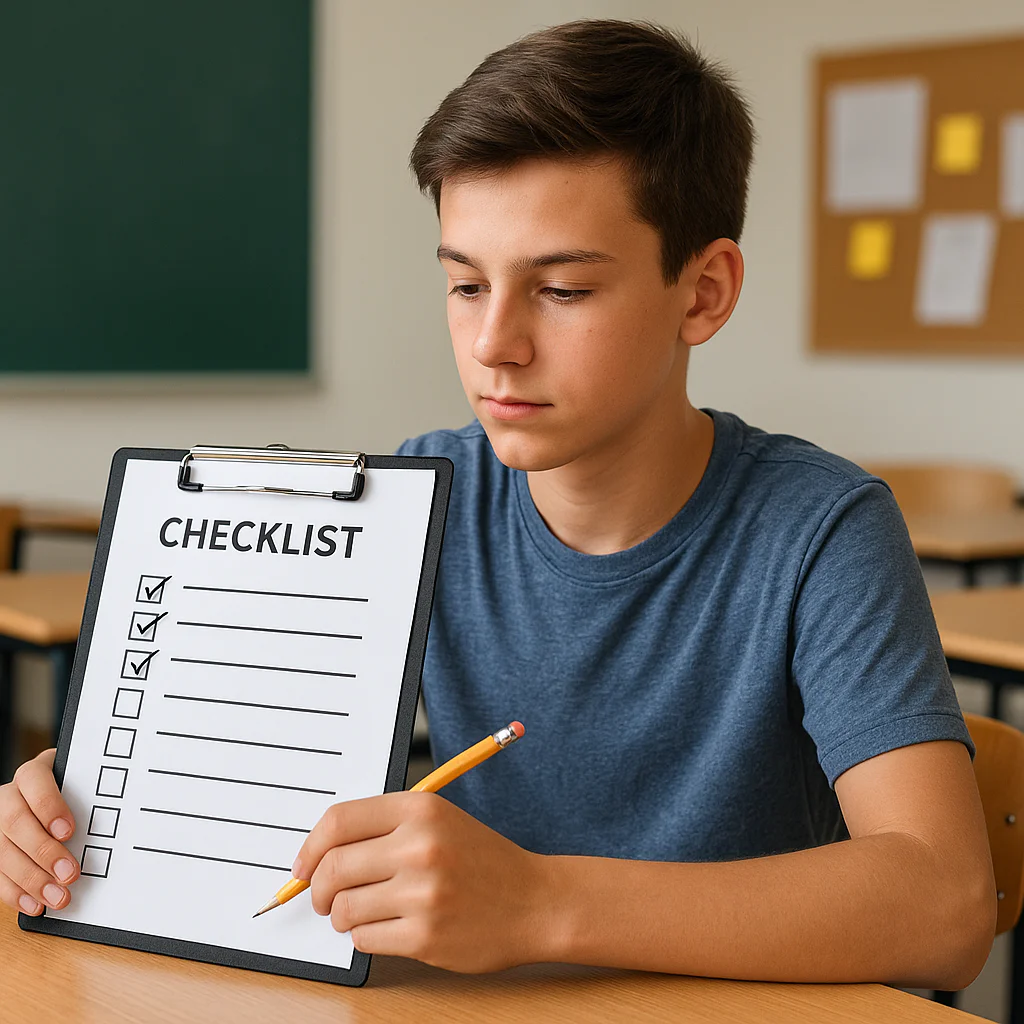
Checklists are the unsung heroes of the classroom—boosting memory, reducing stress, and making sure nothing (and no one) falls through the cracks. The importance of checklists in education isn’t just a theory; it’s backed by research, real-world success stories, and the fact that even the DC Mayor’s office relies on them for back-to-school prep.
Picture this: a teacher juggling 30 students, a stack of permission slips, and a science experiment involving vinegar and baking soda. One missed step, and suddenly, the classroom smells like a salad bar. That’s why checklists matter—they turn chaos into calm, and “Oops, I forgot!” into “Nailed it!”
Did you know teachers make more than 150 decisions per day? That’s more than most CEOs. Checklists aren’t just helpful—they’re essential for keeping everyone (and everything) on track.
Key Takeaways
- Checklists reduce cognitive overload for teachers and students alike.
- They improve organization, accountability, and learning outcomes.
- Checklists support diverse learners and foster independence.
- Digital checklist tools make classroom management smoother than ever.
- Real-world examples—from the DC Mayor’s Back to School Checklist to daily classroom routines—prove their effectiveness.
Table of Contents
- ⚡️ Quick Tips and Facts
- 📚 The Surprising History of Checklists in Education
- 🔍 Why Are Checklists So Important in Education?
- 🧠 Cognitive Science: How Checklists Boost Learning and Memory
- 🎯 15 Ways Checklists Transform Classroom Success
- Organization for Teachers and Students
- Reducing Stress and Anxiety
- Promoting Student Independence
- Supporting Diverse Learners
- Enhancing Assessment and Feedback
- Facilitating Collaboration
- Streamlining Classroom Routines
- Improving Homework Completion
- Tracking Progress Over Time
- Fostering Accountability
- Encouraging Goal Setting
- Supporting Remote and Hybrid Learning
- Aiding Substitute Teachers
- Facilitating Parent Involvement
- Boosting Motivation and Engagement
- 📝 Types of Educational Checklists: From Rubrics to Routines
- Task Checklists
- Behavior Checklists
- Project and Assignment Checklists
- Self-Assessment and Reflection Checklists
- IEP and Special Education Checklists
- 🏫 Real-World Examples: Checklists in Action at School
- 💡 Expert Tips for Creating Effective Educational Checklists
- 📱 Best Digital Tools and Apps for Classroom Checklists
- 🌍 Checklists for Inclusive and Differentiated Learning
- 👩 🏫 Teacher Stories: Checklist Wins and Fails
- 🔬 Education Research You Can Actually Use
- 🚀 Quick-Start Templates: Free Printable and Digital Checklists
- 📊 Checklist Myths vs. Facts
- 🎒 Student Voices: How Checklists Changed My Learning
- 🛠️ Troubleshooting: When Checklists Don’t Work (and How to Fix Them)
- 🌟 The Future of Checklists in Education
- 📝 Conclusion
- 🔗 Recommended Links
- ❓ FAQ
- 📚 Reference Links
⚡️ Quick Tips and Facts
- Checklists are cognitive lifesavers—they help both teachers and students avoid the “Did I forget something?” panic.
- According to NIH research, checklists in education boost memory, focus, and learning outcomes.
- The DC Mayor’s 2026-2027 Back to School Checklist is a real-world example of how checklists streamline everything from immunizations to attendance.
- Teachers make over 150 decisions and 252 judgments daily—checklists reduce mental overload (Edutopia).
- Students with checklists are more organized, less anxious, and more independent.
- Want to know what a checklist for students looks like? Here’s a deep-dive on Student Checklists.
- Digital checklist tools like Notion, Google Keep, and Microsoft To-Do make classroom management a breeze.
- Checklists aren’t just for tasks: They can support behavior, assessment, and even social-emotional learning.
Curious how checklists can actually make your school year smoother? Keep reading—some of our favorite stories and expert tips are just ahead.
📚 The Surprising History of Checklists in Education

Checklists didn’t start in classrooms—they were born in the high-stakes world of aviation, where forgetting a step could mean disaster. The concept soon spread to medicine (see Atul Gawande’s The Checklist Manifesto), and eventually, to education, where the stakes are just as high—just ask any teacher who’s forgotten to collect homework from 30 students.
How Checklists Landed in Schools
- Aviation Roots: Pilots used checklists to ensure every pre-flight step was completed (Smithsonian Magazine).
- Medical Miracles: Hospitals adopted checklists to reduce errors in surgery (Harvard Business Review).
- Classroom Adoption: Teachers realized that if checklists could save lives, they could certainly save lesson plans and learning outcomes.
The Checklist Revolution
By the early 200s, checklists became a staple in classrooms—especially as educators faced growing demands for documentation, differentiation, and accountability. The DC Back to School Checklist is just one example of how checklists are now central to school operations.
🔍 Why Are Checklists So Important in Education?
Let’s be honest: teaching is a juggling act, and students are learning to jugle too. Checklists are the safety net.
The Science: Cognitive Load and Memory
- Teachers face “decision fatigue”—over 150 decisions per day, according to Edutopia.
- Checklists offload memory tasks, freeing up brainpower for creativity, relationship-building, and actual teaching.
- Students benefit, too: Checklists help them break down big projects, remember steps, and build confidence.
Real-World Impact
- DC’s Back to School Checklist ensures every student is ready—no missing immunizations, no forgotten forms, no last-minute scrambles.
- Students with checklists are more likely to turn in assignments, participate in routines, and feel in control (TeachThought).
Still Skeptical?
We’ll share some “checklist fails” later (spoiler: even the best lists can go sideways)—but first, let’s see how checklists actually change the game for learning.
🧠 Cognitive Science: How Checklists Boost Learning and Memory
Why do checklists work? It’s not magic—it’s neuroscience.
Working Memory: The Brain’s Sticky Note
- Working memory is limited. Most people can only hold 4–7 items at once (NIH).
- Checklists “externalize” memory—they let you focus on thinking, not remembering.
Metacognition: Thinking About Thinking
- Checklists scaffold metacognition—students learn to plan, monitor, and evaluate their own work (TeachThought).
- Checking off items provides a dopamine hit, reinforcing positive habits (Habit Formation).
Emotional Benefits
- Reduces anxiety: Students know what’s expected.
- Builds confidence: Every check is a mini-win.
- Encourages independence: Students learn to self-manage.
Fun Fact
A study cited by Edutopia found that checklists help students with executive function challenges stay on track—think of them as “cognitive bumpers” in the bowling alley of school life.
🎯 15 Ways Checklists Transform Classroom Success
Ready for a checklist about checklists? Here are 15 ways they revolutionize education—some you might not expect.
1. Organization for Teachers and Students
✅ Keeps everyone on the same page—literally and figuratively.
✅ Lesson plans, assignments, and routines are all easier to manage.
2. Reducing Stress and Anxiety
✅ Students know what’s next—no more “What do I do now?”
✅ Teachers sleep better (well, sometimes).
3. Promoting Student Independence
✅ Students learn to self-manage—a life skill that pays off beyond the classroom.
✅ Checklists support executive function (Edutopia).
4. Supporting Diverse Learners
✅ Checklists can be differentiated for students with IEPs, ELLs, and others who need extra support.
5. Enhancing Assessment and Feedback
✅ Rubrics and checklists clarify expectations—no more “I didn’t know I was supposed to…”
✅ Feedback is faster and clearer.
6. Facilitating Collaboration
✅ Substitute teachers, aides, and parents can jump in without missing a beat.
7. Streamlining Classroom Routines
✅ Morning routines, clean-up, dismissal—all smoother with a checklist.
8. Improving Homework Completion
✅ Students track assignments—and parents can check progress.
9. Tracking Progress Over Time
✅ Checklists provide data for RTI, IEPs, and parent conferences.
10. Fostering Accountability
✅ No more excuses: “I forgot” doesn’t fly when it’s on the list.
11. Encouraging Goal Setting
✅ Students set and track goals—from reading logs to science projects.
12. Supporting Remote and Hybrid Learning
✅ Digital checklists keep everyone organized, even when learning from home.
13. Aiding Substitute Teachers
✅ Sub plans with checklists = fewer frantic texts from subs.
14. Facilitating Parent Involvement
✅ Parents see what’s expected and can support learning at home.
15. Boosting Motivation and Engagement
✅ Checking off items feels good—it’s a built-in reward system.
📝 Types of Educational Checklists: From Rubrics to Routines
Checklists aren’t one-size-fits-all. Here’s how they show up in real classrooms.
Task Checklists
- Simple to-do lists for daily work, projects, or routines.
- Example: “Morning Routine Checklist”—unpack backpack, sharpen pencil, start warm-up.
Behavior Checklists
- Track social-emotional goals or classroom expectations.
- Example: “Did I raise my hand before speaking?” or “Was I kind to a classmate today?”
Project and Assignment Checklists
- Break down big tasks into manageable steps.
- Example: “Science Fair Project Checklist”—research, hypothesis, experiment, results, presentation.
Self-Assessment and Reflection Checklists
- Students evaluate their own work—builds metacognition and responsibility.
- Example: “Did I check my spelling? Did I use evidence in my answer?”
IEP and Special Education Checklists
- Support individualized goals for students with special needs.
- Example: “IEP Goal Checklist”—track progress on specific skills.
Want more on student checklists? See our full guide.
🏫 Real-World Examples: Checklists in Action at School
Let’s get practical. Here’s how checklists are used in schools—from the front office to the classroom.
| Use Case | Checklist Example | Impact |
|---|---|---|
| Enrollment | DCPS Back to School Checklist | Ensures all forms and immunizations are complete |
| Classroom Routines | Morning/afternoon routines | Smooth transitions, fewer missed steps |
| Assignment Submission | Homework checklists | Higher completion rates |
| Special Education | IEP progress checklists | Tracks goals, supports documentation |
| Field Trips | Permission slip and safety checklists | No lost kids, no forgotten lunches |
| Substitute Teaching | Sub plans with checklists | Consistency for students and subs |
| Parent Communication | Weekly “to-do” checklists | Keeps families informed and engaged |
Anecdote: The Case of the Missing Snack
One of our planners, Jamie, once forgot to send a snack with her child—until she started using the school’s “Morning Checklist.” Now, no more hangry kindergartners!
💡 Expert Tips for Creating Effective Educational Checklists
Not all checklists are created equal. Here’s how to make yours actually work.
1. Keep It Simple
- Start with 5–10 items (Edutopia).
- Too long? People tune out.
2. Be Specific
- “Clean desk” is vague. “Put books on shelf, throw away trash, wipe surface” is better.
3. Make It Visual
- Use icons, colors, or even Bitmojis for younger students.
4. Involve Students
- Let them help build the checklist—it boosts buy-in and understanding.
5. Review and Revise
- Checklists should evolve. Get feedback and adjust as needed (TeachThought).
6. Use Digital Tools
- Apps like Notion, Google Keep, and Microsoft To-Do make sharing and updating lists easy.
7. Celebrate Success
- Checking off items is satisfying—don’t forget to cheer!
📱 Best Digital Tools and Apps for Classroom Checklists
Ready to go digital? Here’s how the top tools stack up:
| Tool | Platform(s) | Features | Best For | Rating (1-10) |
|---|---|---|---|---|
| Notion | Web, iOS, Android, Mac | Templates, collaboration, subtasks | Project management, teams | 9 |
| Google Keep | Web, iOS, Android | Simple lists, reminders, sharing | Quick notes, reminders | 8 |
| Microsoft To-Do | Web, Windows, iOS, Android | Task lists, recurring reminders | Personal task management | 8 |
| Asana | Web, iOS, Android | Project tracking, team collaboration | Group projects | 8 |
| Checklist.gg | Web | AI-powered editing, templates | Fast checklist creation | 7 |
| Todledo | Web, iOS, Android | Custom lists, habits, collaboration | Habit tracking, teams | 7 |
| Overstrike | iOS | Drag-and-drop, reminders, backgrounds | Visual learners | 7 |
| Productive | iOS | Habit tracking, streaks, reminders | Building routines | 7 |
Features, Benefits, and Drawbacks
- Notion: Highly customizable, great for teams, but can be overwhelming for beginners.
- 👉 CHECK PRICE on: Notion on Amazon | Notion Official Website
- Google Keep: Super simple, integrates with Google Classroom, but limited advanced features.
- Microsoft To-Do: Clean interface, recurring tasks, but less robust for complex projects.
- Asana: Excellent for collaboration, but may be “too much” for small classes.
- Checklist.gg: AI-powered, quick edits, but newer and less proven.
- Todledo: Great for habits, but interface feels dated.
- Overstrike: Fun visuals, but iOS only.
- Productive: Habit focus, but not ideal for academic tasks.
Pro Tip: Try a few and see what sticks. For more on habit-building apps, check out our Habit Formation category.
🌍 Checklists for Inclusive and Differentiated Learning
Checklists are a secret weapon for equity in the classroom.
Supporting Diverse Learners
- IEP and 504 Plans: Checklists help students track accommodations and modifications (Wrightslaw).
- English Language Learners: Visual and bilingual checklists clarify expectations.
- Students with ADHD or executive function challenges: Checklists provide structure and reduce overwhelm (CHADD).
Differentiation in Action
- Tiered checklists: Different versions for different readiness levels.
- Choice boards: Students pick from a menu of checklist items.
- Scaffolding: Break complex tasks into smaller, manageable steps.
Anecdote: The Checklist That Saved a Science Project
Our planner Sam once watched a student with ADHD go from meltdown to mastery—all thanks to a color-coded project checklist. The student said, “It’s like having a map for my brain.”
👩 🏫 Teacher Stories: Checklist Wins and Fails
We’ve seen it all—here are some real stories from the Daily Checklist™ team.
Win: The Substitute Teacher Miracle
When Ms. Lopez was out sick, her sub found a detailed checklist in the lesson plan. Result? “It was like I’d been in the classroom all year,” the sub reported. The students didn’t miss a beat.
Fail: The Overwhelming List
Mr. Patel once handed out a 30-item checklist for a group project. The result? Total chaos. Students felt overwhelmed and gave up. Lesson learned: short and sweet wins the race.
Win: The Parent Connection
One teacher sent home a weekly checklist for parents. Suddenly, homework completion rates soared, and parents felt more involved.
Fail: The Forgotten Update
A checklist that never gets updated? Might as well be a paperweight. One teacher forgot to remove a canceled assignment—cue confusion and frustration.
🔬 Education Research You Can Actually Use
Don’t just take our word for it—here’s what the research says.
- NIH: “Using checklists in education can facilitate the learning process, help in memorization, and deepen the concepts being studied.” (NIH)
- Edutopia: “Checklists are required for success under conditions of complexity.” (Edutopia)
- TeachThought: “Checklists don’t narrow thinking, they protect the space where thinking happens.” (TeachThought)
- The Checklist Manifesto: Atul Gawande’s book is a must-read for anyone who wants to understand the power of checklists in high-stakes environments.
Competing Perspectives
Some critics argue that checklists can stifle creativity—but research and our own experience show that, when used flexibly, they actually free up mental space for deeper thinking and problem-solving.
🚀 Quick-Start Templates: Free Printable and Digital Checklists
Ready to try checklists in your classroom? Here are some resources to get you started.
| Template Type | Where to Find It |
|---|---|
| Homework Checklist | Microsoft Templates |
| Project Checklist | Adobe Education Exchange |
| Behavior Checklist | Teachers Pay Teachers |
| IEP Checklist | Wrightslaw |
| Digital Checklist Apps | Notion on Amazon |
👉 Shop Checklist Tools on:
📊 Checklist Myths vs. Facts
Let’s bust some myths.
| Myth | Fact |
|---|---|
| Checklists are only forgetful people | Everyone benefits—experts use them for critical tasks! |
| Checklists stifle creativity | They actually free up mental space for creative thinking. |
| Only teachers need checklists | Students, parents, and admins all benefit. |
| Digital checklists are too complicated | Many apps are user-friendly and free. |
| Checklists are “one and done” | The best checklists evolve with your needs. |
🎒 Student Voices: How Checklists Changed My Learning
We asked students: “How do checklists help you?” Here’s what they said:
- “I don’t forget my homework anymore.”
- “It feels good to check things off.”
- “I know what to do next, so I don’t get stuck.”
- “My mom likes seeing what I have to do.”
One student even said, “It’s like a treasure map—when I finish, I get to the prize!”
🛠️ Troubleshooting: When Checklists Don’t Work (and How to Fix Them)
Checklists aren’t magic wands. Here’s what can go wrong—and how to fix it.
Problem: Overwhelming Lists
❌ Too many items = paralysis.
✅ Solution: Keep it short. Prioritize the essentials.
Problem: Vague Language
❌ “Be good” is meaningless.
✅ Solution: Be specific—“Raise your hand before speaking.”
Problem: Outdated Lists
❌ Old assignments cause confusion.
✅ Solution: Review and update regularly.
Problem: Lack of Buy-In
❌ Students ignore the list.
✅ Solution: Involve them in creating the checklist.
Problem: Digital Fatigue
❌ Too many apps, not enough clarity.
✅ Solution: Pick one tool and stick with it.
🌟 The Future of Checklists in Education
What’s next for checklists? Here’s what we see on the horizon:
- AI-powered checklists that adapt to student needs (see Checklist.gg).
- Integration with learning management systems—think Google Classroom and Canvas.
- Voice-activated checklists for accessibility.
- Gamified checklists that turn routines into challenges and rewards.
Curious how checklists can support early learning? The first YouTube video in this article shows how checklists and matching activities build vocabulary and independence—even for the youngest learners.
Will checklists ever replace teachers? Of course not. But they might just help us all sleep a little better at night. Stay tuned for our final recommendations and some shopping links you won’t want to miss…