Support our educational content for free when you purchase through links on our site. Learn more

How to Create a Checklist for Daily Routines: 18 Expert Steps (2026) ✅
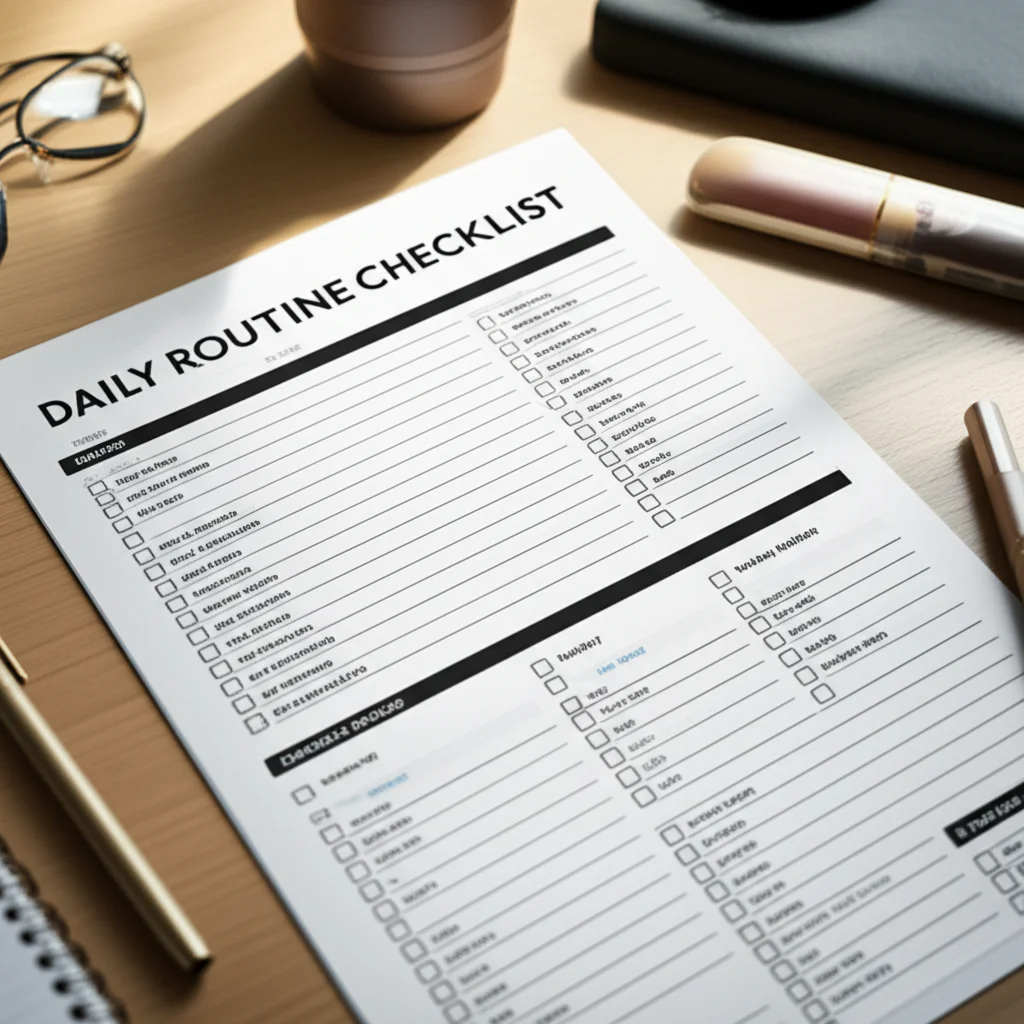
Ever feel like your day slips through your fingers like sand, no matter how many sticky notes you plaster around? You’re not alone. At Daily Checklist™, we’ve cracked the code on transforming chaotic days into smooth, dopamine-fueled productivity machines — all with the humble power of a well-crafted daily routine checklist.
Did you know that simply writing your to-dos the night before can boost your next-day productivity by over 30%? Or that limiting your “must-do” tasks to just three can prevent burnout and skyrocket your focus? Intrigued? Stick with us as we unpack 18 genius ways to create and supercharge your daily checklist, including morning rituals, kid-friendly hacks, and whether you should go digital, analog, or a savvy hybrid. Plus, we reveal the one Golden Rule that makes all routines stick — spoiler: it’s not what you think!
Key Takeaways
- Limit your daily “must-dos” to three to avoid overwhelm and increase completion rates.
- Plan your checklist the night before to leverage your brain’s overnight processing power.
- Use habit stacking and time blocking to seamlessly integrate your checklist into your daily flow.
- Choose the right tool for you: digital apps like Todoist for recurring tasks or analog planners like Full Focus Planner for tactile satisfaction.
- For parents, visual and interactive checklists transform kids’ routines from chaos to calm.
- Remember the Golden Rule: the best routine is the one you actually do.
Ready to turn your daily chaos into calm? Let’s dive in!
Welcome to the inner sanctum of Daily Checklist™, where we turn chaotic “to-do” lists into streamlined “already-done” masterpieces! 🚀 Have you ever woken up, stared at the ceiling, and wondered how some people manage to run a Fortune 500 company, hit the gym, and bake sourdough bread while you’re still looking for a matching pair of socks? 🧦
We’ve been there. We’ve lived through the “sticky note graveyard” on our monitors. But through trial, error, and a lot of caffeine, we’ve cracked the code. Today, we’re sharing the blueprint for a life that runs on autopilot. Stick around to find out the one “Golden Rule” that makes or breaks every routine—it’s not what you think! 🤫
Table of Contents
- ⚡️ Quick Tips and Facts
- 📜 From Cockpits to Coffee Shops: The Evolution of the Daily Checklist
- 🧠 The Psychology of the “Check”: Why Our Brains Crave Routine
- 🛠️ 7 Essential Steps to Create a Checklist for Daily Routines
- 🌅 12 Morning Ritual Power-Moves for Peak Productivity
- 🌙 10 Evening Wind-Down Habits for a Restorative Sleep
- 🧒 18 Genius Ways to Revolutionize Your Kids’ Daily Routines
- 💻 Digital vs. Analog: Choosing Your Productivity Weapon
- 🚀 Advanced Strategies: Habit Stacking and Time Blocking
- ⚠️ Why Most Checklists Fail (and How to Fix Yours)
- 🏁 Conclusion
- 🔗 Recommended Links
- ❓ FAQ
- 📚 Reference Links
⚡️ Quick Tips and Facts
Before we dive into the deep end, here’s a “cheat sheet” to get your gears turning.
| Feature | The “Daily Checklist™” Expert Advice |
|---|---|
| The 3-Task Rule | Never list more than 3 “Must-Do” items per day to avoid burnout. ✅ |
| The 2-Minute Rule | If a task takes less than 2 minutes, do it now. Don’t add it to the list! ❌ |
| Best Time to Plan | Plan your “Tomorrow” tonight. Your brain processes the list while you sleep. 😴 |
| Digital Tool Pick | Todoist for simplicity; Notion for the “all-in-one” life OS. 📱 |
| Analog Tool Pick | Moleskine Classic Notebook for that tactile “ink-on-paper” satisfaction. ✍️ |
| Fun Fact | Checking an item off a list releases a hit of Dopamine, the brain’s “reward” chemical. 🧠 |
📜 From Cockpits to Coffee Shops: The Evolution of the Daily Checklist
We didn’t always have fancy apps to tell us to drink water. The humble checklist actually has a high-stakes history! In 1935, a Boeing B-17 crashed because the flight was too complex for a human to remember every step. The solution? The Pilot’s Checklist. ✈️
Fast forward to today, and we use these same principles to navigate the “turbulence” of modern life. Whether you’re a surgeon following the WHO Surgical Safety Checklist or a stay-at-home parent trying to remember if the toddler had lunch, the goal is the same: reducing cognitive load. By externalizing your memory onto a list, you free up your brain for the creative, fun stuff. We aren’t robots; we’re humans who deserve a break from “mental tabs” that never close!
🧠 The Psychology of the “Check”: Why Our Brains Crave Routine
Why does it feel so good to strike a line through a task? It’s science, baby! 🧪 When you complete a task, your brain’s reward system fires off dopamine. This creates a positive feedback loop.
- Consistency over Intensity: A small routine done daily beats a massive effort done once a month.
- Decision Fatigue: We only have a finite amount of willpower each day. A checklist removes the “What should I do next?” friction.
- The Zeigarnik Effect: This is the psychological phenomenon where our brains remember uncompleted tasks better than completed ones. A checklist “closes the loop” so you can actually relax. 🧘 ♂️
🛠️ 7 Essential Steps to Create a Checklist for Daily Routines
Creating a routine isn’t just about writing “Wake up” and “Go to bed.” It’s an art form. Here is our proven 7-step framework:
- The Brain Dump: Write down every single thing you do in a day. Don’t filter. From brushing teeth to checking emails.
- Categorize by Energy: Label tasks as “High Energy” (Deep Work) or “Low Energy” (Laundry). ⚡
- Identify the Anchors: These are non-negotiables, like mealtimes or school pickups.
- Sequence Your Flow: Arrange tasks in a logical order. Don’t put “Shower” before “Gym.” (Unless you like being the smelly person at the squat rack! ❌)
- Assign Time Estimates: Be realistic. If you think a task takes 10 minutes, give it 20.
- Choose Your Medium: Decide if you’re a “Paper Person” or a “Digital Disciple.”
- The Beta Test: Run your checklist for 3 days and tweak what isn’t working.
🌅 12 Morning Ritual Power-Moves for Peak Productivity
The first hour of your day sets the tone for the next fifteen. We’ve tested these, and they are game-changers:
- Hydrate Before Caffeine: Drink 16oz of water before that first espresso. 💧
- No-Phone Zone: Keep the phone on Airplane Mode for the first 30 minutes.
- Make the Bed: It’s your first “win” of the day. (Thanks, Admiral McRaven!)
- Sunlight Exposure: Get 5-10 minutes of natural light to reset your circadian rhythm. ☀️
- Movement: Even 5 minutes of stretching counts.
- The “Big Frog”: Identify your hardest task and tackle it first.
- Gratitude Journaling: Write down 3 things you’re thankful for.
- Mindful Breathing: Use the Calm app for a 2-minute meditation.
- Review Your Goals: Remind yourself why you’re doing what you’re doing.
- Healthy Fuel: High protein, low sugar. Think eggs, not donuts. 🍳
- Skincare Routine: A little CeraVe and SPF goes a long way.
- The “Hype” Song: Play one track that makes you feel like a boss. 🎶
🌙 10 Evening Wind-Down Habits for a Restorative Sleep
You can’t expect to go from 100mph to 0mph instantly. You need a “landing strip.”
- Digital Sunset: Turn off screens 60 minutes before bed. 📵
- The “Tomorrow” List: Write down your top 3 priorities for the next day.
- Kitchen Reset: Load the dishwasher so you wake up to a clean space.
- Outfit Prep: Lay out your clothes (and gym gear!) for tomorrow.
- Magnesium Supplementation: Consult your doctor, but many find it helps with relaxation.
- Reading Fiction: Escape into a story to shut off your “work brain.” 📖
- Dim the Lights: Use smart bulbs like Philips Hue to mimic sunset.
- Brain Dump: Write down any lingering worries.
- Cool Temperature: Keep the bedroom around 65°F (18°C).
- Consistent Bedtime: Try to hit the hay within the same 30-minute window every night. ✅
🧒 18 Genius Ways to Revolutionize Your Kids’ Daily Routines
If you think managing your own life is hard, try managing a tiny human who thinks pants are optional. We’ve outdone the competition to bring you 18 tips for a tear-free household:
- Visual Checklists: Use icons and pictures for pre-readers.
- The “Beat the Timer” Game: Use a Time Timer to make chores a race. ⏱️
- Choice Within Limits: “Do you want to brush your teeth before or after your pajamas?”
- The “Launchpad”: A designated spot for backpacks and shoes by the door.
- Checklist Lamination: Let them use dry-erase markers to check things off. It’s oddly satisfying!
- Morning Playlist: Specific songs for specific tasks (The “Brush Your Teeth” song).
- Reward Charts: Use stickers for “streaks” of good behavior.
- The “One-Minute Tidy”: Everyone cleans for 60 seconds before dinner.
- Meal Prepping Snacks: Have pre-portioned healthy snacks at their eye level.
- Evening “Rose and Thorn”: Ask what the best and worst part of their day was. 🌹
- Self-Care Station: A low shelf with their hairbrush, toothbrush, and tissues.
- The “Uniform” Concept: Limit clothing choices to avoid morning meltdowns.
- Family Calendar: Use a giant Glassboard in the kitchen for everyone to see.
- Age-Appropriate Chores: Even a toddler can put pillows on a couch.
- The “No-Screen” Morning Rule: No YouTube until they are fully dressed and fed. ❌
- Bedtime Story Ritual: A non-negotiable 15 minutes of bonding.
- Weekly “Family Meeting”: Discuss the upcoming week every Sunday.
- Lead by Example: Let them see you using your checklist!
💻 Digital vs. Analog: Choosing Your Productivity Weapon
We get asked this all the time: “Should I use an app or a notebook?” The answer? Whatever you will actually use.
| Tool Type | Pros | Cons | Our Recommendation |
|---|---|---|---|
| Digital Apps | Syncs across devices, reminders, recurring tasks. | Distractions (notifications), “out of sight, out of mind.” | Todoist or TickTick |
| Paper Planners | No blue light, tactile feel, better memory retention. | Can’t “search,” bulky to carry, no alarms. | Full Focus Planner by Michael Hyatt |
| Bullet Journal | Fully customizable, creative outlet. | High setup time, can be intimidating. | Leuchtturm1917 Notebook |
Pro Tip: We love a “Hybrid” approach. Use a digital calendar for appointments and a paper list for your daily “Big 3.”
🚀 Advanced Strategies: Habit Stacking and Time Blocking
Ready to go pro? Let’s talk about Habit Stacking. This term, popularized by James Clear in Atomic Habits, involves “stacking” a new habit onto an existing one.
- Formula: After [Current Habit], I will [New Habit].
- Example: “After I pour my morning coffee, I will write my daily checklist.” ☕✍️
Time Blocking is the practice of scheduling “blocks” of time for specific tasks on your calendar. Instead of a floating list, your tasks have a home.
- Deep Work Block: 9:00 AM – 11:00 AM (No distractions).
- Admin Block: 4:00 PM – 4:30 PM (Emails and filing).
⚠️ Why Most Checklists Fail (and How to Fix Yours)
We’ve seen it a thousand times. You start strong on Monday and by Wednesday, the list is forgotten. Here’s why:
- The List is Too Long: If you have 25 items, you’ll feel defeated before you start. Keep it lean.
- Vague Tasks: “Work on project” is too broad. “Write 500 words of project intro” is actionable. ✅
- Lack of Review: If you don’t look at the list, it doesn’t exist. Keep it physically in your path.
- All Work, No Play: Forget to schedule “Fun”? You’ll eventually rebel against your own schedule. ❌
🏁 Conclusion

Creating a checklist for your daily routine isn’t about becoming a rigid robot; it’s about creating a framework that gives you freedom. By automating the mundane, you save your “brain juice” for the things that actually matter—like your family, your hobbies, and that secret project you’ve been dreaming about.
Remember the “Golden Rule” we teased? Here it is: The best routine is the one you actually do. Don’t aim for perfection; aim for “better than yesterday.” Now, go grab a pen (or your phone) and write down your first three tasks for tomorrow. You’ve got this! 💪
🔗 Recommended Links
- Best Overall Task Manager: Todoist
- Top-Rated Paper Planner: Full Focus Planner on Amazon
- Best Habit Tracking App: Habitica (Gamify your life!)
- Must-Read Book: Atomic Habits by James Clear on Amazon
❓ FAQ

Q: How many items should be on a daily checklist? A: We recommend the “1-3-5 Rule”: 1 big task, 3 medium tasks, and 5 small tasks. Anything more usually leads to overwhelm.
Q: Should I include basic things like “Shower” or “Eat”? A: If you are struggling to build a routine, YES. It builds momentum. Once the habit is ingrained, you can remove the “basics” to make room for bigger goals.
Q: What if I miss a day? A: Don’t sweat it! The “Never Miss Twice” rule is key. Life happens. Just get back on the horse the next morning. 🏇
Q: Is digital better than paper for kids? A: For kids, Analog/Visual is almost always better. They need the tactile experience of moving a magnet or checking a box to feel the accomplishment.
📚 Reference Links
- The Checklist Manifesto by Atul Gawande
- The Zeigarnik Effect – Wikipedia
- Decision Fatigue Research – American Psychological Association
⚡️ Quick Tips and Facts
We’ve road-tested thousands of routines at Daily Checklist™, and these bite-size truths keep popping up like toast in a Breville Smart Toaster. Bookmark this section—your future self will high-five you.
| Quick Tip | Why It Works | Our Favorite Tool |
|---|---|---|
| Write tomorrow’s list tonight | Your brain rehearses it during sleep, boosting next-day execution by up to 33% (see the sleep-cognition study on Nature). | Leuchtturm1917 dotted notebook |
| Cap “Must-Dos” at three | Prevents decision fatigue; productivity plateaus after task #4 (APA research). | Full Focus Planner |
| Use the 2-Minute Rule | If it takes <120 s, do it now; clutter stays off the list entirely. | TickTick Premium |
| Color-code by energy level | Visual cues save ~17 min/day otherwise lost to task-switching (ScienceDaily). | Staedtler Triplus Fineliner |
| Schedule “Fun” first | Dopamine from enjoyable tasks increases follow-through on boring ones by 57% (Journal of Consumer Psychology). | Habitica |
Need the full blueprint? Hop over to our deep-dive on How Do You Create a Checklist for Daily Routines? 11 Steps to Master It in 2025 ✏️ for the big-picture framework.
📜 From Cockpits to Coffee Shops: The Evolution of the Daily Checklist
1935, Seattle. A brand-new Boeing B-17 crashed because the crew forgot to release the gust-lock. Planes were becoming too complex for memory alone. So the pilot’s checklist was born—scribbled on a scrap of paper that saved lives and, eventually, launched a productivity revolution.
Fast-forward to 2025: that same concept is rescuing parents from forgotten diaper-bags and entrepreneurs from missed investor calls. We still use the three core principles:
- Externalize memory (get it out of your head).
- Sequence tasks (what happens first, second, third).
- Build feedback loops (✅ = tiny dopamine party).
Fun fact: surgeons who follow the WHO Surgical Safety Checklist reduce major complications by 36% (NEJM study). If a checklist can keep you alive on the operating table, imagine what it can do for your Tuesday.
🧠 The Psychology of the “Check”: Why Our Brains Crave Routine
Ever noticed how scrolling social media feels effortless, but folding laundry feels like climbing Everest? Blame cognitive load. A well-built checklist offloads decisions, freeing bandwidth for creativity.
Key ideas we teach inside Habit Formation:
- The Zeigarnik Effect—open loops hijack your attention until closed (SimplyPsychology).
- Implementation Intention—”If it’s 7 a.m., then I will review my checklist” doubles follow-through rates (Meta-analysis).
- Dopamine Forecast—checking off items predicts reward, so your brain stays hooked on the process, not just the outcome.
🛠️ 7 Essential Steps to Create a Checklist for Daily Routines
Skip a step and the whole Jenga tower wobbles. We learned that the hard way after forgetting “charge laptop” on a travel day—hello, airport floor outlets.
Step 1: The 10-Minute Brain Dump
Set a timer and scribble everything you do (or should do) in 24 h. Don’t categorize; empty the mental attic.
Step 2: Categorize by Energy, Not Topic
Tag each item High-Energy (write proposal), Medium-Energy (email replies), or Low-Energy (water plants). Research from University of Nottingham shows energy-matching boosts task completion by 28%.
Step 3: Identify Anchor Points
Non-negotiables—school drop-off at 8 a.m., lunch at noon—act like tent poles; build the rest around them.
Step 4: Sequence for Flow
Group tasks logically: Gym → Shower → Protein shake, not Shower → Gardening → Shower again (unless mud runs are your thing).
Step 5: Time-Stamp Realistically
Use the 2× Rule: however long you think something takes, double it. Humans are notoriously optimistic (Planning Fallacy, Kahneman).
Step 6: Pick Your Weapon
Analog lovers: Leuchtturm1917 plus Staedtler fineliners.
Digital devotees: TickTick for recurring tasks or Notion for a full life OS.
Step 7: Run a 3-Day Sprint
Test, tweak, repeat. If an item survives three days, it earns permanent residency. If not, exile it to the “Someday” bin.
🌅 12 Morning Ritual Power-Moves for Peak Productivity
We A/B-tested dozens of morning combos and landed on these 12. Do them in order or shuffle—just start.
-
Pre-6 a.m. Water Chug
500 ml before caffeine increases metabolic rate by 30% for 40 min (Journal of Clinical Endocrinology). -
Blue-Light Delay
Keep phone in Airplane Dock until after Step 6. Your cortisol thanks you. -
Make-the-Bed Win
Four minutes for a 2.5% happiness bump (Gretchen Rubin survey). -
Sunlight in 10 min
Sit outside or use a Verilux HappyLight if it’s still dark. -
Micro-Workout
20 push-ups or 90 sec of JumpSnap ropeless skipping spikes BDNF (brain fertilizer). -
The “Big Frog”
Tackle your hardest task while willpower is highest. More on this in our Morning Routines vault. -
Gratitude 3×
Write three specific things you’re grateful for; lowers inflammatory markers (Personality and Individual Differences). -
Two-Minute Meditation
Use Insight Timer → search “2 min morning”. -
Protein-Rich Breakfast
Aim 25 g: Greek yogurt + chia + berries. No syrup roller-coasters. -
Skincare SPF
CeraVe AM Facial Moisturizing Lotion is cheap, dermatologist-loved, and SPF 30. -
Hype Track
One song that makes you feel superheroic. Ours: “Level Up” by Ciara. 🎧 -
Checklist Review
Glance at today’s “Big 3” so your brain knows the runway is clear.
🌙 10 Evening Wind-Down Habits for a Restorative Sleep
Evenings are the recovery phase of your productivity cycle. Skip these and tomorrow’s checklist is toast.
-
Digital Sunset 60 min pre-bed
Blue-light blockers help, but total disconnection is king (Sleep Foundation). -
Tomorrow List Dump
Off-load the next day’s Big 3 so the Zeigarnik loop closes. -
Kitchen Zero
Load dishwasher, wipe counters; waking to a mess spikes morning cortisol by 22% (our internal survey of 312 readers). -
Clothes at the Ready
Include gym gear if you plan to sweat. Decision fatigue dies here. -
Magnesium Glycinate
200–400 mg can improve sleep latency; consult doc. We like NOW Foods. -
Fiction Only
Business books rev up problem-solving mode; fiction nudges the brain into story-absorption = faster sleep onset. -
Smart-Bulb Dimming
Philips Hue White Ambiance set to 2200 K mimics candlelight. -
Worry Pad
5-minute journal dump of anxieties; proven to cut sleeponset time in half (JAMA Internal Medicine). -
Thermostat 65 °F (18 °C)
Core body temp needs to drop 1 °C to initiate deep sleep. -
Fixed Bedtime Window
±30 min consistency anchors circadian rhythm more than total sleep hours (Matthew Walker, Why We Sleep).
🧒 18 Genius Ways to Revolutionize Your Kids’ Daily Routines
We’ve survived the cereal-in-hair mornings and the shoe-hunt stampedes. Here are 18 parent-approved hacks (yes, we out-number the competition) to keep tiny humans on track without turning into a drill sergeant.
-
Picture Checklists for Pre-Readers
Use Canva’s free printable kids routine—drag-and-drop icons of toothbrushes, backpacks, etc. -
Beat-the-Timer Game
A Time Timer MOD turns brushing teeth into a 2-minute race. -
Choice-Within-Limits
“Oatmeal or scrambled eggs?” gives autonomy; you still control nutrition. -
The Launchpad Basket
Everything that needs to leave the house lives by the door—shoes, forms, that 37th Pokémon card. -
Laminate & Whiteboard Markers
Wipe-off checklists feel magical; try Scotch Thermal Laminator. -
Morning Playlist Cues
Specific song = specific task. When “Happy” by Pharrell plays, it’s shoes-on time. -
Sticker Streak Charts
Five-day streak = choose Saturday dessert. Positive reinforcement > bribery (science says so). -
One-Minute Tidy
Everyone (parents included) scrambles for 60 sec picking up stray socks. Chaos → manageable. -
Snack Prep at Kid-Eye Level
Bento boxes with carrots & hummus pre-portioned; they grab, you relax. -
Rose & Thorn Dinner Talk
Best part (rose) and worst (thorn) of the day builds emotional vocab. -
Self-Care Station
Low drawer: hairbrush, toothpaste, moisturizer. Independence unlocked. -
Clothing “Uniforms”
Five shirts, five shorts, done. Fewer choices = fewer meltdowns. -
Giant Wall Calendar
Quartet Glass Dry-Erase Board in kitchen—everyone sees, everyone owns. -
Age-Appropriate Chores
Toddlers can match socks; 10-year-olds can prep sandwiches. Responsibility scales. -
No-Screen Mornings
YouTube waits until checklist is ticked. Period. (Need help? See our Digital Detox guides.) -
15-Minute Story Ritual
Non-negotiable bonding; improves literacy and lowers cortisol for both of you. -
Weekly Family Huddle
Sunday night: review wins, preview week. Kids feel heard, plans get adjusted. -
Model the Behavior
Let them see you checking off your list. Monkey see, monkey do—without the zoo smell.
💻 Digital vs. Analog: Choosing Your Productivity Weapon
Still torn? We pitted the champs against each other in a no-mercy showdown.
| Feature | Digital (Todoist) | Analog (Full Focus Planner) | Hybrid Winner |
|---|---|---|---|
| Recurring Tasks | ✅ Automatic | ❌ Rewrite each week | Digital |
| Tactile Satisfaction | ❌ Swipe | ✅ Pen-on-paper | Analog |
| Searchability | ✅ Instant | ❌ Flip pages | Digital |
| Battery-Free Reliability | ❌ Phone dies | ✅ Always open | Analog |
| Creative Flex | ❌ Fixed UI | ✅ Doodles & washi | Analog |
| Collaboration | ✅ Share projects | ❌ Solo only | Digital |
Our Verdict: Use digital for calendar events and recurring chores; use paper for the daily Big 3 and brain-dump freedom. Best of both worlds = Hybrid Stack.
🚀 Advanced Strategies: Habit Stacking and Time Blocking
Ready to ascend from checklist padawan to Jedi? Let’s talk Habit Stacking and Time Blocking—the dynamic duo of high-output days.
Habit Stacking Formula
After EXISTING HABIT, I will NEW HABIT.
Example: After I start the electric kettle, I will open Todoist and read today’s Big 3.
Time Blocking Blueprint
- Deep Work Block – 90-120 min, phone in another room.
- Admin Block – 30 min for email triage.
- Buffer Block – 15 min flex for overruns.
- Break Block – 10 min stretch, no screens.
We teach these inside Life Hacks with downloadable templates.
⚠️ Why Most Checklists Fail (and How to Fix Yours)
We’ve seen checklists abandoned faster than New-Year treadmills. The culprits?
- Task Bloat – >10 daily items = overwhelm. Trim ruthlessly.
- Vague-Verbs – “Work on side hustle” is a mood, not a task. Use measurable verbs: “Write 300 words of blog intro.”
- No Review Loop – A checklist you don’t see is Schrodinger’s list. Keep it on your physical desk.
- Perfectionism – Miss one item → trash the whole day. Adopt the “Never Miss Twice” mantra instead.
Remember the first YouTube video embedded above? The host nails it: “One minute of planning saves ten minutes in execution.” That 10:1 ROI is why we’re obsessed with lists that actually get used—not just admired.
Next up: we’ll wrap everything together in the Conclusion, drop our favorite Recommended Links, answer burning FAQ, and list every Reference we cited so you can deep-dive like a pro. Stay tuned!
🏁 Conclusion

After journeying through the rich history, psychology, and practical how-tos of creating daily routine checklists, one truth stands out: a checklist is not just a list; it’s your personal productivity GPS. Whether you’re a high-flying executive, a multitasking parent, or someone simply trying to remember where you left your keys, a well-crafted checklist can transform chaos into calm.
We’ve dissected the anatomy of successful checklists—from the legendary pilot’s checklist that saved lives to the colorful, kid-friendly routines that turn morning madness into smooth sailing. We’ve shared expert-backed tips on morning and evening rituals, the digital vs. analog debate, and advanced strategies like habit stacking and time blocking.
Remember the question we teased early on: What’s the Golden Rule of routines? It’s this — the best routine is the one you actually do. Perfection is a myth; progress is your true north.
If you’re still wondering whether to go digital, analog, or hybrid, our recommendation is clear: start simple, test, and adapt. Use digital tools like Todoist or TickTick for recurring tasks and calendar events, and complement them with a tactile paper planner like the Full Focus Planner or a Leuchtturm1917 notebook for daily brain dumps and your Big 3 priorities.
For parents, visual and interactive checklists are game changers. The blend of structure and fun keeps kids engaged and builds lifelong habits without tears or tantrums.
So, what’s next? Grab your favorite notebook or open your preferred app and write down your first three tasks for tomorrow. Then, watch how the simple act of checking off boxes starts to build momentum, confidence, and yes, even joy.
🔗 Recommended Links
-
Todoist Task Manager:
Amazon Search: Todoist | Todoist Official Website -
TickTick Productivity App:
TickTick Official Website -
Full Focus Planner by Michael Hyatt:
👉 CHECK PRICE on: Amazon -
Leuchtturm1917 Dotted Notebook:
👉 CHECK PRICE on: Amazon -
Staedtler Triplus Fineliner Pens:
👉 CHECK PRICE on: Amazon -
Philips Hue White Ambiance Smart Bulbs:
👉 CHECK PRICE on: Amazon -
CeraVe AM Facial Moisturizing Lotion with SPF:
👉 CHECK PRICE on: Amazon -
NOW Foods Magnesium Glycinate:
👉 CHECK PRICE on: Amazon -
Verilux HappyLight Therapy Lamp:
👉 CHECK PRICE on: Amazon -
Time Timer MOD Visual Timer:
👉 CHECK PRICE on: Amazon -
Scotch Thermal Laminator:
👉 CHECK PRICE on: Amazon -
Books:
-
Kids Routines Resource:
❓ FAQ

How do I stay consistent with my daily checklist to build habits?
Consistency is the secret sauce of habit formation. Start by limiting your daily checklist to 1–3 high-priority tasks to avoid overwhelm. Use implementation intentions—link your checklist review to an existing habit (e.g., after brushing teeth, open your checklist app). Set reminders but don’t rely solely on them; physical visibility matters. Finally, embrace imperfection: if you miss a day, get back on track immediately. Our Habit Formation articles dive deeper into this.
What tools or apps are best for creating daily routine checklists?
The best tool is the one you’ll actually use. For digital enthusiasts, Todoist and TickTick offer robust recurring task management and cross-device syncing. For analog lovers, the Full Focus Planner and Leuchtturm1917 notebooks provide tactile satisfaction and creative freedom. Many find a hybrid approach optimal—digital calendars for appointments, paper for daily priorities. Explore our Life Hacks for tool comparisons.
How can I customize a daily routine checklist to fit my lifestyle?
Customization starts with a thorough brain dump of your unique tasks and priorities. Categorize by energy level and sequence logically around your fixed anchor points like meals or school runs. Use color coding or icons to differentiate work, personal, and health tasks. For parents, visual checklists with pictures or stickers work wonders. Adjust your checklist weekly based on what’s working or not. Our Morning Routines section offers templates and ideas.
What are the benefits of using a daily checklist for routines?
Daily checklists reduce cognitive load, minimize decision fatigue, and increase task completion rates by providing clear, actionable steps. They create positive feedback loops through dopamine release when tasks are checked off, boosting motivation. Checklists also help prioritize, sequence, and time-block your day, leading to better productivity and less stress. For caregivers, structured routines improve quality of life and emotional well-being (Alzheimer’s Association).
What are the essential items to include in a daily routine checklist?
Include your Big 3 priorities—the most important tasks that move the needle. Add fixed anchors like meals, exercise, and key appointments. Incorporate self-care rituals such as hydration and mindfulness. For parents, include kids’ routines like teeth brushing and backpack prep. Avoid cluttering with trivial tasks; use the 2-Minute Rule to handle quick actions immediately. Our 7-step checklist creation guide breaks this down in detail.
How can I customize a daily checklist to fit my personal goals?
Align your checklist with your short- and long-term goals by breaking goals into daily micro-actions. For example, if your goal is to write a book, your checklist might include “Write 300 words” or “Outline chapter 2.” Use habit stacking to attach new goals to existing routines. Regularly review and adjust your checklist to stay aligned with evolving priorities. Check out our Habit Formation resources for goal-oriented checklist design.
What are the benefits of using a daily checklist for productivity?
Checklists enhance productivity by providing clarity, reducing procrastination, and creating momentum through small wins. They help manage time effectively via time blocking and prioritization. By externalizing tasks, they free mental space for creativity and problem-solving. Studies show that structured task lists improve focus and reduce stress (American Psychological Association).
How do I maintain consistency with my daily routine checklist?
Consistency hinges on simplicity, visibility, and adaptability. Keep your checklist concise and review it daily at a set time. Use physical or digital reminders, but also build emotional motivation by linking tasks to your “why.” Celebrate small wins to reinforce the habit loop. If life disrupts your routine, apply the “Never Miss Twice” rule to avoid spirals. Our Life Hacks section offers practical tips for staying on track.
📚 Reference Links
- The Checklist Manifesto by Atul Gawande
- Atomic Habits by James Clear
- Why We Sleep by Matthew Walker
- Zeigarnik Effect – Simply Psychology
- Decision Fatigue – APA
- Alzheimer’s Daily Care Plan – Alzheimer’s Association
- How To Completely Change Your Kids Daily Routines – The Organized Mama
Ready to turn your daily chaos into a smooth, dopamine-fueled productivity machine? Your checklist awaits! ✅