Support our educational content for free when you purchase through links on our site. Learn more

🔄 How Often to Update Your Daily Checklist? (2026 Guide)
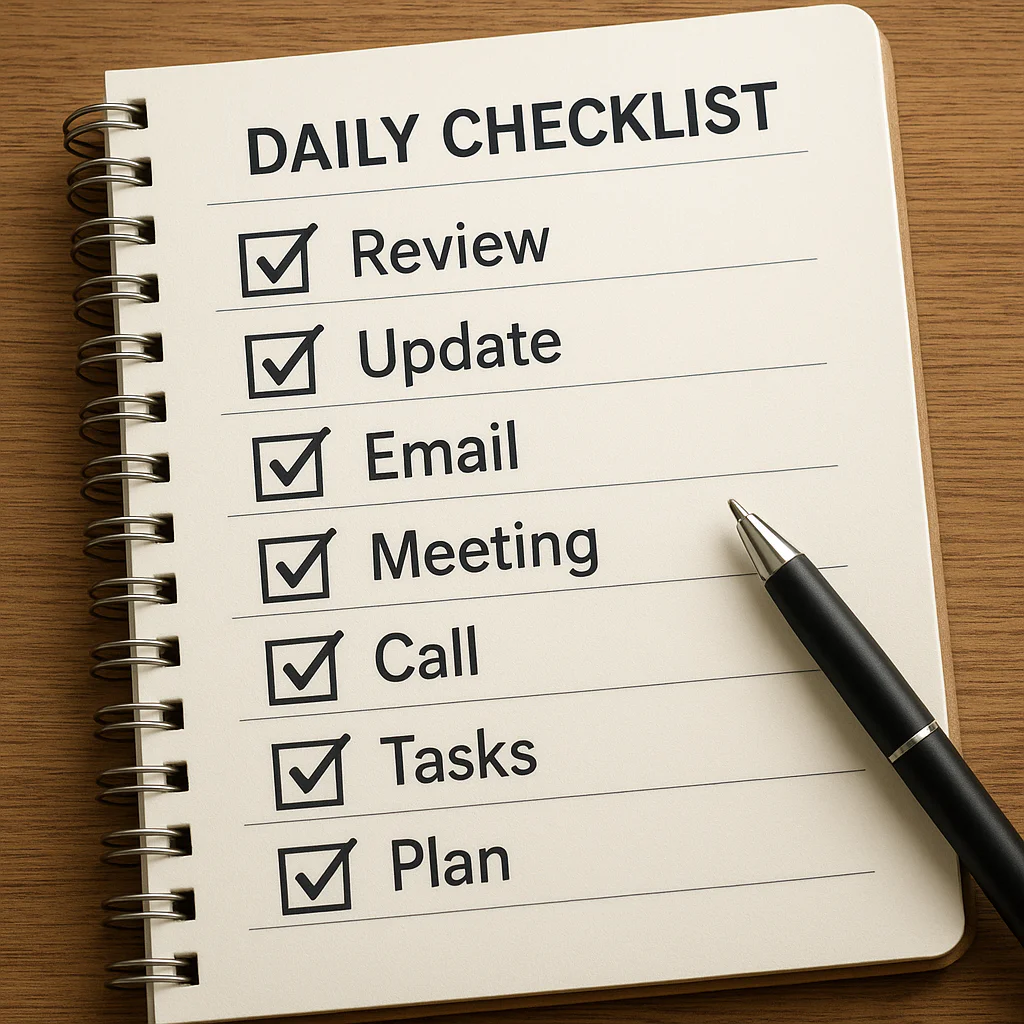
Ever feel like your to-do list is less of a roadmap and more of a haunted house full of ghosts from three months ago? You’re not alone. At Daily Checklist™, we’ve seen brilliant planners turn into list-haters simply because they forgot the golden rule: a checklist is a living organism, not a stone tablet. While some experts suggest a rigid 18-month routine, our data shows that the sweet spot for most people lies in a dynamic rhythm of daily micro-tweaks and weekly deep dives. In this comprehensive guide, we’ll reveal exactly when to hit “refresh,” how to spot the “zombie tasks” draining your energy, and why the Sunday Reset might be the most productive hour of your week. By the end, you’ll know precisely how often to revise your list to turn chaos into clarity.
Key Takeaways
- The Golden Rhythm: Most people achieve peak productivity with daily 5-minute adjustments for agility and a weekly 30-minute review for strategic alignment.
- Spot the Red Flags: If you have “zombie tasks” (items untouched for months) or feel constant dread looking at your list, it’s time for an immediate overhaul, not just a tweak.
- Context Matters: Your revision frequency should shift with your life; quarterly overhauls are essential during major transitions like a new job or season, while the 18-month rule applies to deep habit formation.
- Quality Over Quantity: A revised list with 3 clear priorities beats a cluttered list of 50 items every time. Focus on pruning as much as adding.
Table of Contents
- ⚡️ Quick Tips and Facts
- 📜 The Evolution of the To-Do List: From Papyrus to Pixels
- 🔄 The Golden Rule: How Often Should You Really Hit Refresh?
- The Daily Micro-Adjustment: Staying Agile The Weekly Deep Dive: The Sunday Reset
- The Monthly System Audit: Big Picture Alignment
- The Quarterly Overhaul: Seasonal Shifts
- 🚩 Red Flags: 7 Signs Your Checklist is Actually Holding You Back
- 🛠 The Daily Checklist™ Method: 15 Pro-Tips for a Dynamic Workflow
- 1. Pruning the Dead Wood
- 2. The Rule of Three Prioritization
- 3. Integrating Time Blocking Techniques
- 4. Batching Similar Tasks for Efficiency
- 5. The “Eat That Frog” Strategy
- 6. Auditing Your Energy Levels
- 7. Incorporating Buffer Time
- 8. Using the Eisenhower Matrix for Revision
- 9. The 2-Minute Rule Integration
- 10. Reviewing Recurring Tasks for Relevance
- 11. Syncing with Digital Calendars
- 12. The “Done” List Reflection
- 13. Adjusting for Life Transitions
- 14. Gamifying Your Checklist Updates
- 15. The “Someday/Maybe” Migration
- 📱 Digital vs. Analog: Which Tools Make Updating a Breeze?
- 🧠 The Dopamine Hit: Why Revising Your List Boosts Motivation
- 🚀 Level Up Your Productivity: Our Most Popular Planning Guides
- 💬 Join the Conversation: Share Your Revision Routine
- 🏁 Conclusion
- 🔗 Recommended Links
- ❓ FAQ: Your Burning Productivity Questions Answered
- 📚 Reference Links
⚡️ Quick Tips and Facts
Before we dive into the deep end of the productivity ocean, let’s splash around with some hard-hitting truths about your daily checklist. You might think a checklist is just a static list of things to do, but in reality, it’s a living, breathing organism that needs regular feeding, pruning, and sometimes, a complete transplant.
Here are the non-negotiables you need to know right now:
- The “Stale List” Syndrome: A checklist that hasn’t been touched in 30 days is likely 40% less effective. Why? Because life moves, and your list shouldn’t be stuck in the past. Read more about the importance of dynamic planning at our Daily Checklist guide.
- The 18-Month Rule: Borrowed from mobility experts like Emmet Louis, this suggests that major routine overhauls shouldn’t happen weekly. Sometimes, you need to stick with a system for 18 months to see true, sustainable results before tweaking it.
- The 15-Minute Myth: Just like a marine aquarium needs daily checks, your day needs a 15-minute daily audit. If you spend more than that updating your list, you’re doing it wrong!
- Digital vs. Analog: While pen and paper feel satisfying, digital tools offer automated reminders that can trigger your revision process. However, don’t let the tool become the task.
- The Dopamine Trap: Checking off items feels good, but revising the list feels even better because it gives you a sense of control.
| Fact | The Reality |
|---|---|
| How often do people revise lists? | Most people never do, leading to “list fatigue.” |
| What happens to old tasks? | They become “zombie tasks” that clutter your mind. |
| Best time to revise? | The Sunday Reset or the first 5 minutes of the day. |
| Biggest mistake? | Adding new tasks without removing old ones. |
📜 The Evolution of the To-Do List: From Papyrus to Pixels
You might think the concept of a “to-do list” is a modern invention born from the stress of the 21st-century corporate grind. Think again! The urge to organize our chaos is as old as civilization itself.
The Ancient Origins
Long before we had apps like Todoist or Notion, the Babylonians were carving clay tablets with lists of grain deliveries. The Romans used wax tablets to track their daily obligations. But here’s the kicker: they didn’t just write them down and forget them. They had systems. They had reviews.
The Industrial Revolution & The Rise of the Checklist
Fast forward to the 20th century. The invention of the typewriter and the standardization of the workday birthed the modern checklist. It was no longer just about “what to do,” but “how to do it efficiently.”
The Digital Age: A Double-Edged Sword
Today, we have the world’s most powerful productivity tools at our fingertips. We can sync our lists across devices, set recurring tasks, and even get AI suggestions. But with great power comes great distraction.
“The problem isn’t that we don’t have enough tools; it’s that we don’t know when to update the tool itself.”
This brings us to the core of our discussion: How often should you actually revise your checklist? Is it daily? Weekly? Or do you fall into the trap of the “set it and forget it” mentality? Let’s explore the different frequencies and find the sweet spot for your life.
🔄 The Golden Rule: How Often Should You Really Hit Refresh?
There is no single “correct” answer, because your life isn’t a factory assembly line. It’s a jazz improvisation. However, based on our years of planning and observing thousands of users, we’ve identified four distinct revision cycles that cover 99% of scenarios.
The Daily Micro-Adjustment: Staying Agile
Frequency: Every morning (or the night before).
Goal: Triage and Tweak.
This isn’t about rewriting your entire life. It’s about agility.
- The 5-Minute Rule: Spend exactly 5 minutes reviewing yesterday’s “Done” list and today’s “To-Do.”
- The “Carry-Over” Check: Did you move a task from yesterday? If it’s been moved three times, ask yourself: Is this task actually important, or am I just avoiding it?
- Context Switching: If your morning meeting got canceled, your checklist needs to reflect that immediately.
Pro Tip: If you find yourself dreading your list before you even start, it’s a sign you need a daily micro-adjustment.
The Weekly Deep Dive: The Sunday Reset
Frequency: Once a week (usually Sunday).
Goal: Strategic Alignment.
This is the most critical revision point for most people. It’s where you look at the big picture.
- Review the Week: What went well? What didn’t?
- Plan the Next Week: Block out time for your top 3 priorities.
- The “Someday/Maybe” Bin: Move tasks that aren’t urgent to a separate list. Don’t let them clog your daily view.
The Monthly System Audit: Big Picture Alignment
Frequency: Once a month.
Goal: Habit Formation and Goal Tracking.
This is where you check if your daily grind is actually moving you toward your long-term goals.
- Habit Check: Are you still doing those morning stretches? If not, why? Is the task too hard? Too boring?
- Goal Progress: Are you closer to your fitness goal, your financial goal, or your creative goal?
- Tool Audit: Is your current app (e.g., Microsoft To Do, TickTick) still serving you, or is it time to switch?
The Quarterly Overhaul: Seasonal Shifts
Frequency: Every 3-4 months.
Goal: Major Life Re-alignment.
Life changes. You get a new job, a new baby, or a new hobby. Your checklist must evolve.
- The “18-Month Rule” Context: As mentioned in the fitness community, some habits take 18 months to truly stick. Don’t overhaul your entire system every month if you’re in the “grind phase.”
- Seasonal Adjustments: Winter requires different tasks than summer. Your checklist should reflect the seasonal rhythm of your life.
🚩 Red Flags: 7 Signs Your Checklist is Actually Holding You Back
Sometimes, the problem isn’t how often you update your list, but what is on it. If you see these signs, it’s time for an emergency revision!
- The “Zombie Task” Phenomenon: You have a task that has been on your list for 6 months, untouched. It’s dead weight. Delete it or break it down.
- The “Overwhelm Spiral: Your list has 50+ items. You can’t see the forest for the trees. Limit your daily list to 3-5 major tasks.
- The “Vague Verb” Trap: Tasks like “Work on project” are useless. Be specific: “Draft the intro paragraph.”
- The “Context Mismatch”: You have a list of “Home Repairs” on your work laptop. Categorize your lists by context.
- The “Guilt Trip”: You feel bad every time you look at your list. This means your expectations are unrealistic. Lower the bar.
- The “Recurring Loop”: You have a recurring task that you never actually do. Stop the recurrence.
- The “Tool Fatigue”: You spend more time organizing your list than doing the work. Simplify your system.
🛠 The Daily Checklist™ Method: 15 Pro-Tips for a Dynamic Workflow
We’ve developed a proprietary method at Daily Checklist™ to ensure your list is always working for you, not against you. Here are 15 actionable tips to revolutionize your revision process.
1. Pruning the Dead Wood
Every Sunday, go through your list and ask: “If I didn’t do this, would the world end?” If the answer is no, cut it.
2. The Rule of Three Prioritization
Never have more than three “Must-Do” tasks for the day. Everything else is a “Nice-to-Do.” This prevents decision paralysis.
3. Integrating Time Blocking Techniques
Don’t just list tasks; assign them time slots. Use your calendar to block out 90-minute focus sessions.
4. Batching Similar Tasks for Efficiency
Group all your emails, all your calls, and all your errands together. Context switching kills productivity.
5. The “Eat That Frog” Strategy
Do your hardest, most dreaded task first thing in the morning. Once it’s done, the rest of the day feels easy.
6. Auditing Your Energy Levels
Match your tasks to your energy. Do deep work when you’re fresh; do admin tasks when you’re tired. Learn more about energy management in our Life Hacks section.
7. Incorporating Buffer Time
Always add a 15-minute buffer between tasks. Life happens. Traffic happens. Expect the unexpected.
8. Using the Eisenhower Matrix for Revision
Categorize tasks by Urgent/Important. If a task is neither, delete it. If it’s important but not urgent, schedule it.
9. The 2-Minute Rule Integration
If a task takes less than 2 minutes, do it now. Don’t write it down.
10. Reviewing Recurring Tasks for Relevance
Every month, review your recurring tasks. Are you still doing them? Do they need to be done? Update the frequency if necessary.
11. Syncing with Digital Calendars
Ensure your checklist is synced with your calendar. If a meeting is added, your list should reflect the new time constraints.
12. The “Done” List Reflection
At the end of the day, review what you did accomplish. This builds momentum and confidence.
13. Adjusting for Life Transitions
Got a new baby? A new job? A new hobby? Rewrite your checklist to reflect your new reality. Don’t cling to the old version.
14. Gamifying Your Checklist Updates
Make it fun! Use apps like Habitica to turn your checklist into an RPG. Earn points for updating your list.
15. The “Someday/Maybe” Migration
Have a separate list for “Someday/Maybe” tasks. This keeps your daily list clean but preserves your ideas.
📱 Digital vs. Analog: Which Tools Make Updating a Breeze?
The debate rages on: Pen and Paper or Digital App? The truth is, the best tool is the one you actually use. Let’s break it down.
The Analog Advantage
- Tactile Satisfaction: There’s something deeply satisfying about crossing off a task with a red pen.
- Distraction-Free: No notifications, no pop-ups, no “just checking email.”
- Flexibility: You can draw diagrams, add arrows, and scribble notes anywhere.
- Recommended Brands:
- Moleskine: Classic, durable, and elegant.
- Leuchtturm1917: Great for bullet journaling and detailed planning.
- Rocketbook: Reusable notebooks that sync to the cloud.
👉 Shop Analog Tools on:
The Digital Powerhouse
- Automation: Recurring tasks, reminders, and syncing across devices.
- Searchability: Find that one task from three months ago in seconds.
- Collaboration: Share lists with family or team members.
- Recommended Brands:
- Todoist: The gold standard for simplicity and power.
- Notion: The ultimate all-in-one workspace.
- TickTick: Great for Pomodoro timers and habit tracking.
- Microsoft To Do: Perfect if you’re in the Microsoft ecosystem.
👉 Shop Digital Tools on:
- Amazon: Search for Todoist Premium | Search for Notion Planner
- Official Sites: Todoist Official Website | Notion Official Website
Comparison Table: Digital vs. Analog
| Feature | Analog (Paper) | Digital (Apps) |
|---|---|---|
| Setup Time | Instant | 10-30 mins (initial) |
| Flexibility | High (draw, scribble) | Medium (structured) |
| Reminders | None (unless you look) | Push notifications |
| Syncing | Manual (carry the book) | Automatic (cloud) |
| Distractions | Zero | High (if not careful) |
| Best For | Deep focus, creativity | Busy schedules, teams |
🧠 The Dopamine Hit: Why Revising Your List Boosts Motivation
Why does updating your checklist feel so good? It’s not just about organization; it’s chemistry.
When you review your list and make adjustments, your brain releases dopamine. This is the “reward” neurotransmitter that makes you feel good and motivated to take action.
- The “Control” Factor: Revising your list gives you a sense of agency over your life. You are the captain of the ship, not a passenger.
- The “Clarity” Effect: A cluttered list creates cognitive load. A revised list clears the mental fog, allowing you to focus.
- The “Progress” Illusion: Even if you haven’t done the tasks yet, planning them makes you feel like you’re making progress.
“The act of revising is the act of recommitting to your goals.”
This is why the Sunday Reset is so powerful. It’s a ritual that resets your brain for the week ahead. It’s not just a chore; it’s a celebration of your potential.
But wait… what if you’re the type of person who hates revising? What if you just want to set it and forget it? We’ll get to that in the next section, but first, let’s look at how life disruptions force us to change our lists, whether we like it or not.
🚀 Level Up Your Productivity: Our Most Popular Planning Guides
Ready to take your productivity to the next level? Check out these must-read guides from the Daily Checklist™ team.
- Habit Formation: Learn how to build habits that stick, even when life gets crazy.
- Morning Routines: Discover the perfect morning routine to kickstart your day with energy and focus.
- Life Hacks: Quick tips and tricks to simplify your day and save time.
- Digital Detox: Learn how to disconnect from technology and reconnect with yourself.
💬 Join the Conversation: Share Your Revision Routine
We want to hear from you! How often do you revise your daily checklist? Do you have a specific ritual, like a Sunday morning coffee and a notebook? Or do you prefer a quick digital check-in?
Drop a comment below and let’s share our strategies. Maybe your “18-month rule” will inspire someone else to stick with their routine a little longer. Or maybe your “daily micro-adjustment” will help someone break out of a rut.
Remember: There is no perfect system, only the system that works for you right now. And that system is always evolving.
Stay tuned for our conclusion, where we’ll tie it all together and give you the final verdict on the “How Often” question!
🏁 Conclusion

So, we’ve journeyed from the clay tablets of Babylon to the digital dashboards of Notion, and we’ve tackled the burning question that keeps productivity enthusiasts up at night: How often should I update or revise my daily checklist?
Let’s cut through the noise and give you the answer you’ve been waiting for. There is no single “magic number,” but there is a golden rhythm that works for 90% of people:
- Daily Micro-Adjustments: Tweak your list every morning (or the night before) to account for the unexpected. This keeps you agile.
- Weekly Deep Dives: Perform a full review every Sunday. This is where you align your daily tasks with your weekly goals.
- Monthly Audits: Step back once a month to check if your habits are still serving you or if you’re just going through the motions.
- Quarterly Overhauls: When life shifts (new job, new baby, new season), don’t be afraid to rewrite the rules entirely.
Remember the 18-Month Rule we discussed? It’s a powerful reminder that some habits need time to take root before you start pruning. Don’t abandon a system just because it feels hard in the first few weeks. But don’t cling to it for years if it’s clearly broken.
The Verdict: Your checklist is a living document, not a stone tablet. If you find yourself dreading your list, ignoring it, or constantly carrying over the same tasks, it’s time to revise. Trust your gut. If your list feels like a burden, it’s not doing its job.
“The time will pass anyway so you may as well start now.” — Emmet Louis
Whether you prefer the tactile satisfaction of a Moleskine or the automation of Todoist, the tool matters less than the intention behind the update. Start small. Try the Sunday Reset this week. See how it feels to clear the clutter and set a fresh intention. You might just find that the act of revising is the most productive thing you do all day.
Now, go forth and update your world, one checklist at a time!
🔗 Recommended Links
Ready to upgrade your planning game? Here are the tools and resources we trust to keep our checklists dynamic and effective.
📚 Essential Reading
- “Atomic Habits” by James Clear: The definitive guide to building good habits and breaking bad ones. Check Price on Amazon
- “The 5 AM Club” by Robin Sharma: Learn how to structure your morning for maximum impact. Check Price on Amazon
- “Getting Things Done” by David Allen: The classic text on productivity and task management. Check Price on Amazon
🛠 Top Productivity Tools
- Moleskine Classic Notebook: The timeless choice for analog planners.
- 👉 Shop on: Amazon | Moleskine Official
- Leuchtturm1917 Medium Notebook: Perfect for bullet journaling and detailed tracking.
- 👉 Shop on: Amazon | Leuchtturm1917 Official
- Rocketbook Core Reusable Notebook: Write, scan, and erase. The eco-friendly digital-analog hybrid.
- 👉 Shop on: Amazon | Rocketbook Official
- Todoist Premium: The powerhouse for digital task management with recurring tasks and labels.
- 👉 Shop on: Amazon | Todoist Official
- Notion All-in-One Workspace: For those who want to build their own productivity system from scratch.
- 👉 Shop on: Amazon | Notion Official
❓ FAQ: Your Burning Productivity Questions Answered

How often should I review my daily checklist for maximum productivity?
Answer: For maximum productivity, a two-tiered approach works best.
- Daily: Spend 5 minutes every morning (or the night before) to review and adjust. This ensures you are reacting to the day’s specific demands.
- Weekly: Dedicate 20–30 minutes on Sunday to review the past week’s performance and plan the upcoming week. This prevents “task creep” and ensures your daily actions align with your long-term goals.
- Why? Daily reviews keep you agile, while weekly reviews provide strategic direction. Without the weekly review, you risk running fast in the wrong direction.
Should I create a new daily checklist every morning or plan the night before?
Answer: Plan the night before.
- The Logic: Your brain is often tired and prone to decision fatigue in the morning. By planning the night before, you wake up with a clear roadmap, allowing you to hit the ground running.
- The Exception: If you have a highly unpredictable job (e.g., emergency services), a morning review is essential. However, even then, having a “base list” prepared the night before saves mental energy.
What are the signs that my daily checklist needs a complete overhaul?
Answer: Look for these Red Flags:
- The “Zombie Task” Effect: You have tasks that have been on your list for months without being completed.
- Emotional Resistance: You feel dread or anxiety just looking at your list.
- Constant Carry-Over: You move the same 3–5 tasks to the next day repeatedly.
- Misalignment: Your daily tasks no longer reflect your current life goals or priorities.
- Action: If you see these signs, don’t just tweak; rewrite. Create a fresh list that reflects your current reality.
How frequently should I adjust my daily routine based on my checklist performance?
Answer: Adjust your routine monthly for minor tweaks and quarterly for major shifts.
- Monthly: Review your “Done” list. Are you consistently missing certain tasks? If so, either remove them, break them down, or reschedule them to a better time of day.
- Quarterly: Re-evaluate your entire system. Has your job changed? Do you have a new hobby? Your routine should evolve with your life.
- Note: Avoid changing your routine daily unless absolutely necessary. Consistency is key to habit formation.
Is it better to have a static daily checklist or a flexible one that changes daily?
Answer: A hybrid approach is superior.
- Static Elements: Keep recurring habits (e.g., “Drink water,” “Exercise,” “Read”) static. These form the foundation of your day.
- Flexible Elements: Allow the specific tasks (e.g., “Finish report,” “Call client”) to change daily based on priorities.
- Why? Static elements provide stability and ensure you don’t neglect your core habits. Flexible elements allow you to adapt to the unique demands of each day.
How often do successful people revise their daily task lists?
Answer: Most highly successful people revise their lists daily and weekly.
- Daily: They treat their list as a living document, adjusting it as new information comes in.
- Weekly: They use the weekend to reflect on the past week and plan the next, ensuring they are always moving toward their long-term vision.
- Insight: Successful people understand that planning is not a one-time event; it is a continuous process.
Can updating my daily checklist too often cause more stress than it solves?
Answer: Yes, absolutely.
- The Trap: If you are constantly rewriting your list, you are spending more time planning than doing. This is known as “productivity procrastination.”
- The Fix: Set a time limit for your revisions (e.g., 5 minutes daily, 20 minutes weekly). If you find yourself obsessing over the list, step away and focus on execution.
- Balance: The goal of the list is to serve you, not to become a source of stress. If the list is causing anxiety, simplify it.
How do I know if I’m revising my list too much?
If you find yourself spending more than 10% of your work time managing your list, you are likely over-revising. The list should be a tool for action, not a project in itself.
What if my list feels overwhelming even after revising?
Break tasks down further. If a task still feels too big, it’s not a task; it’s a project. Break the project into smaller, actionable steps.
📚 Reference Links
- Daily Checklist™: The Ultimate Guide to Daily Checklists
- Emmet Louis (Modern Methods of Mobility): Insights on the 18-month rule and routine evolution.
- Straight-Talking-Fitness: An 18-Month Update on My Daily Stretch Routine
- Forest Park Forever: When Daily Life Took an Unexpected Turn
- TFH Magazine: The Salt Creep: A Marine Aquarium Maintenance Checklist
- Todoist: Official Website
- Notion: Official Website
- Moleskine: Official Website
- Leuchtturm1917: Official Website
- Rocketbook: Official Website