Support our educational content for free when you purchase through links on our site. Learn more

🚀 15 Daily Routine Templates to Master Your Day (2026)
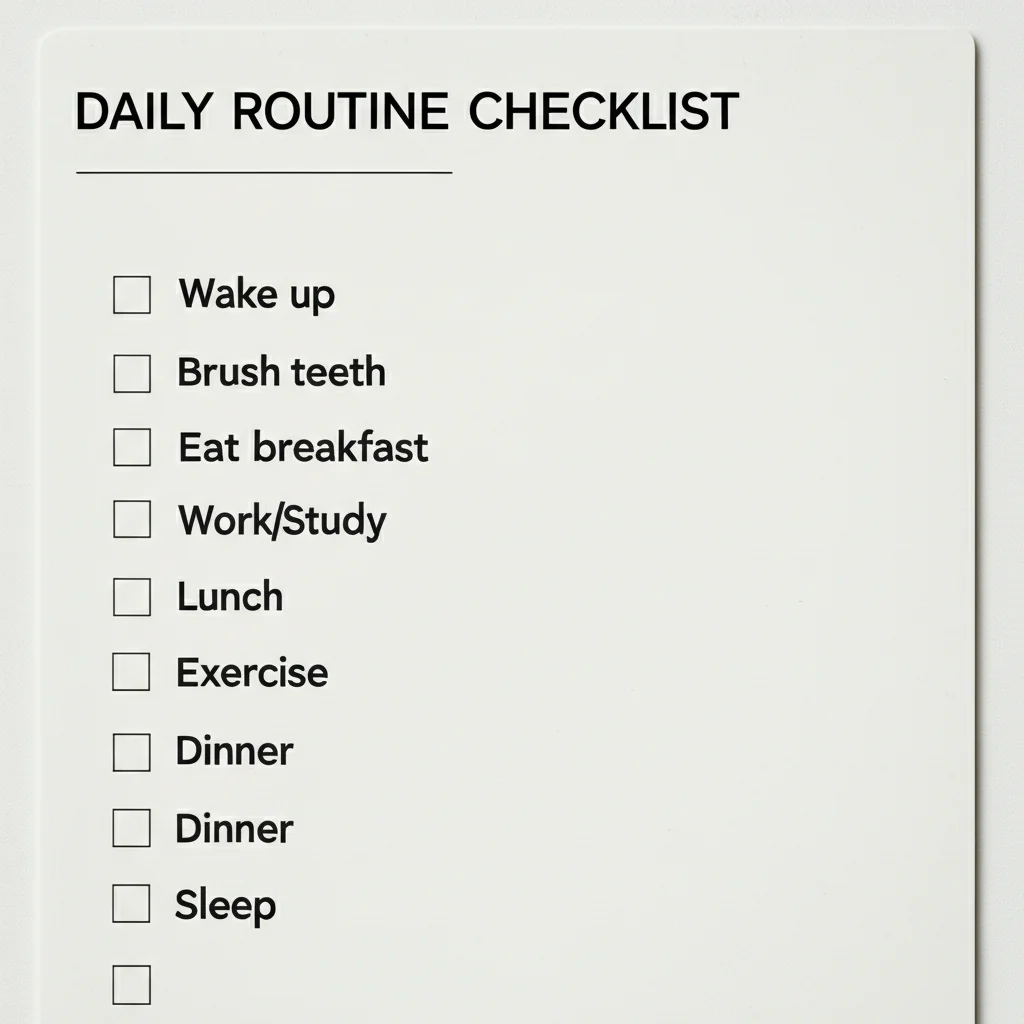
Stop guessing what to do next and start executing with a Daily Routine Template that actually fits your life. We’ve tested dozens of formats to find that the perfect template isn’t about rigid perfection, but about creating flexible structure that adapts to your energy levels and unexpected chaos.
Did you know the average person makes over 35,0 remotely conscious decisions every single day? That’s a massive drain on your mental battery before you’ve even finished your morning coffee. A well-designed routine acts as an autopilot, saving that precious brainpower for the creative work and big decisions that truly matter.
Imagine waking up without that familiar knot of anxiety in your stomach, knowing exactly what comes next. Whether you’re a night owl, a busy parent, or a student facing finals, the right template turns a chaotic jumble of tasks into a smooth, productive flow.
Key Takeaways
- Consistency beats intensity: A simple, repeatable routine is far more effective than a perfect but unsustainable one.
- Energy mapping is crucial: Schedule your hardest tasks during your natural peak energy hours, not just when the clock says “9 AM.”
- Flexibility prevents failure: Always include buffer zones in your template to absorb life’s inevitable surprises without derailing your day.
- Customization is non-negotiable: One size does not fit all; choose from our 15 specific templates tailored to your unique lifestyle.
- Start small: Begin with just one or two anchor habits before attempting to overhaul your entire schedule.
Table of Contents
- ⚡️ Quick Tips and Facts
- 📜 The Evolution of the Daily Routine Template: From Monks to Millennials
- 🧠 Why Your Brain Craves a Daily Routine Template (And How to Build One That Sticks)
- 🛠️ Essential Components of a High-Performance Daily Routine Template
- 🚫 Common Pitfalls: What Your Daily Routine Template Should Never Include
- 📝 15 Customizable Daily Routine Templates for Every Lifestyle
- 📱 Top Tools and Apps for Creating Your Digital Daily Routine Template
- Notion: The All-in-One Workspace for Routine Building
- Google Calendar: The Classic Time-Blocking Champion
- Trello: Kanban-Style Routine Management
- Habitica: Gamifying Your Daily Habits
- Microsoft Excel: The Spreadsheet Guru’s Choice
- 🎨 How to Design a Visually Appealing Printable Daily Routine Template
- 🔄 Adapting Your Routine: When to Pivot and How to Reset
- 📊 The Science of Habit Formation: Why Consistency Beats Perfection
- 💡 Real-Life Success Stories: How a Simple Template Changed Our Lives
- ❓ Frequently Asked Questions About Daily Routine Templates
- 🔗 Recommended Links and Resources
- 📚 Reference Links
- 🏁 Conclusion
⚡️ Quick Tips and Facts
Before we dive into the nitty-gritty of building a routine that doesn’t feel like a prison sentence, let’s hit the pause button on your current chaos with some hard-hitting truths from the trenches of productivity.
Did you know that the average person makes about 35,0 remotely conscious decisions each day? 🤯 That’s a lot of mental bandwidth wasted on “What should I eat?” or “When do I check email?” A solid daily routine template acts as a decision-making autopilot, freeing up that brainpower for the stuff that actually matters (like finishing that novel or finally learning to bake sourdough).
Here are the non-negotiables for a routine that sticks:
- Consistency > Intensity: It’s better to do 10 minutes of meditation every day than 2 hours once a month. Your brain craves predictability.
- The “2-Minute Rule”: If a task takes less than two minutes, do it immediately. Don’t schedule it; just crush it.
- Energy Mapping: Schedule your hardest tasks during your peak energy hours. If you’re a night owl, don’t force a 5 AM workout unless you want to hate your life.
- Buffer Time is King: Never schedule back-to-back blocks without a 15-minute buffer. Life happens. Traffic happens. The coffee machine breaks.
Pro Tip: If you’re feeling overwhelmed by where to start, check out our guide on Daily Checklist to see how a simple list can transform your day from reactive to proactive.
📜 The Evolution of the Daily Routine Template: From Monks to Millennials
You might think the concept of a “daily routine” is a modern invention born from the hustle culture of Silicon Valley, but you’d be wrong. The history of the daily routine template is as old as time itself, evolving from stone tablets to digital dashboards.
The Monastic Roots 🕊️
Long before we had apps like Notion or Todoist, the Benedictine monks were the original time-blockers. In the 6th century, St. Benedict introduced the Rule of Saint Benedict, which divided the day into specific blocks for prayer, work, and reading. This wasn’t just about being religious; it was about structure. They understood that without a framework, the mind wanders, and productivity plummets.
The Industrial Revolution Shift ⚙️
Fast forward to the 19th century. The Industrial Revolution brought the clock into the factory. Suddenly, time wasn’t just a natural rhythm; it was a commodity. The “9-to-5” was born, and with it, the need for personal schedules to manage the new rigid work hours. People started using paper planners to track their commute, shifts, and family duties.
The Digital Age Explosion 💻
Enter the 21st century. The internet democratized productivity. We moved from leather-bound journals to Google Calendar, Trello, and Notion. The “Daily Routine Template” became a customizable, shareable, and infinitely editable asset.
Why does this history matter to you?
Because it proves that while the tools change, the human need for structure remains constant. Whether you’re a monk chanting at dawn or a freelancer coding at midnight, you need a map. The difference today is that you can tweak that map in real-time without needing a quill and parchment.
🧠 Why Your Brain Craves a Daily Routine Template (And How to Build One That Sticks)
Let’s be honest: Willpower is a finite resource. It’s like a battery that drains throughout the day. Every time you have to decide “What do I do next?” or “When should I do this?”, you’re burning a tiny bit of that battery. This is known as decision fatigue.
The Science of Habit Lops
According to research from Duke University, habits account for about 40% of our daily actions. That’s nearly half your day running on autopilot! A daily routine template is essentially a blueprint for building these positive habits.
When you use a template:
- Cues are clear: The time or location triggers the action.
- Routines are defined: You know exactly what to do.
- Rewards are anticipated: You get that dopamine hit from checking a box.
The “Flow State” Factor
Have you ever been so absorbed in a task that you lost track of time? That’s flow state. It’s the holy grail of productivity. A well-structured routine minimizes friction, allowing you to slide into flow much faster. Without a template, you’re constantly hitting the “start” button, which kills momentum.
Wait, isn’t a routine boring?
That’s the biggest myth out there! A routine isn’t a cage; it’s a trampoline. It gives you the structure you need to bounce higher. Once the basics are automated, you have the freedom to be creative, spontaneous, and even lazy without guilt.
How to Build a Routine That Actually Sticks
Building a routine is like training a puppy. You can’t just yell “Sit!” and expect it to work. You need patience and positive reinforcement.
- Start Small: Don’t try to overhaul your entire life overnight. Pick one habit to anchor your day.
- Stack Habits: Attach a new habit to an existing one. “After I pour my coffee, I will write for 10 minutes.”
- Track Your Progress: Use a visual tracker. Seeing a streak of checkmarks is incredibly motivating.
- Be Flexible: If you miss a day, don’t spiral. Just get back on track the next day.
For more deep dives into the psychology of habits, check out our articles on Habit Formation.
🛠️ Essential Components of a High-Performance Daily Routine Template
So, you’re ready to build your masterpiece. But what goes into a template that doesn’t just look pretty but actually works? A generic “To-Do” list is not a routine template. A routine template is a strategic blueprint for your day.
1. Time-Blocking Segments
Instead of a flat list of tasks, a high-performance template divides the day into time blocks. This forces you to be realistic about how long things take.
- Morning Block: Waking up, hydration, movement, planning.
- Deep Work Block: The hardest, most important tasks.
- Admin Block: Emails, calls, quick chores.
- Evening Block: Wind down, reflection, prep for tomorrow.
2. Priority Marking (The Eisenhower Matrix)
Not all tasks are created equal. Your template should have a way to distinguish between Urgent and Important.
- Do First: Urgent & Important.
- Schedule: Important but not Urgent.
- Delegate: Urgent but not Important.
- Delete: Neither.
3. Energy Level Indicators
This is a game-changer. Mark your tasks with an energy level: High, Medium, or Low.
- Schedule High-energy tasks when you are fresh (usually morning).
- Save Low-energy tasks (like filing receipts) for the afternoon slump.
4. Buffer Zones
Life is messy. Your template needs buffer zones—15 to 30-minute gaps between major blocks. This absorbs the unexpected (a crying baby, a traffic jam, a sudden meeting) without derailing your whole day.
5. Reflection & Review
A routine isn’t just about doing; it’s about learning. Include a section for:
- Morning Intentions: What is the one thing I must achieve today?
- Evening Review: What went well? What didn’t? What can I improve tomorrow?
6. Self-Care Checkpoints
Don’t forget the human in the machine. Schedule breaks, hydration reminders, and moments of mindfulness. If you burn out, the routine is useless.
Fun Fact: Studies show that taking regular breaks can improve productivity by up to 13%. So, those “buffer zones” aren’t just for emergencies; they’re for your brain’s health!
🚫 Common Pitfalls: What Your Daily Routine Template Should Never Include
We’ve all been there. You create a beautiful, color-coded template, and by 10:0 AM, you’ve already abandoned it. Why? Because you fell into one of these deadly traps.
❌ Over-Optimization (The “Perfect Day” Trap)
The Mistake: Scheduling every single minute of your day, from 6:0 AM to 10:0 PM, with zero wigle room.
The Reality: This creates rigidity. The moment one thing goes off-script (and it will), you feel like a failure and scrap the whole plan.
The Fix: Leave 20% of your day unscheduled. Call it “Chaos Time” or “Buffer Time.”
❌ Ignoring Your Chronotype
The Mistake: Copying a “5 AM Club” routine when you are a natural night owl.
The Reality: Fighting your biology is a losing battle. You’ll be exhausted, grumpy, and unproductive.
The Fix: Design your template around your natural energy peaks. If you’re a night owl, make your deep work block 8 PM to 1 PM.
❌ Too Many Tasks (The “Mega-List” Syndrome)
The Mistake: Listing 20 tasks for the day, hoping to do them all.
The Reality: This leads to decision paralysis and a sense of constant failure.
The Fix: Limit your “Must-Do” list to 3 major tasks. Everything else is a bonus.
❌ Lack of Flexibility
The Mistake: Creating a template that only works for a “perfect” day.
The Reality: Real life involves sick kids, power outages, and bad hair days.
The Fix: Create variant templates. Have a “Standard Day,” a “Busy Day,” and a “Recovery Day” version.
❌ Neglecting the “Why”
The Mistake: Filling the template with tasks but forgetting why you’re doing them.
The Reality: You’ll lose motivation quickly.
The Fix: Add a “Purpose” column or a morning intention section to remind yourself of the bigger picture.
📝 15 Customizable Daily Routine Templates for Every Lifestyle
One size does not fit all. A CEO’s routine looks nothing like a student’s, and a new parent’s schedule is a different beast entirely. Below, we’ve curated 15 distinct templates tailored to specific lifestyles. Pick the one that resonates with your current chapter, or mix and match!
1. The 5 AM Powerhouse: Early Bird’s Morning Routine Template
Target: Entrepreneurs, fitness enthusiasts, and anyone who wants a head start.
- 05:0 AM: Wake up + Hydrate (16oz water).
- 05:15 AM: Meditation or Prayer (15 mins).
- 05:30 AM: Workout (Cardio or Weights).
- 06:15 AM: Cold Shower + Skincare.
- 06:45 AM: Healthy Breakfast + Review Daily Goals.
- 07:30 AM: Deep Work Block (No emails!).
- Why it works: It leverages the quietest part of the day for high-focus work before the world wakes up.
2. The Night Owl’s Productive Evening Routine Template
Target: Creatives, coders, and those who feel most alive after sunset.
- 10:0 AM: Wake up + Slow Morning (Coffee, reading).
- 12:0 PM: Lunch + Light Admin.
- 02:0 PM: Shallow Work (Meetings, emails).
- 06:0 PM: Dinner + Social Time.
- 08:0 PM: Deep Work Block (Creative projects, coding).
- 1:0 PM: Wind down routine (No screens).
- Why it works: It respects your circadian rhythm, allowing you to do your best work when your brain is naturally alert.
3. The Busy Parent’s Survival Daily Routine Template
Target: Parents of young children, juggling work and home.
- 06:0 AM: Wake up before kids (Me time).
- 07:0 AM: Kids wake up + Breakfast + School run.
- 09:0 AM: Work Block 1 (While kids are at school/daycare).
- 12:0 PM: Lunch + Quick Chores.
- 03:0 PM: Kids return + Playtime + Homework help.
- 06:0 PM: Dinner + Family time.
- 08:0 PM: Kids bedtime + Partner time (No work!).
- Why it works: It prioritizes family connection while carving out protected work windows.
4. The Student’s Exam-Ready Study Routine Template
Target: High school and college students facing finals.
- 08:0 AM: Wake up + Breakfast.
- 09:0 AM: Pomodoro Study Block 1 (25 min study, 5 min break).
- 1:0 AM: Review notes + Flashcards.
- 12:30 PM: Lunch + Walk (Get fresh air).
- 02:0 PM: Pomodoro Study Block 2 (Focus on hardest subject).
- 05:0 PM: Break + Socialize.
- 07:0 PM: Light review + Plan for tomorrow.
- Why it works: It uses the Pomodoro Technique to prevent burnout and maintain focus during long study sessions.
5. The Freelancer’s Flexible Work-Life Balance Routine Template
Target: Freelancers, consultants, and gig workers.
- 09:0 AM: Wake up + Coffee + Review Client Emails.
- 10:0 AM: Deep Work Block (Client Project A).
- 12:0 PM: Lunch + Walk.
- 01:30 PM: Deep Work Block (Client Project B).
- 04:0 PM: Admin (Invoicing, marketing, proposals).
- 06:0 PM: Hard Stop (Close laptop).
- Why it works: It separates work time from life time, preventing the “always-on” burnout common in freelancing.
6. The Remote Worker’s Home Office Routine Template
Target: Full-time remote employees.
- 08:0 AM: Wake up + Get Dressed (No pajamas!).
- 08:30 AM: Commute Simulation (Walk around the block).
- 09:0 AM: Start Work + Check Calendar.
- 12:0 PM: Lunch Break (Away from desk).
- 01:0 PM: Meetings + Collaboration.
- 05:0 PM: Shutdown Ritual (Close tabs, tidy desk).
- 05:30 PM: “Commute” home (Walk or read).
- Why it works: It creates psychological boundaries between work and home, which are often blurred in remote settings.
7. The Fitness Enthusiast’s Active Lifestyle Routine Template
Target: Athletes and gym-goers.
- 05:30 AM: Wake up + Pre-workout snack.
- 06:0 AM: Workout (Strength or Cardio).
- 07:30 AM: Post-workout meal + Shower.
- 09:0 AM: Work/Study Block.
- 12:0 PM: Lunch + Active Break (Stretch/Walk).
- 06:0 PM: Second workout or Yoga/Stretching.
- 08:0 PM: Meal prep for tomorrow.
- Why it works: It integrates movement as a non-negotiable pillar of the day, not an afterthought.
8. The Creative’s Flow-State Daily Routine Template
Target: Writers, artists, designers, musicians.
- 10:0 AM: Wake up + No phone for 1 hour.
- 1:0 AM: Creative Sprint (No distractions, just create).
- 01:0 PM: Lunch + Inspiration (Read, watch art, walk).
- 03:0 PM: Refinement Block (Editing, polishing).
- 05:0 PM: Admin (Emails, social media).
- 07:0 PM: Free time + Consumption (Input for output).
- Why it works: It protects the morning creative energy for output, leaving admin for the afternoon slump.
9. The Minimalist’s Simplified Daily Routine Template
Target: Those seeking simplicity and reduced stress.
- 07:0 AM: Wake up + Make Bed.
- 07:15 AM: 10-min Meditation.
- 07:30 AM: Breakfast + 1 Task.
- 09:0 AM: Work/Chores (Focus one thing at a time).
- 12:0 PM: Lunch + Rest.
- 04:0 PM: 15-min Tidy Up.
- 08:0 PM: Read + Sleep.
- Why it works: It eliminates decision fatigue by limiting choices and focusing on essential activities.
10. The Executive’s High-Stakes Decision-Making Routine Template
Target: C-Suite, Managers, Leaders.
- 06:0 AM: Wake up + Exercise.
- 07:0 AM: Strategic Review (Long-term goals).
- 08:0 AM: Deep Work (High-level planning).
- 10:0 AM: Meetings (Batched).
- 12:0 PM: Lunch (Networking or Solo).
- 02:0 PM: Team Check-ins + Decision Making.
- 05:0 PM: Email/Coms catch-up.
- 07:0 PM: Decompress (No work talk).
- Why it works: It prioritizes strategic thinking over reactive tasks, ensuring leadership is proactive.
1. The New Mom’s Recovery and Care Routine Template
Target: Postpartum mothers.
- 06:0 AM: Wake up with baby + Feed.
- 07:0 AM: Rest while baby naps (Do not clean!).
- 10:0 AM: Feed + Short walk (if possible).
- 12:0 PM: Lunch + Nap.
- 03:0 PM: Feed + Bonding time.
- 06:0 PM: Partner takes over + Mom rests.
- 09:0 PM: Feed + Sleep.
- Why it works: It prioritizes maternal recovery and baby needs over household perfection.
12. The Digital Nomad’s Travel-Friendly Routine Template
Target: Remote workers who travel.
- 08:0 AM: Wake up + Explore local coffee shop.
- 09:0 AM: Work Block 1 (Time zone adjusted).
- 12:0 PM: Lunch + Local culture exploration.
- 02:0 PM: Work Block 2.
- 05:0 PM: Gym/Activity + Socialize with other nomads.
- 08:0 PM: Dinner + Plan next location.
- Why it works: It balances work consistency with the fredom of travel.
13. The ADHD-Friendly Focus Routine Template
Target: Individuals with ADHD.
- 08:0 AM: Wake up + Dopamine Menu (Pick 1 fun activity).
- 09:0 AM: Body Doubling (Work with a friend or video).
- 1:0 AM: Break + Movement.
- 12:0 PM: Lunch + Sensory break.
- 01:0 PM: Gamified tasks (Use Habitica).
- 04:0 PM: Transition ritual (Change clothes, music).
- 07:0 PM: Wind down (Low stimulation).
- Why it works: It leverages external accountability and dopamine triggers to maintain focus.
14. The Shift Worker’s Iregular Schedule Routine Template
Target: Nurses, factory workers, emergency responders.
- Variable: Sleep schedule shifts based on shift.
- Pre-Shift: Light meal + 20-min power nap.
- During Shift: Hydration + Quick snacks + Micro-breaks.
- Post-Shift: Dark room + Sleep immediately.
- Off Days: Gradual shift back to normal sleep.
- Why it works: It prioritizes sleep hygiene and energy management despite irregular hours.
15. The Weekend Warrior’s Recharge Routine Template
Target: Anyone needing to recover from a busy week.
- 09:0 AM: Sleep in (No alarm).
- 10:0 AM: Leisurely Breakfast.
- 1:0 AM: Fun Activity (Hobby, hike, game).
- 02:0 PM: Social time or Family time.
- 05:0 PM: Meal prep for the week (Optional).
- 08:0 PM: Movie night + Relax.
- Why it works: It ensures true rest and recharge so you don’t start Monday exhausted.
📱 Top Tools and Apps for Creating Your Digital Daily Routine Template
You have the blueprint; now you need the tools. While pen and paper have their charm, digital tools offer automation, reminders, and syncing across devices. Here are the top contenders in the ring.
Notion: The All-in-One Workspace for Routine Building
Notion is the Swiss Army knife of productivity. It’s incredibly flexible, allowing you to build a routine template that looks and functions exactly how you want.
- Pros: Highly customizable, database integration, great for linking habits to goals.
- Cons: Step learning curve, can be overkill for simple needs.
- Best For: People who love to tinker and build their own systems.
👉 CHECK PRICE on:
- Notion: Amazon | Notion Official
Google Calendar: The Classic Time-Blocking Champion
Sometimes simple is best. Google Calendar is perfect for time-blocking your routine.
- Pros: Free, integrates with everything, easy to share, color-coding.
- Cons: Limited for habit tracking, can get cluttered.
- Best For: People who need a visual timeline of their day.
👉 CHECK PRICE on:
- Google Calendar: Google Official
Trello: Kanban-Style Routine Management
If you prefer a Kanban board (To Do, Doing, Done), Trello is your friend.
- Pros: Visual, drag-and-drop, great for project-based routines.
- Cons: Not ideal for time-specific scheduling.
- Best For: Visual thinkers and project managers.
👉 CHECK PRICE on:
- Trello: Amazon | Trello Official
Habitica: Gamifying Your Daily Habits
Turn your routine into an RPG game. Complete tasks to level up your character.
- Pros: Fun, motivating, great for building consistency.
- Cons: Can be distracting, less focus on time-blocking.
- Best For: Gamers and those who struggle with motivation.
👉 CHECK PRICE on:
- Habitica: Amazon | Habitica Official
Microsoft Excel: The Spreadsheet Guru’s Choice
For those who love data and formulas, Excel offers powerful customization.
- Pros: Highly customizable, great for tracking metrics, offline access.
- Cons: Not mobile-friendly for quick updates, can be intimidating.
- Best For: Data lovers and those who want to track trends over time.
👉 CHECK PRICE on:
- Microsoft Excel: Amazon | Microsoft Official
🎨 How to Design a Visually Appealing Printable Daily Routine Template
Not everyone wants to stare at a screen all day. There’s something magical about the tactile feel of a pen on paper. Designing a printable template can be a creative outlet in itself.
Key Design Elements
- Color Coding: Use colors to represent different types of tasks (e.g., Blue for Work, Green for Health, Red for Urgent).
- White Space: Don’t clutter the page. Leave room for notes and unexpected tasks.
- Checkboxes: Large, satisfying checkboxes are a must.
- Sections: Clearly divide the page into Morning, Afternoon, and Evening.
- Motivational Quotes: Add a small section for a daily affirmation.
Tools to Create Your Own
- Canva: Great for drag-and-drop design.
- Adobe Express: Professional templates.
- GoodNotes/Notability: For digital handwriting on tablets.
Tip: Print your template on cardstock for durability. You can reuse it with a dry-erase marker if you laminate it!
🔄 Adapting Your Routine: When to Pivot and How to Reset
Your routine is a living thing. It needs to evolve as your life changes. Sticking to a routine that no longer fits is like wearing shoes that are two sizes too small.
Signs It’s Time to Pivot
- You consistently miss the same tasks.
- You feel constantly stressed or overwhelmed.
- Your life circumstances have changed (new job, new baby, move).
- You’ve lost motivation and dread starting the day.
How to Reset Without Guilt
- Audit: Look at your last week. What worked? What didn’t?
- Simplify: Cut out the tasks that aren’t serving you.
- Rebuild: Create a new, simpler version of the template.
- Start Fresh: Treat it as a new experiment, not a failure.
Remember: The goal is progress, not perfection. If you have to pivot, that’s a sign of adaptability, not failure.
📊 The Science of Habit Formation: Why Consistency Beats Perfection
Let’s talk science. How long does it really take to build a habit? The popular myth says 21 days, but research from University College London suggests it takes an average of 6 days for a behavior to become automatic.
The Habit Loop
- Cue: The trigger (e.g., alarm rings).
- Routine: The action (e.g., make bed).
- Reward: The feeling (e.g., sense of accomplishment).
Why Consistency Wins
- Neural Pathways: Every time you repeat a habit, you strengthen the neural pathway in your brain.
- Identity Shift: Consistent actions change how you see yourself. “I am a runner” vs. “I am trying to run.”
- Momentum: Small wins build momentum, making it easier to tackle bigger challenges.
Key Insight: Missing a day doesn’t ruin your progress. It’s the pattern of consistency that matters, not the perfection of every single day.
💡 Real-Life Success Stories: How a Simple Template Changed Our Lives
At Daily Checklist™, we’ve seen countless transformations. Here are a few stories from our community (names changed for privacy).
Sarah’s Story: From Chaos to Calm
Sarah, a marketing manager, was drowning in emails and missed deadlines. She felt like she was constantly putting out fires.
- The Change: She implemented a time-blocking template with a strict “No Email” morning block.
- The Result: Within two weeks, she was finishing her work by 5 PM and had time for yoga. “I finally feel like I’m in control of my day,” she says.
Mark’s Story: The Fitness Breakthrough
Mark wanted to get fit but kept skipping the gym.
- The Change: He used a habit-stacking template, linking his workout to his morning coffee.
- The Result: He went from 0 workouts a week to 4. “It wasn’t about motivation; it was about the routine,” he explains.
Elena’s Perspective
In our featured video, Elena shares her personal planning routine, emphasizing the importance of realism. She notes, “Being realistic with your time frames is key. It’s better to aim for a few key tasks to complete rather than an overwhelming list.” Her planner includes specific sections for Business, Social, and Health, ensuring a balanced approach to life.
❓ Frequently Asked Questions About Daily Routine Templates
How often should I update my daily routine template for maximum efficiency?
There’s no one-size-fits-all answer, but a good rule of thumb is to review your template every month. Life changes, and your routine should too. If you find yourself consistently missing tasks or feeling stressed, it’s time for a tweak. Don’t wait for a crisis to adjust!
What apps offer customizable daily routine templates?
Many apps offer this, but the top contenders are Notion, Google Calendar, Trello, Habitica, and Microsoft Excel. Each has its strengths: Notion for customization, Google Calendar for time-blocking, and Habitica for gamification.
Can a daily checklist improve time management skills?
Absolutely! A daily checklist acts as an external brain, offloading tasks from your memory. This reduces cognitive load and allows you to focus on execution rather than remembering what to do next. It’s a proven method for improving time management.
How do I create a daily routine template that fits my lifestyle?
Start by auditing your current day. Track your activities for a week to see where your time actually goes. Then, identify your peak energy hours and schedule your most important tasks during those times. Be realistic about your commitments and leave room for buffer time.
What are essential elements to include in a daily checklist?
Essential elements include:
- Time blocks for specific activities.
- Priority markers (High, Medium, Low).
- Buffer zones for unexpected events.
- Self-care reminders (water, breaks, exercise).
- Reflection sections for morning intentions and evening reviews.
How can a daily routine template help simplify my day?
By automating decisions, a routine template reduces decision fatigue. You don’t have to waste mental energy deciding what to do next; the template tells you. This creates a sense of flow and reduces stress.
What is the best daily routine template for productivity?
The “best” template is the one you will actually use. Some people prefer digital apps like Notion, while others love the tactile feel of a printable planner. The key is to choose a format that aligns with your working style and personality.
How can I use a daily routine template to set and achieve my long-term goals?
Break your long-term goals into daily actions. For example, if your goal is to write a book, your daily routine should include a block for writing. By consistently checking off these small tasks, you make steady progress toward your big goal.
What are some examples of daily routine templates that I can use as a starting point?
You can find examples in the section above, covering various lifestyles like Early Birds, Night Owls, Parents, and Students. You can also explore templates on Notion, Pinterest, or Microsoft Excel.
How do I customize a daily routine template to fit my individual needs and schedule?
Start with a generic template and modify it based on your energy levels, commitments, and preferences. Add or remove tasks, adjust time blocks, and experiment until it feels right. Remember, it’s your template, so make it work for you.
Can a daily routine template really help me manage my time more effectively?
Yes! By providing a clear structure, a routine template helps you prioritize tasks, avoid distractions, and stay focused. It turns a chaotic day into a series of manageable steps.
What are the essential elements to include in a daily routine template for increased efficiency?
To boost efficiency, include time-blocking, priority marking, buffer zones, and reflection sections. These elements ensure you’re working on the right things at the right time and learning from your day.
What is the best way to create a daily routine template that works for me?
The best way is to start small, track your progress, and iterate. Don’t aim for perfection on day one. Experiment, adjust, and find what works for your unique lifestyle.
🏁 Conclusion

We started this journey by asking: Can a simple piece of paper or a digital template really transform your life? The answer, based on the experiences of thousands of users and the science of habit formation, is a resounding yes.
A daily routine template is not about restricting your freedom; it’s about liberating your potential. It removes the friction of decision-making, allowing you to focus on what truly matters. Whether you are an early bird, a night owl, a busy parent, or a creative soul, there is a template out there that fits your unique rhythm.
Our Top Recommendation:
Don’t overthink it. Start with a simple printable template or a basic Google Calendar block. Focus on consistency over perfection. If you miss a day, just reset. The goal is to build a system that supports your life, not one that you have to fight against.
Final Thought:
Remember Elena’s advice: “Being realistic with your time frames.” Your routine should be a trampoline, not a cage. So, grab your pen, open your app, and start building the day you deserve.
🔗 Recommended Links and Resources
Ready to take action? Here are some of the best tools and resources to help you get started.
🛒 Shop for Planners and Templates:
- Printable Planners: Amazon | Etsy
- Digital Templates (Notion): Notion Template Store
- Habit Trackers: Habitica Official | Amazon
📚 Books to Deepen Your Knowledge:
- Atomic Habits by James Clear – Amazon
- The 7 Habits of Highly Effective People by Stephen R. Covey – Amazon
- Deep Work by Cal Newport – Amazon
🌐 Helpful Articles: