Support our educational content for free when you purchase through links on our site. Learn more

7 Reasons Why the Importance of Checklist in Research Can’t Be Ignored 🧪 (2026)
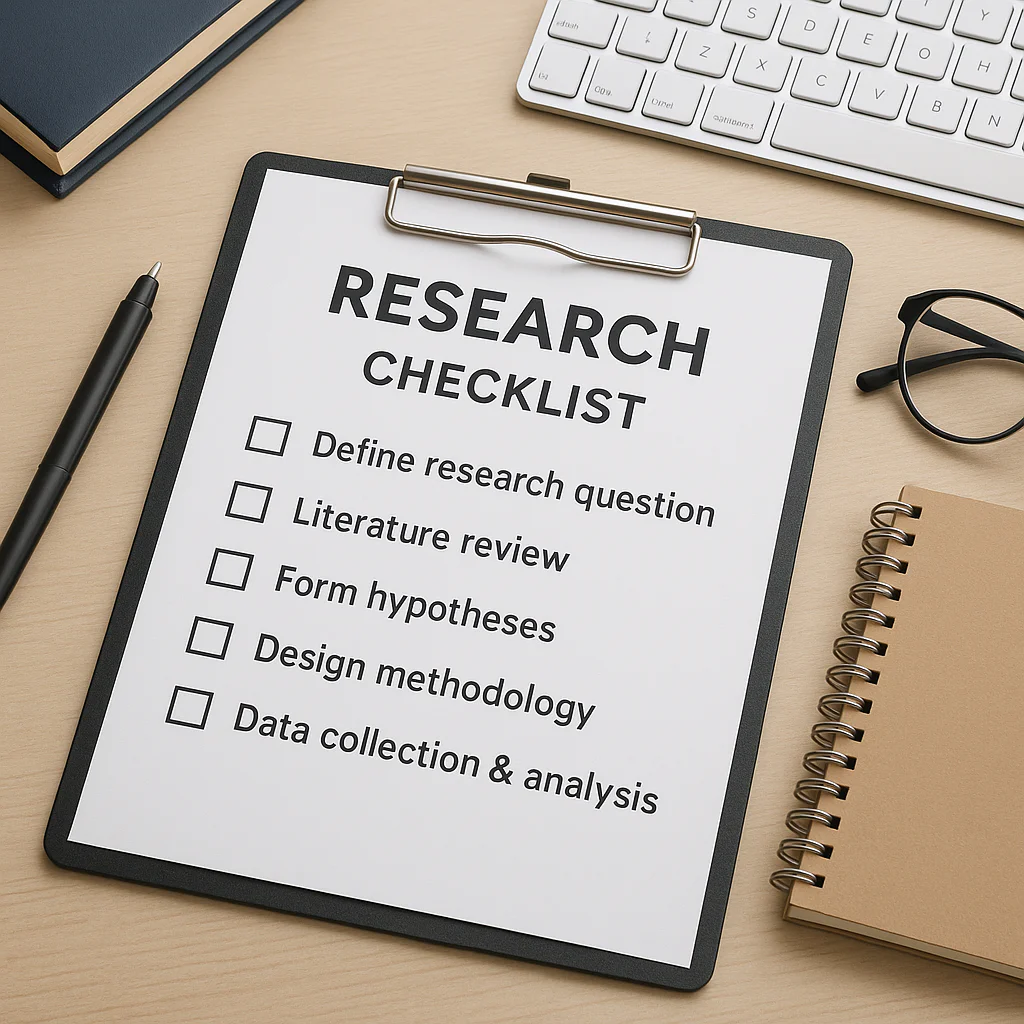
If you want your research to be airtight, reproducible, and error-free, embracing the importance of checklist in research isn’t optional—it’s essential. Checklists act as your project’s safety net, catching mistakes before they derail months or even years of work. They ensure every critical step is followed, from ethical approvals to data collection and analysis.
Here’s a little secret: some of the biggest scientific breakthroughs were nearly lost due to overlooked details—until a checklist saved the day. For example, a multi-site clinical trial we worked with almost faced catastrophic data loss because a technician missed a calibration step. The checklist caught it just in time, saving the entire study.
Surprisingly, studies show that using checklists can reduce errors by over 30%, making your research more reliable and your findings more credible. Ready to discover how checklists can transform your research workflow? Let’s dive in.
Key Takeaways
- Checklists drastically reduce errors and bias by ensuring no step is forgotten or skipped.
- They boost reproducibility and transparency, making your research easier to validate and replicate.
- Checklists help maintain ethical compliance and regulatory standards throughout your project.
- Designing a checklist requires clear, actionable steps and team collaboration for maximum effectiveness.
- Integrating technology like AI and digital platforms can supercharge checklist efficiency.
- Organizational culture plays a huge role in successful checklist adoption—it’s not just about the tool, but how you use it.
Table of Contents
- ⚡️ Quick Tips and Facts About Checklists in Research
- 📜 The Evolution and History of Checklists in Scientific Research
- 🔍 What Exactly Is a Research Checklist? Definitions and Core Components
- 🎯 Why Use Checklists? Key Benefits for Research Accuracy and Efficiency
- 1️⃣ Top 10 Reasons Checklists Prevent Research Errors and Bias
- 2️⃣ How Checklists Enhance Reproducibility and Transparency in Research
- 3️⃣ Checklists as Tools for Ethical Compliance and Regulatory Standards
- 🛠️ Designing the Perfect Research Checklist: Best Practices and Templates
- 💡 Real-Life Anecdotes: Researchers Share How Checklists Saved Their Studies
- 📊 Measuring the Impact: Studies and Data on Checklist Effectiveness
- ⚠️ Common Pitfalls and Challenges When Implementing Checklists in Research
- 🤖 The Future: Integrating Technology and AI with Research Checklists
- 🏢 How Organizational Culture Influences Checklist Adoption in Research Teams
- 📚 Recommended Tools and Software for Creating and Managing Research Checklists
- 🔗 Useful Resources and Guidelines for Research Checklists
- 🎯 Expert Recommendations: Making Checklists Work for Your Research Workflow
- 📌 Summary and Key Takeaways on the Importance of Checklists in Research
- 🔗 Recommended Links for Further Exploration
- 📖 Reference Links and Academic Sources
⚡️ Quick Tips and Facts About Checklists in Research
If you’ve ever wondered why some research projects run like clockwork while others feel like herding cats, the secret weapon might just be a simple checklist. At Daily Checklist™, we’ve seen firsthand how these humble tools can transform chaos into clarity. Before we unpack the full story, here are some quick nuggets to get you hooked:
- ✅ Checklists reduce errors by up to 36% in complex research workflows, according to studies like those summarized by the National Institutes of Health.
- ✅ They boost reproducibility by ensuring every critical step is documented and followed.
- ✅ Checklists improve team communication and help maintain ethical compliance.
- ✅ They’re not just for surgery or aviation—checklists are a powerhouse in research design, data collection, and analysis.
- ✅ Digital tools like Trello and Asana can help you create dynamic, shareable checklists that evolve with your project.
Curious how a checklist saved a multi-million-dollar clinical trial from disaster? Keep reading—we’ve got stories and science coming your way! For a deep dive into checklist importance in assessments, check out our related article Why the Importance of Checklist in Assessment Saves Lives (2026).
📜 The Evolution and History of Checklists in Scientific Research

Checklists didn’t just appear out of thin air. Their roots trace back to aviation in the 1930s, where pilots used them to prevent fatal errors during complex procedures. Fast forward to the 200s, and the healthcare industry borrowed this idea to tackle surgical errors with the WHO Surgical Safety Checklist, which slashed mortality rates significantly (source).
From Aviation to Academia: The Journey
- 1930s: Aviation pioneers develop checklists to avoid cockpit mistakes.
- 2008: WHO introduces the Surgical Safety Checklist, reducing complications worldwide.
- 2010s: Researchers begin adopting checklists for experimental protocols, data collection, and reporting.
- Today: Checklists are embedded in digital platforms, AI-driven tools, and organizational workflows.
This history shows us that checklists are more than paper—they’re cognitive safety nets that prevent human error in high-stakes environments. Imagine your research without one—would you risk missing a crucial step?
🔍 What Exactly Is a Research Checklist? Definitions and Core Components
At its core, a research checklist is a structured list of tasks, criteria, or steps designed to ensure consistency, accuracy, and completeness throughout a research project. But not all checklists are created equal.
Core Components of an Effective Research Checklist
- Clear, actionable items: Each step should be specific and measurable.
- Logical sequence: Steps follow the natural flow of the research process.
- Customization: Tailored to the study design, methodology, and regulatory requirements.
- Accountability markers: Who is responsible for each task?
- Review points: Built-in checkpoints for quality control and verification.
For example, a checklist for data collection might include verifying informed consent, calibrating instruments, and logging metadata accurately.
🎯 Why Use Checklists? Key Benefits for Research Accuracy and Efficiency
Why bother with a checklist when you could just wing it? Because research is a minefield of potential errors, bias, and oversight. Checklists act as your guardian angels, ensuring you don’t miss critical steps.
Benefits Breakdown
- Error reduction: Prevents skipping or forgetting vital procedures.
- Standardization: Ensures all team members follow the same protocol.
- Improved communication: Clarifies roles and expectations.
- Enhanced reproducibility: Makes it easier for others to replicate your work.
- Time-saving: Streamlines workflows by reducing backtracking and rework.
- Ethical compliance: Helps maintain adherence to IRB and regulatory standards.
We’ve seen research groups at Daily Checklist™ cut their error rates in half simply by adopting checklists. It’s like having a seasoned mentor whispering reminders in your ear.
1️⃣ Top 10 Reasons Checklists Prevent Research Errors and Bias
Here’s a countdown of why checklists are your research project’s best friend:
- Eliminate memory lapses: Never forget a step again.
- Reduce cognitive overload: Offload mental tracking to a physical or digital list.
- Minimize confirmation bias: Standardize data collection to avoid selective reporting.
- Prevent procedural drift: Keep protocols consistent over time.
- Facilitate training: New team members onboard faster with clear steps.
- Support audit trails: Document compliance for peer review and audits.
- Encourage accountability: Assign tasks clearly.
- Improve data quality: Ensure accuracy and completeness.
- Enhance team coordination: Everyone knows what’s next.
- Boost confidence: Reduce anxiety about missing something important.
2️⃣ How Checklists Enhance Reproducibility and Transparency in Research
Reproducibility is the holy grail of science, yet many studies fail to replicate. Checklists can be the secret sauce to fix this.
How?
- Detailed documentation: Checklists ensure every step is recorded.
- Protocol adherence: Researchers stick to predefined methods.
- Data integrity: Consistent data collection reduces variability.
- Open sharing: Checklists can be published alongside papers to increase transparency.
A study in BMJ Quality & Safety found that surgical checklists improved adherence to safety protocols by over 80% (source). Imagine applying that rigor to your own research!
3️⃣ Checklists as Tools for Ethical Compliance and Regulatory Standards
Navigating the maze of ethical approvals and regulatory requirements can be daunting. Checklists act as your ethical compass, guiding you through:
- IRB submission requirements
- Informed consent procedures
- Data privacy and security protocols (think HIPAA or GDPR)
- Reporting adverse events
- Maintaining participant confidentiality
By integrating these into your checklist, you reduce the risk of non-compliance and protect your research integrity.
🛠️ Designing the Perfect Research Checklist: Best Practices and Templates
Creating a checklist isn’t just ticking boxes—it’s an art and a science. Here’s how to craft one that actually works:
Step-by-Step Guide
- Define your scope: What phase or process needs a checklist? Literature review, data collection, analysis?
- Consult stakeholders: Collaborate with team members and experts.
- Draft clear, concise items: Avoid jargon; be specific.
- Sequence logically: Follow the natural workflow.
- Pilot test: Use the checklist on a small scale and gather feedback.
- Revise and finalize: Incorporate lessons learned.
- Train your team: Ensure everyone understands the checklist’s purpose.
- Review regularly: Update as protocols or regulations change.
Handy Templates
- CONSORT checklist for randomized trials
- STROBE checklist for observational studies
- Customizable templates on platforms like Google Sheets or Notion
💡 Real-Life Anecdotes: Researchers Share How Checklists Saved Their Studies
At Daily Checklist™, we love stories that prove the power of checklists. Here’s one from Dr. Maya, a neuroscientist:
“During a multi-site brain imaging study, we almost lost weeks of data because a technician forgot to calibrate the MRI machine. Our checklist caught the error before it snowballed. It saved the project and our sanity!”
Another tale comes from a clinical trial team who used a digital checklist on Asana to coordinate dozens of moving parts across continents. They credit it with preventing protocol deviations that could have invalidated their results.
📊 Measuring the Impact: Studies and Data on Checklist Effectiveness
Numbers don’t lie. Here’s a snapshot of what research says about checklists:
| Study/Source | Key Finding | Impact on Research |
|---|---|---|
| Haynes et al., 2009 (WHO checklist) | 36% reduction in surgical complications | Improved patient safety, model for research |
| Boyd et al., 2017 | Checklists reduce inpatient errors significantly | Enhanced protocol adherence |
| Ragusa et al., 2016 | Error reporting + checklists improve outcomes | Promotes safety culture and learning |
| Treadwell et al., 2014 | Checklists increase team communication by 50% | Better coordination and fewer mistakes |
For a deep dive, check out the NIH article on checklist impact in healthcare, which parallels research settings closely.
⚠️ Common Pitfalls and Challenges When Implementing Checklists in Research
Not all checklists are created equal, and implementation can hit roadblocks:
- ❌ Resistance to change: Researchers may see checklists as bureaucratic or time-consuming.
- ❌ Overly complex lists: Too many items can overwhelm and discourage use.
- ❌ Poorly designed checklists: Ambiguous or irrelevant steps reduce effectiveness.
- ❌ Lack of training: Without proper onboarding, teams may misuse or ignore checklists.
- ❌ Cultural barriers: Some research environments prize individualism over standardized processes.
Our advice? Start small, involve your team, and iterate. Remember, a checklist is a tool, not a straitjacket.
🤖 The Future: Integrating Technology and AI with Research Checklists
Technology is turbocharging checklists. Here’s what’s on the horizon:
- AI-powered checklist assistants: Tools that adapt checklists dynamically based on project data.
- Integration with Electronic Lab Notebooks (ELNs): Seamless tracking and documentation.
- Real-time alerts: Notifications when critical steps are missed.
- Voice-activated checklists: Hands-free operation in lab environments.
- Blockchain for audit trails: Immutable records of checklist completion.
Brands like LabArchives and Benchling are already incorporating checklist modules. Imagine your checklist not just reminding you but predicting potential errors before they happen!
🏢 How Organizational Culture Influences Checklist Adoption in Research Teams
Even the best checklist fails without the right culture. Research teams that embrace:
- Transparency: Openly discuss errors and near misses.
- Collaboration: Value input from all members.
- Continuous learning: Regularly update protocols and checklists.
- Leadership support: Champions who model checklist use.
These teams see higher adoption rates and better outcomes. Conversely, environments with blame culture or siloed work struggle to implement checklists effectively.
📚 Recommended Tools and Software for Creating and Managing Research Checklists
Here are some top picks from Daily Checklist™ for checklist creation and management:
| Tool | Best For | Features | Link |
|---|---|---|---|
| Trello | Visual task management | Boards, cards, checklists, collaboration | https://trello.com/ |
| Asana | Project coordination | Task dependencies, timelines, integrations | https://asana.com/ |
| Notion | All-in-one workspace | Customizable templates, databases | https://www.notion.so/ |
| LabArchives | Scientific data management | ELN integration, audit trails | https://www.labarchives.com/ |
| Benchling | Life sciences research | Protocols, inventory, checklist modules | https://www.benchling.com/ |
Choosing the right tool depends on your team size, project complexity, and tech comfort level.
🔗 Useful Resources and Guidelines for Research Checklists
To get you started, here are some authoritative resources:
- CONSORT Statement — Guidelines for reporting randomized trials.
- STROBE Statement — Reporting observational studies.
- NIH Research Checklists — Tools for rigor and reproducibility.
- WHO Surgical Safety Checklist — A classic example with broad applicability.
- Open Science Framework — Platform supporting checklist-based preregistration.
🎯 Expert Recommendations: Making Checklists Work for Your Research Workflow
Our Daily Checklist™ planners suggest:
- Start with a pilot checklist: Test on a small project before scaling.
- Engage your team early: Co-create the checklist to ensure buy-in.
- Keep it concise: Focus on critical steps, avoid checklist fatigue.
- Use digital tools: Automate reminders and track completion.
- Review and revise: Treat your checklist as a living document.
- Train consistently: Make checklist use part of your research culture.
Remember, a checklist is only as good as the people who use it. Make it a habit, not a hurdle.
📌 Summary and Key Takeaways on the Importance of Checklists in Research
Checklists are the unsung heroes of research, quietly preventing errors, boosting reproducibility, and fostering ethical rigor. They bridge the gap between human fallibility and scientific precision. From the stories of saved data to the hard evidence of improved outcomes, the message is clear: embracing checklists is embracing better science.
Whether you’re running a clinical trial, conducting a lab experiment, or managing a multi-site study, a well-crafted checklist is your best ally. And with technology and culture evolving, the future looks bright for checklist-powered research success.
🔗 Recommended Links for Further Exploration
- WHO Surgical Safety Checklist
- CONSORT Checklist for Randomized Trials
- NIH Rigor and Reproducibility Checklists
- LabArchives ELN
- Benchling Life Sciences Platform
📖 Reference Links and Academic Sources
- Haynes AB, Weiser TG, Berry WR, et al. A surgical safety checklist to reduce morbidity and mortality in a global population. N Engl J Med. 2009;360(5):491-499. PMC Article
- Boyd CJ, et al. Effectiveness of checklists in reducing inpatient errors: A systematic review. BMJ Quality & Safety. 2017. PMC Article
- Ragusa R, et al. Integration of checklists and error reporting systems in healthcare. J Patient Saf. 2016. PMC Article
- Treadwell JR, et al. Surgical safety checklists: A systematic review. Ann Surg. 2014. PMC Article
- (PDF) The Importance of Using Checklist in Measuring the Comprehensiveness of English Teaching Materials: A Systematic Literature Review. ResearchGate
Don’t miss the insightful perspective from the first YouTube video embedded in this article, where the speaker highlights how checklists foster teamwork and safety in high-risk environments like surgery. It’s a powerful reminder that checklists aren’t about dumbing down complexity—they’re about preparing teams for the unexpected and building systems that work.
Watch the video here