Support our educational content for free when you purchase through links on our site. Learn more

🚀 15 Ways Daily Checklists Simplify Your Routine (2026)
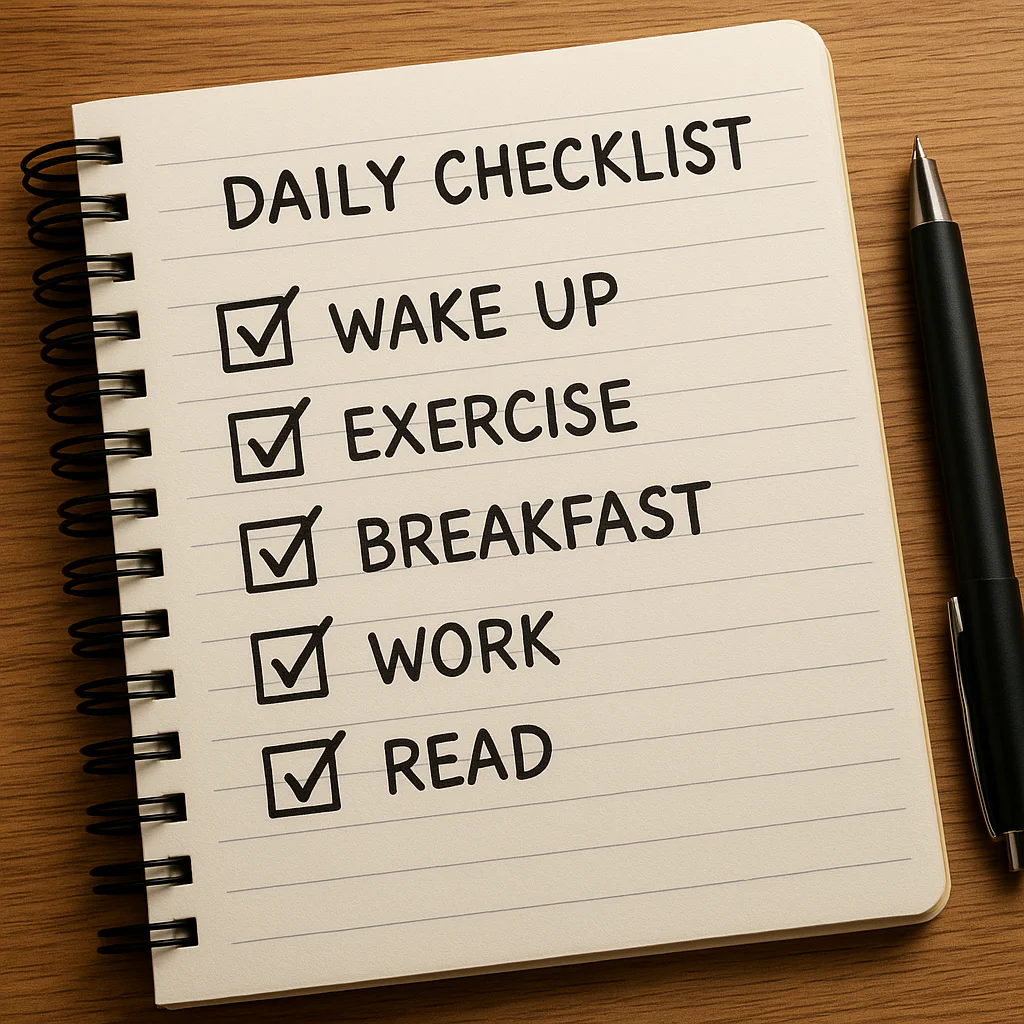
Ever feel like your brain is a browser with 47 tabs open, three of which are frozen, and one is playing music you can’t find? You’re not alone. While AI tools like ChatGPT are great for generating ideas, they can’t physically check off your tasks or stop you from forgetting your keys. The real secret to reclaiming those “10 hours” isn’t a magic algorithm; it’s the humble, battle-tested daily checklist. From ancient Roman scribes to modern surgeons, history proves that writing things down is the ultimate hack for eliminating decision fatigue and reducing anxiety. In this guide, we’ll reveal 15 specific strategies to transform your chaotic to-do list into a streamlined engine for success, including a surprising comparison between digital apps and the unbeatable charm of pen and paper.
Key Takeaways
- Cognitive Offloading: Writing tasks down frees up your working memory, instantly reducing mental clutter and anxiety.
- The Dopamine Effect: Checking off items triggers a positive feedback loop, boosting motivation and productivity.
- Actionable Specificity: Transform vague goals into bite-sized wins by using clear verbs and the 1-3-5 Rule.
- Tool Agnostic: Whether you prefer digital apps like Todoist or analog notebooks, the system matters more than the medium.
- Consistency Over Intensity: Small, daily checklist habits build long-term consistency without leading to burnout.
Table of Contents
- ⚡️ Quick Tips and Facts
- 🕰️ The History of Checklists: From Ancient Rome to Your Morning Coffee
- 🧠 Why Your Brain Craves a Daily Checklist: The Science of Simplification
- 🚀 15 Proven Ways Daily Checklists Simplify Your Chaotic Routine
- 1. Eliminate Decision Fatigue Before You Even Start Your Day
- 2. Transform Overwhelming Projects into Bite-Sized Wins
- 3. Boost Productivity by Prioritizing High-Impact Tasks
- 4. Reduce Anxiety and Mental Clutter Instantly
- 5. Create a Foolproof Morning Routine That Sets You Up for Success
- 6. Streamline Your Evening Wind-Down for Better Sleep
- 7. Track Habits and Build Consistency Without the Guilt
- 8. Prevent Costly Mistakes in Work and Personal Life
- 9. Enhance Team Collaboration and Accountability
- 10. Manage Time Effectively with Time-Blocking Integration
- 1. Simplify Complex Travel and Vacation Planning
- 12. Organize Household Chores and Family Logistics
- 13. Prepare for Important Meetings and Presentations
- 14. Optimize Your Workout and Health Regimens
- 15. Review and Reflect to Continuously Improve Your Day
- 🛠️ Digital vs. Analog: Choosing the Right Checklist Tool for You
- Top Rated Apps: Todoist, Tick, and Microsoft To Do Compared
- The Unbeatable Charm of Pen and Paper: Why Physical Lists Still Win
- 🎨 How to Build a Checklist That Actually Gets Used (Without Burning Out)
- 🚫 Common Checklist Mistakes That Sabotage Your Productivity
- 🌍 Global Perspectives: How Different Cultures Approach Daily Planning
- 📊 Real-Life Success Stories: From Burnout to Balance
- ❓ Frequently Asked Questions About Daily Checklists
- 🏁 Conclusion
- 🔗 Recommended Links
- 📚 Reference Links
Quick Tips and Facts
Let’s be honest: your brain is not a hard drive. It’s more like a browser with 47 tabs open, three of which are frozen, and one playing music you can’t find. 🎵🤯 That’s where daily checklists come in—not to add more work, but to clear the cache.
Here is the Daily Checklist™ team’s rapid-fire truth bomb on why you need to start using them today:
- Cognitive Offloading: Writing down tasks frees up working memory. According to research from Harvard Business Review, capturing tasks externally reduces anxiety and improves focus on the task at hand. 🧠
- The “Zeigarnik Effect”: Your brain hates unfinished loops. Checking off a box signals closure, releasing dopamine and reducing mental clutter. ✅
- Decision Fatigue is Real: By pre-planning your day, you save precious willpower for actual decisions, not trivial ones like “what should I do next?” ⏳
- Consistency > Intensity: A daily checklist builds habit formation through small, manageable wins rather than overwhelming sprints. Check out our guide on Habit Formation to see how small steps compound.
- The “One-Tab” Rule: If you can do it in 2 minutes, do it now. Don’t clutter your list. This is a core principle of our Life Hacks category.
Ready to stop drowning in “to-dos” and start swimming in “done”? Let’s dive into the history of this simple yet revolutionary tool.
🕰️ The History of Checklists: From Ancient Rome to Your Morning Coffee

You might think checklists are a modern productivity hack born in Silicon Valley, but they’ve been saving lives (and sanity) for millennia.
Ancient Origins and Aviation Safety
The concept of the checklist dates back to Ancient Rome, where scribes used lists to ensure no decree was missed. However, the modern checklist as a safety and efficiency tool gained prominence in the 20th century.
In 1935, the Boeing B-17 Flying Fortress, one of the most complex machines of its time, crashed on its maiden flight due to pilot error. The solution? A simple pre-flight checklist. Pilots could now verify every system before takeoff. This wasn’t just about organization; it was about survival. ✈️
The Medical Revolution
Fast forward to 208, when Atul Gawande, a surgeon and author, published The Checklist Manifesto. He argued that checklists could reduce mortality rates in hospitals by ensuring critical steps weren’t skipped during surgery. The results were staggering: a 36% reduction in complications and a 47% reduction in deaths in some trials. 🏥
Why This Matters to You
Just as pilots use checklists to navigate the sky, you can use them to navigate your day. The principle is the same: complexity requires structure. Whether you’re launching a rocket or launching your morning routine, a checklist ensures nothing falls through the cracks.
For more on how to structure your day effectively, read our deep dive into Morning Routines.
🧠 Why Your Brain Craves a Daily Checklist: The Science of Simplification
Why do we feel lighter after writing down our tasks? It’s not magic; it’s neuroscience.
The Brain as a Processor, Not a Storage Unit
Your brain is excellent at processing information but terrible at storing it. When you try to remember your dentist appointment, your grocery list, and that email you need to send, you’re overloading your working memory. This leads to:
- Mental Fog: You feel tired even if you haven’t moved much.
- Anxiety: The fear of forgetting something creates low-level stress.
- Procrastination: The task feels too big, so you avoid it.
The Power of Externalization
By transferring tasks to a daily checklist, you offload this cognitive burden. This is known as cognitive offloading. Studies show that when you write something down, your brain releases it from active memory, allowing you to focus on execution rather than retention.
The Dopamine Hit
Every time you check a box, your brain releases a small amount of dopamine, the “feel-good” neurotransmitter. This creates a positive feedback loop: you feel good, so you want to do more. This is the secret to building momentum. 🚀
Pro Tip: Don’t just list tasks; list actions. “Project X” is vague. “Email John about Project X” is actionable. Specificity reduces resistance.
🚀 15 Proven Ways Daily Checklists Simplify Your Chaotic Routine
So, how exactly does a simple list transform your life? Here are 15 specific ways Daily Checklist™ planners have seen our clients simplify their routines, boost productivity, and reclaim their time.
1. Eliminate Decision Fatigue Before You Even Start Your Day
Waking up and asking “What should I do?” is a waste of prime mental energy. A pre-made checklist removes the need to decide. You simply execute. This is crucial for anyone interested in optimizing their Morning Routines.
2. Transform Overwhelming Projects into Bite-Sized Wins
“Write Book” is terrifying. “Write 50 words” is doable. Checklists break down large goals into micro-tasks, making them less intimidating and more manageable.
3. Boost Productivity by Prioritizing High-Impact Tasks
Not all tasks are created equal. Use your checklist to identify the Top 3 most important tasks (MITs) for the day. Focus on these first. This aligns with the Eisenhower Matrix principle of urgent vs. important.
4. Reduce Anxiety and Mental Clutter Instantly
As mentioned earlier, externalizing tasks reduces anxiety. Knowing that your tasks are safely captured in your list allows your brain to relax. It’s like closing those 47 browser tabs. 🧘 ♀️
5. Create a Foolproof Morning Routine That Sets You Up for Success
A morning checklist ensures you don’t skip critical steps like hydration, movement, or planning. Consistency here sets the tone for the entire day.
6. Streamline Your Evening Wind-Down for Better Sleep
A “Shutdown Checklist” helps you prepare for the next day and mentally clock out. Include tasks like:
- Review tomorrow’s top 3 tasks.
- Tidy your workspace.
- Set out clothes for tomorrow.
This ritual signals to your brain that work is done, improving sleep quality.
7. Track Habits and Build Consistency Without the Guilt
Checklists aren’t just for tasks; they’re for habit tracking. Did you drink water? Did you meditate? Checking these boxes builds consistency without the guilt of forgetting. Explore our Habit Formation resources for more tips.
8. Prevent Costly Mistakes in Work and Personal Life
Whether it’s a pre-flight checklist for a project or a packing list for a trip, checklists prevent omission errors. We’ve all been there: forgot the charger, forgot the passport. Never again. ✈️
9. Enhance Team Collaboration and Accountability
In a team setting, a shared checklist ensures everyone knows their responsibilities. It reduces miscommunication and ensures no task falls between the cracks. Tools like Asana or Todoist are great for this.
10. Manage Time Effectively with Time-Blocking Integration
Combine your checklist with time-blocking. Assign specific time slots to each task on your list. This prevents tasks from expanding to fill the day and ensures deep work gets dedicated time.
1. Simplify Complex Travel and Vacation Planning
Travel is chaotic. A packing checklist, itinerary checklist, and pre-trip admin checklist can turn a stressful trip into a smooth adventure. For cleaning and home prep before travel, see our featured video below.
12. Organize Household Chores and Family Logistics
Who is doing the dishes? Who is picking up the kids? A family checklist distributes chores fairly and ensures household logistics run smoothly. It’s the peace treaty your family needs. 🏠
13. Prepare for Important Meetings and Presentations
Never walk into a meeting unprepared. A pre-meting checklist ensures you have your slides, notes, and questions ready. It boosts confidence and professionalism.
14. Optimize Your Workout and Health Regimens
Track your workouts, meals, and hydration. A health checklist helps you stay consistent with your fitness goals and ensures you’re fueling your body correctly.
15. Review and Reflect to Continuously Improve Your Day
At the end of the day, review your checklist. What did you accomplish? What didn’t? Why? This reflection is key to continuous improvement. It turns your checklist into a learning tool.
🛠️ Digital vs. Analog: Choosing the Right Checklist Tool for You
One of the biggest debates in productivity is: Paper vs. App. Both have merits. Let’s break it down.
Top Rated Apps: Todoist, Tick, and Microsoft To Do Compared
For those who live on their phones and computers, digital checklists offer syncing, reminders, and collaboration.
| Feature | Todoist | Tick | Microsoft To Do |
|---|---|---|---|
| Best For | Power users & cross-platform sync | Gamification & habit tracking | Microsoft ecosystem users |
| Key Strength | Natural language input | Built-in Pomodoro timer | Free & seamless Office integration |
| Weakness | Premium features cost extra | Can feel cluttered with features | Limited customization |
| Platform | Web, iOS, Android, Desktop | Web, iOS, Android, Desktop | Web, iOS, Android, Windows |
- Todoist: Great for quick capture. “Buy milk tomorrow at 5pm” is parsed instantly.
- Tick: Offers a unique “Habit” feature that combines tasks and habits.
- Microsoft To Do: Ideal if you use Outlook. It’s free and surprisingly robust.
👉 CHECK PRICE on:
- Todoist: Amazon | Todoist Official
- Tick: Amazon | Tick Official
- Microsoft To Do: Microsoft Official
The Unbeatable Charm of Pen and Paper: Why Physical Lists Still Win
For many, analog checklists offer a tactile satisfaction that digital apps can’t match. There’s no screen glare, notifications, and no battery anxiety.
- Focus: No distractions. Just you and the task.
- Memory: Writing by hand improves retention (the generation effect).
- Flexibility: Draw arrows, circles, and sketches freely.
Pro Tip: If you prefer paper, try the Bullet Journal method. It’s a customizable system that combines a planner, diary, and to-do list into one notebook.
🎨 How to Build a Checklist That Actually Gets Used (Without Burning Out)
A checklist that’s too long is a checklist that’s ignored. Here’s how to build one that sticks.
Step 1: Brain Dump Everything
Start with a blank page. Write down every task, idea, and worry in your head. Don’t organize yet. Just get it out. This is your “Master List.”
Step 2: Categorize and Prioritize
Group tasks into categories (Work, Home, Personal). Then, apply the Eisenhower Matrix:
- Urgent & Important: Do now.
- Important & Not Urgent: Schedule it.
- Urgent & Not Important: Delegate it.
- Not Urgent & Not Important: Delete it.
Step 3: Limit Your Daily List
Rule of Thumb: No more than 5-7 major tasks per day. Anything more is overwhelming. Use the 1-3-5 Rule:
- 1 Big Task
- 3 Medium Tasks
- 5 Small Tasks
Step 4: Make Tasks Actionable
Use verbs. “Project” is bad. “Draft Project Outline” is good. Specificity reduces procrastination.
Step 5: Review and Adjust
At the end of the day, review. Move unfinished tasks tomorrow or delete them if they’re no longer relevant. This keeps your list dynamic and realistic.
🚫 Common Checklist Mistakes That Sabotage Your Productivity
Even the best checklists can fail if you make these common errors.
Mistake 1: The “Laundry List” Syndrome
Listing 50 tasks makes you feel defeated before you start. Solution: Limit your daily list. Use sub-lists for larger projects.
Mistake 2: Vague Tasks
“Clean house” is too vague. Solution: Break it down. “Vacuum living room,” “Wipe kitchen counters.”
Mistake 3: Ignoring Energy Levels
Scheduling deep work when you’re tired is a recipe for failure. Solution: Match tasks to your energy. Do hard tasks when you’re fresh.
Mistake 4: Not Celebrating Wins
Checking off tasks feels good. Solution: Acknowledge your progress. It reinforces the habit.
Mistake 5: Rigid Adherence
Life happens. Solution: Be flexible. If a task doesn’t fit, move it or delete it. Your checklist should serve you, not the other way around.
🌍 Global Perspectives: How Different Cultures Approach Daily Planning
Productivity isn’t one-size-fits-all. Different cultures have unique approaches to time and organization.
The German “Ordnung”
Germans are famous for their love of order and planning. Termine (appointments) are sacred. A daily checklist in Germany might be more structured and time-bound than in other cultures.
The Japanese “Kaizen”
Kaizen means “continuous improvement.” In Japan, checklists are often used for quality control and incremental progress. The focus is on small, daily improvements rather than big leaps.
The American “Hustle”
In the US, productivity is often tied to output and efficiency. Checklists are used to maximize time and achieve more in less time. This can sometimes lead to burnout if not balanced with rest.
The Mediterranean “Siesta”
In some Mediterranean cultures, the day is split into two parts with a long break in the middle. Checklists might be used to plan the morning and evening, leaving the afternoon for rest and socializing.
📊 Real-Life Success Stories: From Burnout to Balance
Case Study: Sarah, the Overwhelmed Executive
Sarah was working 60-hour weeks and still feeling behind. She started using a daily checklist with the 1-3-5 Rule. Within two weeks, she reduced her workweek to 45 hours and felt more in control. “The checklist didn’t add work; it removed the mental load,” she says.
Case Study: Mark, the Student
Mark was failing classes because he couldn’t keep track of assignments. He switched to Tick and used its habit tracker. He started checking off daily study sessions. His grades improved, and his anxiety decreased. “It’s like I finally have a map,” he says.
❓ Frequently Asked Questions About Daily Checklists
Do I need an app or can I use paper?
Both work! Apps offer sync and reminders. Paper offers focus and tactile satisfaction. Choose what fits your lifestyle.
How long should my checklist be?
Aim for 5-7 major tasks. Keep it realistic.
What if I don’t finish my checklist?
That’s okay! Move unfinished tasks tomorrow or delete them. The goal is progress, not perfection.
Can checklists help with creativity?
Yes! By handling the mundane tasks, checklists free up mental space for creative thinking.
How do I stay motivated?
Celebrate small wins. Use the dopamine hit of checking off tasks to keep going.
🏁 Conclusion

So, did we solve the mystery of the 47 open tabs? We certainly hope so. The journey from ancient Roman scribes to modern AI-powered apps all points to one undeniable truth: your brain is not designed to remember everything. It’s designed to create, solve, and live.
We started this article asking, “How can daily checklists simplify my daily routine?” The answer isn’t just about crossing things off; it’s about reclaiming your mental real estate. Whether you choose the tactile satisfaction of a pen and paper or the seamless sync of Todoist or Tick, the magic lies in the act of externalization. By moving tasks from your head to a list, you stop fighting your own biology and start working with it.
The Verdict:
If you are still hesitating, here is our confident recommendation: Start today, but start small. Don’t try to overhaul your entire life with a 50-item list. Pick one area—your morning routine, your evening wind-down, or your top three work tasks—and build a checklist for that.
- Positives of Daily Checklists: Drastically reduced anxiety, improved focus, consistent habit formation, and the undeniable dopamine rush of completion.
- Negatives to Watch For: The temptation to over-list, rigid adherence that ignores life’s unpredictability, and the potential for “productivity porn” where you spend more time organizing than doing.
The “10 hours saved” claim you might have heard about? It’s not magic; it’s the result of eliminating decision fatigue and preventing costly errors. When you stop wondering “what’s next?” and start executing, you unlock time you didn’t know you had.
Your checklist is your map, your safety net, and your cheerleader. It’s time to stop drowning in the “to-do” and start swimming in the “done.” Grab your pen, open your app, and take that first step. Your future, less-stressed self will thank you.
🔗 Recommended Links
Ready to upgrade your organization game? Here are our top picks for tools, books, and resources to help you build the ultimate daily checklist system.
📱 Top Apps for Digital Checklists
- Todoist: The gold standard for natural language input and cross-platform syncing.
👉 Shop Todoist on: Amazon | Todoist Official Website - Tick: Perfect for those who want habits, a built-in Pomodoro timer, and calendar views in one app.
👉 Shop Tick on: Amazon | Tick Official Website - Microsoft To Do: The best free option for Windows and Office users, offering seamless integration.
👉 Shop Microsoft To Do on: Microsoft Official Website - The Daily Checklist App: An all-in-one hub for tasks, goals, and financial tracking (as discussed in our research).
👉 Shop The Daily Checklist on: Apple App Store
📚 Essential Books on Productivity & Checklists
- The Checklist Manifesto: How to Get Things Right by Atul Gawande
- The definitive book on why checklists work and how to use them effectively.
Check Price on: Amazon - Atomic Habits by James Clear
- Learn how to build tiny habits that compound into massive results, perfect for checklist integration.
Check Price on: Amazon - Getting Things Done (GTD) by David Allen
- The classic guide to capturing and organizing every open loop in your life.
Check Price on: Amazon
🛠️ Physical Tools for Analog Lovers
- Bullet Journal Notebook: The ultimate flexible system for custom checklists.
👉 Shop on: Amazon | Etsy - Leuchtturm1917 Master Notebook: A high-quality, numbered notebook perfect for long-term tracking.
👉 Shop on: Amazon
📚 Reference Links
We believe in transparency and evidence-based advice. Here are the sources and further reading that informed our recommendations:
- The Science of Checklists: Harvard Business Review – The Power of Checklists
- Medical Impact: Atul Gawande’s The Checklist Manifesto (Book Overview)
- Cognitive Offloading Research: American Psychological Association – The Benefits of Writing Things Down
- Habit Formation Data: Journal of European Social Psychology – How Long Does It Take to Form a Habit?
- Productivity Case Studies: Asana – The Impact of Task Management on Team Performance
- The “10 Hours Saved” Concept: Facebook Post: Adrian Brambila on ChatGPT Organizing the Home
❓ Frequently Asked Questions
What are the best apps for creating daily checklists?
The “best” app depends entirely on your workflow.
- For Speed and Simplicity: Todoist is unmatched for its natural language processing. You can type “Call mom every Monday at 5pm” and it sets the recurring task instantly.
- For All-in-One Features: Tick is our top pick for power users who want habits, a calendar, and a Pomodoro timer in one place.
- For Microsoft Users: Microsoft To Do is free, integrates perfectly with Outlook, and is surprisingly powerful for basic list management.
- For Visual Thinkers: Trello or Notion offer board-style views if you prefer Kanban over lists.
How do I create a daily checklist that actually works?
The secret is specificity and realism.
- Brain Dump: Write everything down first.
- Filter: Apply the Eisenhower Matrix to prioritize.
- Limit: Stick to the 1-3-5 Rule (1 big, 3 medium, 5 small tasks).
- Action Verbs: Ensure every item starts with a verb (e.g., “Email client” instead of “Client”).
- Review: End your day by moving unfinished items tomorrow or deleting them. A checklist that isn’t updated is just a source of guilt.
Can daily checklists help reduce stress and anxiety?
Absolutely. This is backed by the concept of cognitive offloading. When you try to hold tasks in your working memory, your brain stays in a state of low-level alert (the Zeigarnik Effect), which increases cortisol (stress hormone) levels. Writing tasks down signals to your brain that the information is safe, allowing you to relax. Furthermore, the act of checking off items releases dopamine, which counteracts anxiety and creates a sense of control.
What should be included in a morning routine checklist?
A morning checklist should focus on energy management and intention setting, not just chores.
- Hydration: Drink a glass of water immediately.
- Movement: 5-10 minutes of stretching or a quick walk.
- Mindfulness: 5 minutes of meditation or deep breathing.
- Review: Look at your top 3 tasks for the day.
- Preparation: Lay out clothes or pack your bag the night before (a great evening checklist item!).
- Avoid: Checking email or social media for the first 30 minutes.
How long does it take to build a habit with a daily checklist?
While the popular myth says “21 days,” research from University College London suggests it takes an average of 6 days for a behavior to become automatic. However, this varies wildly based on the complexity of the habit and the individual. The key is consistency, not perfection. Missing a day doesn’t reset the clock; just get back on track the next day.
Are digital or paper checklists better for productivity?
There is no single winner; it depends on your personality.
- Digital: Best for reminders, syncing across devices, collaboration, and recurrence. If you live on your phone, go digital.
- Paper: Best for focus, memory retention (the generation effect), and tactile satisfaction. If you get distracted by notifications, paper is superior.
- Hybrid Approach: Many successful planners use paper for daily execution and digital for long-term project storage.
How can I stop procrastinating using a daily checklist?
Procrastination is often a fear of the unknown or the size of the task.
- Micro-Steps: Break a daunting task like “Write Report” into “Open document,” “Write title,” “Write first sentence.”
- The 2-Minute Rule: If a task takes less than 2 minutes, do it immediately. Don’t add it to the list.
- Time-Blocking: Assign a specific time slot to the task on your checklist. “Work on Report: 9:0 AM – 9:45 AM.”
- Visual Progress: The physical act of checking a box provides a dopamine hit that motivates you to continue.