Support our educational content for free when you purchase through links on our site. Learn more

🤔 Is There a To Do List Template in Word? (2026)
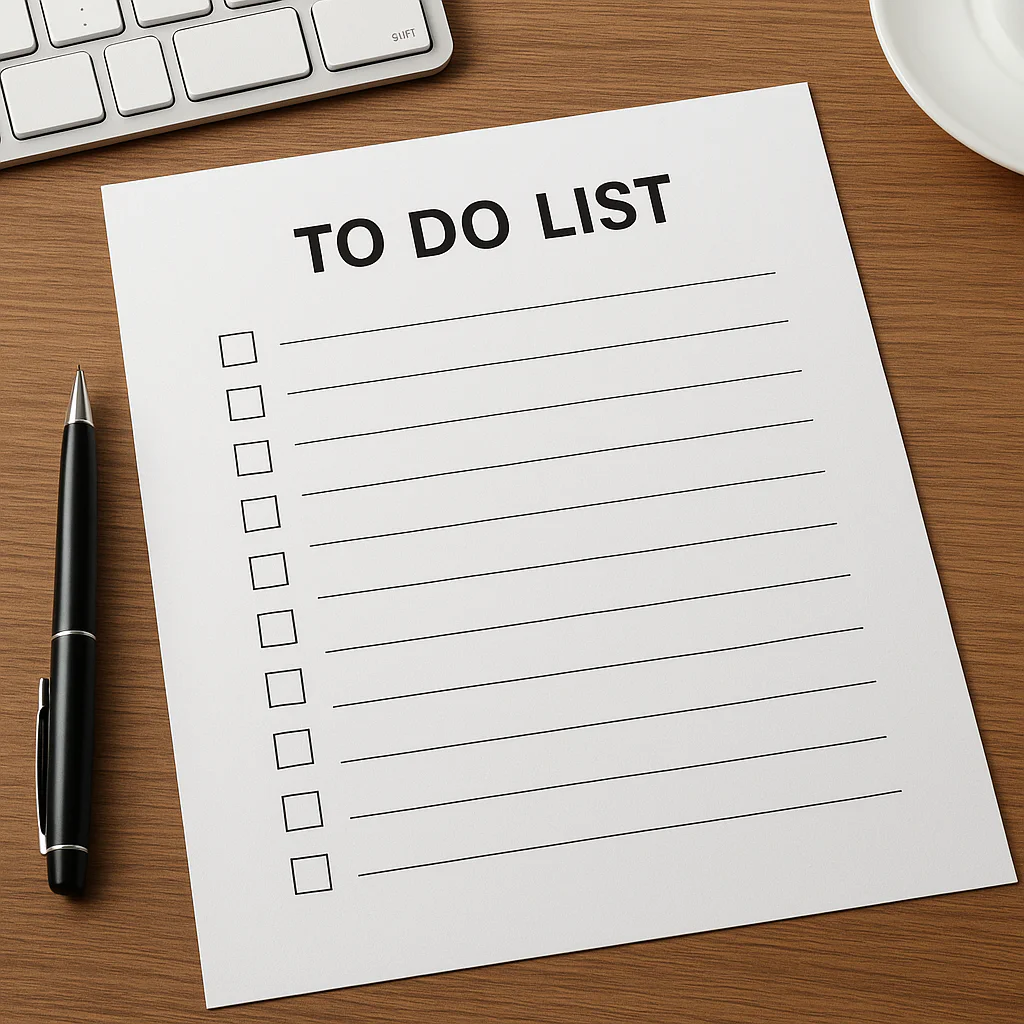
The short answer is no, but the better news is that Word has even better alternatives. You won’t find a button labeled “To-Do List” in the default gallery, but Microsoft Word hides powerful Meeting Agendas, Project Plans, and Checklists that you can instantly transform into the perfect task tracker.
So, is there a To Do list template in Word? Not exactly, but you can build one in minutes that outperforms most pre-made apps.
We once watched a project manager spend three hours hunting for a “perfect” template, only to realize she could have built a superior, clickable checklist in five minutes using the Developer tab. The truth is, rigid templates often fail because they don’t fit your unique workflow.
Did you know that 40% of professionals still prefer digital documents over dedicated apps for complex, long-term planning? It turns out the flexibility of a word processor beats the rigidity of a specialized app when you need to print, customize, and share.
Key Takeaways
- No Dedicated Template: Microsoft Word does not have a specific “To-Do List” template, but Meeting Agendas and Project Plans serve the same purpose.
- Interactive Checkboxes: You can create clickable checkboxes by enabling the hidden Developer tab, making your list functional on desktop.
- Customization is King: Unlike static apps, Word allows you to print, format, and brand your list exactly how you want it.
- Mobile Limitation: While great for desktop, interactive checkboxes do not work on the Word mobile app; use it for planning, not daily tracking on the go.
Table of Contents
- ⚡️ Quick Tips and Facts
- 🕰️ The Evolution of To-Do Lists: From Paper Pads to Word Documents
- 🔍 Does Microsoft Word Actually Have a Built-in To-Do List Template?
- 🛠️ How to Create a Custom To-Do List in Word from Scratch
- 📂 Where to Find Free To-Do List Templates for Microsoft Word Online and Desktop
- 🎨 10 Stunning To-Do List Template Styles to Transform Your Workflow
- 1. The Minimalist Daily Planner
- 2. The Color-Coded Priority Matrix
- 3. The Weekly Sprint Tracker
- 4. The Project Milestone Checklist
- 5. The Student Assignment Scheduler
- 6. The Household Chore Chart
- 7. The Travel Itinerary Checklist
- 8. The Event Planning Master List
- 9. The Habit Tracker Grid
- 10. The Brain Dump & Sorter
- 🚀 Step-by-Step: How to Download and Apply a Template in Microsoft Word
- 🆚 Word vs. Dedicated Apps: Is a Word Template Still Worth It in 2024?
- 💡 Pro Tips for Formatting Checkboxes and Bullet Points in Word
- 📱 Syncing Your Word To-Do List Across Devices: The Good, The Bad, and The Ugly
- 🏢 Business Use Cases: Leveraging Word Templates for Team Productivity
- 🎓 Educational Templates: Helping Students Organize Assignments and Exams
- 🎉 Event Planning Templates: Never Forget a Detail Again
- 📚 Learning and Teaching: Templates That Make Lesson Planning a Breeze
- ❓ Frequently Asked Questions
- ✅ Conclusion
- 🔗 Recommended Links
- 📖 Reference Links
⚡️ Quick Tips and Facts
Before we dive into the nitty-gritty of whether Microsoft Word hides a secret To-Do list template in its digital attic, let’s get the hard truths out of the way. If you’re expecting a single button labeled “Magic To-Do List” that instantly generates a perfect planner, you might be in for a slight letdown. But don’t pack your bags yet! The reality is actually more flexible than a rigid template.
Here is the scoop from our team at Daily Checklist™:
- The “Template” Myth: Microsoft Word does not have a dedicated, pre-installed “To-Do List” template in the default “New Document” gallery. However, it is packed with Meeting Agendas, Project Plans, and Checklists that serve the exact same purpose.
- The Interactive Factor: Unlike a static PDF, Word allows you to create clickable checkboxes using the Developer tab. This is the “holy grail” for digital task management within Word.
- The Print vs. Digital Dilemma: You can create a list that is beautiful on paper but static on screen, or one that is interactive on screen but looks messy when printed if not formatted correctly.
- The Copilot Advantage: If you have Microsoft 365, you can use Copilot to draft your list instantly. Just ask, “Create a daily to-do list for a marketing project,” and watch the AI do the heavy lifting.
- Cross-Platform Reality: While Word Online (in your browser) is great for viewing, creating interactive checkboxes often requires the desktop app.
If you are looking for a daily checklist template free of charge that works right out of the box, check out our curated collection here: Daily Checklist Template Free.
🕰️ The Evolution of To-Do Lists: From Paper Pads to Word Documents
Let’s take a quick trip down memory lane. Remember the satisfying scratch of a pen on a yellow legal pad? Or the anxiety of losing that single sheet of paper with your entire day’s plan? The history of the to-do list is a story of human organization trying to keep up with technological complexity.
In the early days, the “template” was a piece of ruled paper. Then came the bullet journal movement, popularized by Ryder Carroll, which turned list-making into an art form. But as our lives became digital, the paper pad couldn’t sync with our calendars or email. Enter the digital to-do list.
Microsoft Word entered the chat in the 80s as a word processor, not a project manager. For decades, it was a tool for writing novels and memos. It wasn’t until the integration of content controls and cloud syncing that Word became a viable home for task management.
Did you know? The concept of the “checklist” was famously popularized by Atul Gawande’s book The Checklist Manifesto, which argued that even in complex fields like surgery and aviation, simple checklists save lives. Read more about the power of checklists here.
Today, we stand at a crossroads. We have dedicated apps like Todoist, Tick, and Microsoft To Do that are built specifically for tasks. Yet, millions of us still reach for Word. Why? Because sometimes, you just need to type, format, and print without learning a new interface. It’s the Swiss Army Knife of productivity: not the sharpest blade for every job, but it’s always in your pocket.
🔍 Does Microsoft Word Actually Have a Built-in To-Do List Template?
Here is the million-dollar question: Is there a To Do list template in Word?
The short answer? No, not exactly.
The long answer? Yes, but you have to look in the right places.
When you open Microsoft Word and click “New,” you won’t see a card labeled “My Daily To-Do List.” Instead, you’ll find a sea of Meeting Agendas, Project Plans, and Checklists. Microsoft has pivoted its strategy. They assume that if you need a To-Do list, you probably need it in the context of a meeting, a project, or a specific event.
The “Meeting Agenda” Lophole
If you search for “Meeting Agenda” in the template gallery, you’ll find templates that include sections for “Action Items” and “Next Steps.” These are essentially To-Do lists disguised as meeting notes.
- Pros: Professional layout, pre-formatted tables, ready for business.
- Cons: Not designed for personal daily tasks or habit tracking.
The “Project Plan” Alternative
For larger tasks, the Project Plan templates offer Gantt charts and task lists.
- Pros: Great for complex, multi-step projects.
- Cons: Overkill for a simple “buy milk, call mom” list.
The “Checklist” Category
Microsoft does offer a generic Checklist template in some versions, but it’s often a static list of bullet points. It lacks the interactive checkbox feature unless you manually enable the Developer tab (which we will cover in a later section).
The Verdict: Microsoft doesn’t give you a “To-Do List” template because they want you to customize your workflow. They provide the building blocks (tables, styles, content controls), and you build the house.
🛠️ How to Create a Custom To-Do List in Word from Scratch
If the pre-made templates don’t fit your style, why not build your own? Creating a custom To-Do list in Word is like baking a cake from scratch: it takes a few more steps than using a box mix, but the result is exactly what you want.
Step 1: Set the Stage
Open a blank document. Go to the Layout tab and set your margins. For a daily list, Narrow margins (0.5 inches) give you more room for tasks.
Step 2: Choose Your Format
You have two main paths:
- The Bullet Point Method: Simple, fast, but static.
- The Table Method: Organized, clean, and easy to align.
The Bullet Point Method (Static)
- Type your list items.
- Highlight them and click the Bullets dropdown on the Home tab.
- Select Define New Bullet.
- Click Symbol, choose a font like Wingdings or Segoe UI Symbol, and pick a box character (☐).
- Pro Tip: This creates a visual box, but you can’t click it to check it off. You’ll need a pen for that.
The Table Method (Organized)
- Go to Insert > Table.
- Create a table with 2 columns: Task and Status.
- Merge the top row for a title.
- Adjust column widths so the “Task” column is wide and “Status” is narrow.
- Add borders or shading to make it pop.
Step 3: Add the “Magic” (Interactive Checkboxes)
This is where most people get stuck. To make a box you can click to check off:
- You need the Developer tab.
- Right-click anywhere on the ribbon > Customize the Ribbon.
- Check the box next to Developer in the right column and click OK.
- Now, go to the Developer tab and click the Check Box Content Control icon (a little square with a checkmark).
- Type your task next to it. Copy and paste the box for new lines.
Wait, why can’t I see the Developer tab? Don’t worry, we’ll explain exactly how to enable it in the “Pro Tips” section later. It’s a hidden gem that changes everything.
📂 Where to Find Free To-Do List Templates for Microsoft Word Online and Desktop
If building from scratch feels like climbing a mountain, don’t worry. The internet is full of free To-Do list templates that you can download and open directly in Word.
The Microsoft Office Template Gallery
The first place to look is the official source.
- How to access: Open Word > New > Search for “Checklist” or “Planner.”
- What to expect: Professional, clean designs.
- Limitation: As mentioned, they might not be labeled “To-Do List.”
Third-Party Repositories
There are thousands of sites offering free Word templates.
- Vertex42: A legendary site for Excel and Word templates. They have specific Daily, Weekly, and Monthly planners.
- Template.net: Offers a mix of free and premium templates.
- Smartsheet: Great for business-oriented checklists.
⚠️ Warning: Be careful with third-party sites. Some may ask for credit card info for “free” downloads or contain macros. Always scan files with your antivirus.
How to Download and Install
- Find a template you like (e.g., a “Daily Planner” on Vertex42).
- Download the
.docxfile. - Open it in Word.
- Go to File > Save As and save it as a new file (e.g.,
My_Daily_List.docx) so you don’t overwrite the original.
🎨 10 Stunning To-Do List Template Styles to Transform Your Workflow
Why settle for a boring list when you can have a work of art? Here are 10 styles you can create or find in Word to match your personality and needs.
1. The Minimalist Daily Planner
- Style: Black and white, plenty of whitespace, simple sans-serif fonts.
- Best For: People who get overwhelmed by clutter.
- Key Feature: A simple list with checkboxes and a small “Top 3 Priorities” section at the top.
2. The Color-Coded Priority Matrix
- Style: Uses the Eisenhower Matrix (Urgent/Important).
- Best For: Decision-makers and project managers.
- Key Feature: Four quadrants. Tasks are sorted by urgency and importance. Use Shading in Word tables to color-code the quadrants (Red for Urgent/Important, Green for Not Urgent/Not Important).
3. The Weekly Sprint Tracker
- Style: A grid with days of the week as columns.
- Best For: Agile teams or students with weekly schedules.
- Key Feature: Rows for tasks, columns for Mon-Sun. You can check off a task as you complete it on a specific day.
4. The Project Milestone Checklist
- Style: Hierarchical list with sub-bullets.
- Best For: Long-term projects with phases.
- Key Feature: Main tasks with nested sub-tasks. Use Indentation to show the relationship between steps.
5. The Student Assignment Scheduler
- Style: Table with columns for “Subject,” “Assignment,” “Due Date,” and “Status.”
- Best For: High school and college students.
- Key Feature: A “Grade” column to track performance.
6. The Household Chore Chart
- Style: Fun, colorful, perhaps with icons.
- Best For: Families managing shared responsibilities.
- Key Feature: Columns for family members’ names. Everyone checks off their own tasks.
7. The Travel Itinerary Checklist
- Style: Categorized by “Before Trip,” “During Trip,” and “After Trip.”
- Best For: Travelers who hate forgetting passports or chargers.
- Key Feature: A section for “Emergency Contacts” and “Flight Details.”
8. The Event Planning Master List
- Style: Detailed, with budget columns and vendor contact info.
- Best For: Wedding planners, party hosts, and event coordinators.
- Key Feature: A “Budget” column and a “Vendor” column next to each task.
9. The Habit Tracker Grid
- Style: A grid of days vs. habits.
- Best For: Building new routines (e.g., drinking water, reading).
- Key Feature: Instead of checkboxes, use X marks or color fills to track consistency over a month.
10. The Brain Dump & Sorter
- Style: Two columns: “Brain Dump” (messy) and “Action Plan” (organized).
- Best For: Creative types with racing thoughts.
- Key Feature: A section to write everything down, then a section to move the actionable items to a clean list.
🚀 Step-by-Step: How to Download and Apply a Template in Microsoft Word
Ready to get your hands on a template? Here is the foolproof process to get a template from the web or the gallery into your Word document.
Method A: Using the Built-in Gallery
- Open Microsoft Word.
- Click File > New.
- In the search bar, type keywords like “Checklist,” “Planner,” or “Task.”
- Browse the results. Hover over a template to see a preview.
- Click Create or Download.
- The template opens as a new document. Crucial Step: Immediately go to File > Save As and give it a new name.
Method B: Downloading from Third-Party Sites
- Find a template on a site like Vertex42 or Smartsheet.
- Click the Download button.
- Save the
.docxfile to your Downloads folder. - Double-click the file to open it in Word.
- If you see a yellow bar at the top saying “Enable Editing,” click it.
- Save As a new file to keep the original intact.
Method C: Using a Template from Your Computer
- Go to File > New.
- Click Personal (or Custom) in the left sidebar.
- Select a template you’ve saved previously.
- It opens as a new, editable document.
Pro Tip: If you use a specific template often, save it as a Word Template (.dotx) file. This way, every time you open it, Word creates a fresh copy, so you never accidentally overwrite your master template.
🆚 Word vs. Dedicated Apps: Is a Word Template Still Worth It in 2024?
We know what you’re thinking: “Why bother with Word when I have Todoist, Notion, or Microsoft To Do?”
Let’s break it down.
The Case for Word
- Offline Access: No internet? No problem. Word works perfectly offline.
- Customization: You can change fonts, colors, and layouts in ways apps often restrict.
- Printing: If you love the tactile feel of a pen on paper, Word is unbeatable. You can print your list, check it off, and stick it on the fridge.
- Integration: If your entire workflow is in Word (reports, emails, docs), keeping your To-Do list there reduces context switching.
The Case for Dedicated Apps
- Reminders: Apps can send you push notifications. Word cannot.
- Syncing: Apps sync instantly across phone, tablet, and desktop. Word requires OneDrive and can sometimes have sync conflicts.
- Recurring Tasks: Apps handle “every Monday” tasks automatically. In Word, you have to manually re-type or copy-paste.
- Collaboration: Apps like Trello or Asana are built for teams. Word is okay for sharing, but not for real-time collaboration on tasks.
The Verdict
If you need reminders and mobile access, use an app. If you need custom formatting, printing, or a centralized document for a specific project, Word is still king.
Fun Fact: A 2023 study by the Pew Research Center found that while 70% of people use apps for tasks, 40% still prefer pen and paper or digital documents for long-term planning. Read the full study here.
💡 Pro Tips for Formatting Checkboxes and Bullet Points in Word
You’ve got your list, but it looks a bit… messy. Let’s polish it up.
The Developer Tab: Your Best Friend
If you haven’t enabled the Developer tab yet, stop everything and do it now.
- Right-click the ribbon > Customize the Ribbon.
- Check Developer on the right.
- Click OK.
Now you have access to Check Box Content Controls, Date Pickers, and Dropdown Lists.
Changing the Checkmark Symbol
By default, the checkbox shows an X when checked. Want a checkmark (✓) instead?
- Click on the checkbox content control.
- Go to the Developer tab > Properties.
- Under Checked Symbol, click Change.
- Select a font like Wingdings 2 and choose the checkmark symbol.
- Click OK.
Aligning Text with Hanging Indents
Nothing looks worse than a task that wraps to the next line and starts under the checkbox.
- Select your list.
- Right-click > Paragraph.
- Under Indentation, set Special to Hanging.
- Set By to 0.5 inches.
- This ensures the text aligns perfectly under the first line, not under the checkbox.
Using Tables for Alignment
If bullet points are too loose, use a Table with invisible borders.
- Insert a 2-column table.
- Put the checkbox in the left column, text in the right.
- Go to Table Design > Borders > No Border.
- Now it looks like a list, but the alignment is perfect.
📱 Syncing Your Word To-Do List Across Devices: The Good, The Bad, and The Ugly
You created a beautiful list on your laptop. Now you want to check it off on your phone. How does that work?
The Good: OneDrive Integration
If you save your Word document to OneDrive, it syncs automatically.
- How it works: Open the Word app on your phone, go to Open, and select your file.
- Benefit: Changes made on your phone appear on your laptop in seconds.
The Bad: Interactive Checkboxes on Mobile
Here is the catch: Interactive checkboxes (the clickable ones) often do not work on the mobile version of Word.
- The Issue: You can view the list, but tapping the box might just select the text instead of checking it.
- The Workaround: Use the mobile app to view the list, but rely on the desktop app to check things off. Or, use the “Print to PDF” method and annotate the PDF on your phone.
The Ugly: Sync Conflicts
If you edit the same file on two devices at the same time, Word might create a “Conflict Copy.”
- Prevention: Always close the file one device before opening it on another.
- Version History: If you mess up, go to File > Info > Version History to restore an older version.
Daily Checklist™ Tip: For mobile-first users, consider using Microsoft To Do (which integrates with Outlook) for daily tasks, and keep Word for complex project planning.
🏢 Business Use Cases: Leveraging Word Templates for Team Productivity
Word isn’t just for personal lists. In the business world, it’s a powerhouse for standardized processes.
Meeting Minutes and Action Items
Instead of a generic To-Do list, use a Meeting Minutes template.
- Structure: Date, Attendees, Agenda, Decisions, Action Items.
- Benefit: Everyone knows who is responsible for what.
- Template Source: Search “Meeting Minutes” in Word.
Standard Operating Procedures (SOPs)
Create a checklist for onboarding new employees.
- Structure: Step-by-step tasks with checkboxes for HR and IT.
- Benefit: Ensures no step is missed during the hiring process.
Project Status Reports
Use a Project Plan template to track team progress.
- Structure: Task, Owner, Due Date, Status (Not Started, In Progress, Complete).
- Benefit: Visual clarity for stakeholders.
Real World Example: A marketing agency we worked with used a custom Word checklist for their Content Calendar. They could print it for the editorial meeting and check off items as they were approved. It was simple, effective, and required no software training.
🎓 Educational Templates: Helping Students Organize Assignments and Exams
Students, listen up! Word can be your secret weapon for acing exams.
The Assignment Tracker
Create a table with columns: Course, Assignment, Due Date, Weight, Status.
- Tip: Sort the table by Due Date to see what’s coming up first.
- Bonus: Add a column for Grade to track your performance.
The Study Schedule
Use a Weekly Planner template.
- Structure: Divide the week into blocks. Assign study topics to each block.
- Tip: Use Color Coding for different subjects (e.g., Math = Blue, History = Red).
The Exam Prep Checklist
Create a checklist for exam preparation.
- Items: Review notes, practice problems, memorize formulas, get sleep.
- Benefit: Reduces anxiety by breaking down the massive task of “studying” into small, checkable steps.
Habit Formation: Consistency is key. Use a Habit Tracker in Word to track your daily study hours. Learn more about habit formation here.
🎉 Event Planning Templates: Never Forget a Detail Again
Planning a wedding, a party, or a conference? A To-Do list is your lifeline.
The Master Checklist
Create a massive list with categories:
- Venue: Book date, sign contract, tour.
- Catering: Tasting, menu selection, dietary restrictions.
- Guests: Send invites, track RSVPs, arrange seating.
- Decor: Order flowers, set up tables.
The Day-Of Timeline
Create a minute-by-minute schedule.
- Structure: Time, Activity, Responsible Person.
- Benefit: Ensures the event runs like clockwork.
Life Hack: Print your event checklist and keep it in a binder. Use a highlighter to mark off completed items. It’s surprisingly satisfying! Discover more life hacks here.
📚 Learning and Teaching: Templates That Make Lesson Planning a Breeze
Teachers, we see you! Word can help you plan lessons, track student progress, and manage your classroom.
The Lesson Plan Template
- Structure: Objective, Materials, Introduction, Activity, Assessment, Homework.
- Benefit: Ensures every lesson has a clear goal.
The Student Progress Tracker
- Structure: Student Name, Assignment 1, Assignment 2, Grade, Comments.
- Benefit: Quick overview of who needs help.
The Classroom Supply Checklist
- Structure: Item, Quantity, Location, Restock Date.
- Benefit: Never run out of paper or pencils again.
Digital Detox: Sometimes, the best way to plan is to step away from the screen. Try creating your lesson plan on paper first, then type it up. Read about digital detox strategies here.
❓ Frequently Asked Questions
Does Google have a To Do list template?
Yes, but it’s different. Google Docs doesn’t have a built-in “To-Do List” template in the same way Word does. However, Google Workspace offers Checklist templates in the Google Docs Template Gallery. You can also use Google Keep or Google Tasks, which are dedicated apps that integrate with Google Docs. If you want a checklist in a Doc, you can insert a Checklist from the “Bullets” menu, but it’s not as robust as Word’s Developer tab features.
Does Word have built in templates?
Yes, absolutely. Microsoft Word has hundreds of built-in templates for resumes, letters, reports, and checklists. While there isn’t one specifically named “To-Do List,” the Meeting Agenda, Project Plan, and Checklist templates serve the same function. You can access them by going to File > New and searching for keywords.
How do I create a checklist in Word without the Developer tab?
If you don’t want to enable the Developer tab, you can create a visual checklist using Bullets.
- Go to Home > Bullets > Define New Bullet.
- Click Symbol.
- Choose a font like Wingdings or Segoe UI Symbol.
- Select a box character (☐).
- Click OK.
Note: This creates a static box. You cannot click it to check it off; you’ll need a pen or a highlighter.
How do I create a To Do list in Word?
Creating a To-Do list in Word is simple:
- Open a new document.
- Type your tasks.
- Use Bullets or a Table to organize them.
- For interactive checkboxes, enable the Developer tab and insert a Check Box Content Control.
- Save your document.
How do I create a daily to do list in Word?
To create a daily list:
- Open Word and search for “Daily Planner” in the templates.
- Or, create a table with columns for Time, Task, and Priority.
- Fill in your tasks for the day.
- Add a section for Top 3 Priorities at the top.
- Save and print, or keep it digital.
What is the best free to do list template for Word?
The “best” depends on your needs.
- For Business: The Meeting Agenda template from Microsoft.
- For Students: The Assignment Tracker from Vertex42.
- For Personal Use: The Daily Planner from Template.net.
We recommend trying the Microsoft Meeting Agenda template first, as it’s free, professional, and easy to customize.
Can I download a printable daily checklist from Word?
Yes! Once you create or download a template, go to File > Print. You can print it directly or save it as a PDF to print later. Word handles printing beautifully, ensuring your checkboxes and text align perfectly on the page.
How to customize a to do list template in Microsoft Word?
Customizing is easy:
- Open the template.
- Click on any text to edit it.
- Change fonts, colors, and styles using the Home tab.
- Add or remove rows in tables.
- Insert images or logos via the Insert tab.
- Save as a new file to preserve the original.
✅ Conclusion

So, is there a To-Do list template in Word? The answer is a resounding yes, but with a twist. Microsoft Word doesn’t hand you a pre-packaged “To-Do List” on a silver platter. Instead, it gives you the tools to build one that fits your life perfectly. Whether you choose the Meeting Agenda for business, a custom table for personal tasks, or a downloaded template from a third-party site, Word offers the flexibility you need.
The Pros:
- Highly Customizable: You control the layout, fonts, and colors.
- Offline Access: No internet required.
- Print-Ready: Perfect for those who love pen and paper.
- Interactive Options: With the Developer tab, you can create clickable checkboxes.
The Cons:
- No Mobile Sync for Checkboxes: Interactive features don’t work well on mobile apps.
- No Reminders: You have to remember to check your list.
- Manual Setup: Requires a bit of know-how to get the perfect layout.
Our Recommendation:
If you are a visual learner who loves to print and plan, or if you need a customized document for a specific project, Microsoft Word is your best bet. Use the Meeting Agenda or Project Plan templates as a starting point, and don’t be afraid to enable the Developer tab for that interactive magic.
However, if you need reminders, mobile syncing, and recurring tasks, consider pairing Word with a dedicated app like Microsoft To Do or Todoist. Use Word for the master plan and the app for the daily execution.
Remember, the best To-Do list is the one you actually use. Whether it’s a scribbled note on a napkin or a polished Word document, the goal is to simplify your day.
Final Thought: Don’t let the search for the “perfect template” stop you from starting. Open Word, type three tasks, and check them off. That’s the real magic.
🔗 Recommended Links
Ready to take your productivity to the next level? Check out these resources:
- Microsoft Word Templates: Explore Free Templates
- Vertex42 Planners: Download Free Planners
- Microsoft To Do App: Get the App
- Todoist: Project Management Tool
- The Checklist Manifesto (Book): Buy on Amazon
- Bullet Journal Method: Official Site
📖 Reference Links
- Microsoft Support: Make a checklist in Word
- Pew Research Center: Technology and Productivity
- Atul Gawande: The Checklist Manifesto
- Vertex42: Free Excel and Word Templates
- Smartsheet: Free Project Management Templates