Support our educational content for free when you purchase through links on our site. Learn more

How to Prioritize Tasks on a Daily Checklist: 12 Proven Methods for 2025 🚀
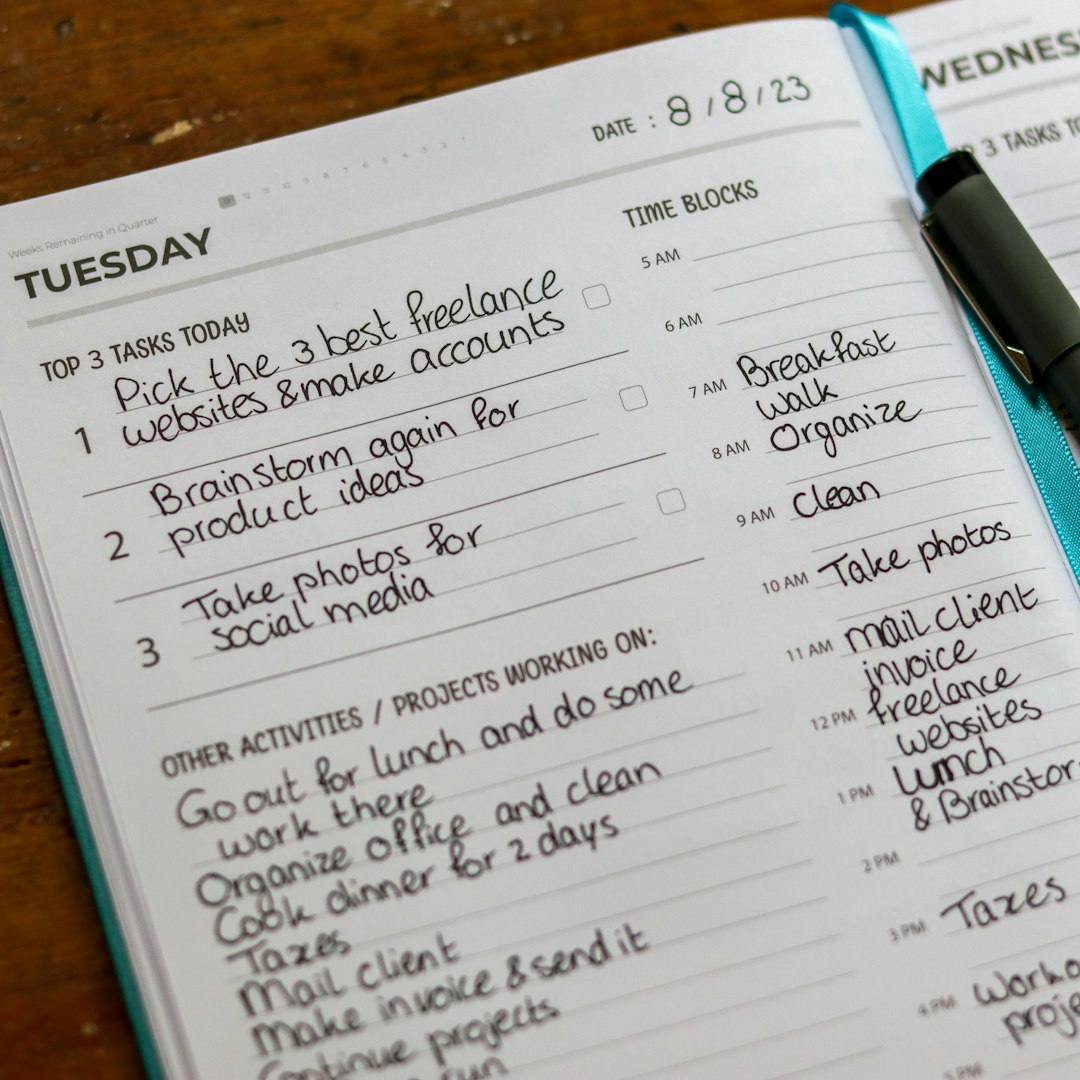
Ever stared at your daily to-do list and felt like you were drowning in tasks? You’re not alone. The average person spends nearly an hour every day just deciding what to tackle next—time that could be better spent actually getting things done. Imagine slicing through that chaos with a clear, actionable plan that transforms your overwhelming list into a productivity powerhouse. Intrigued? You’re about to discover 12 proven prioritization methods that will help you master your daily checklist, boost your focus, and reclaim your time in 2025.
At Daily Checklist™, we’ve tested every trick in the book—from the classic Eisenhower Matrix to the energizing “Eat the Frog” technique—and we’re sharing the ultimate roadmap to help you prioritize like a pro. Whether you’re juggling work projects, home chores, or personal goals, this guide will equip you with practical strategies and tech tools to make your daily checklist your secret weapon against overwhelm.
Key Takeaways
- Master 12 powerful prioritization methods including Eisenhower Matrix, ABCDE, and Time Blocking to tailor your approach.
- Build a solid daily checklist foundation by brain dumping, breaking down tasks, and categorizing by urgency and energy.
- Leverage technology like Asana, Todoist, and Trello to organize and track your priorities efficiently.
- Align tasks with your energy levels and motivation to maximize productivity and avoid burnout.
- Regularly review and adjust your priorities to stay flexible and focused in a changing day.
👉 Shop productivity tools to get started:
- Asana: Amazon | Asana Official Website
- Todoist: Amazon | Todoist Official Website
- Trello: Amazon | Trello Official Website
Ready to turn your daily checklist from chaos to clarity? Let’s dive in!
Table of Contents
- ⚡️ Quick Tips and Facts
- 📜 The Never-Ending To-Do List: A Brief History of Task Management Woes
- 🤯 Why Prioritization Feels Like a Herculean Task: Understanding the Overwhelm
- ✍️ The Foundation: Crafting Your Ultimate Daily Checklist
- 🎯 Mastering the Art: 12 Top Prioritization Methods for Your Daily Checklist
- 🚀 Beyond the Method: Practical Strategies for Daily Prioritization Success
- 📱 Leveraging Technology: Digital Tools for Supercharging Your Daily Checklist
- 🧘♀️ The Human Element: Mindset, Motivation, and Avoiding Burnout
- 📈 Measuring Success: How Prioritized Work Leads to Productive Outcomes
- 🚧 Common Pitfalls to Avoid When Prioritizing Tasks
- 💡 Conclusion: Your Path to Daily Checklist Mastery
- 🔗 Recommended Links for Further Reading
- ❓ FAQ: Your Burning Questions Answered
- 📚 Reference Links
⚡️ Quick Tips and Facts
Before we dive deep into the art and science of prioritizing tasks on your daily checklist, let’s kick off with some quick, actionable tips and fascinating facts from the planners at Daily Checklist™ who’ve been in the trenches of task management for years:
- Start with a brain dump: Write down everything you need to do—no filtering. This clears mental clutter and sets the stage for prioritization. (Pro tip: Check out our What makes a good checklist? article for more on checklist essentials.)
- Use the 80/20 rule: About 20% of your tasks will yield 80% of your results. Find those golden tasks and prioritize them! (Pareto Principle explained)
- Beware of multitasking myth: Studies show multitasking reduces productivity by up to 40%. Focus on one prioritized task at a time. (Source: American Psychological Association)
- Leverage technology wisely: Apps like Asana, Todoist, and Trello can help you organize and prioritize—but only if you don’t get lost in the tools themselves.
- Energy matters: Schedule demanding tasks during your peak energy hours. For many, that’s mid-morning.
- Celebrate small wins: Crossing off tasks releases dopamine, boosting motivation. Don’t underestimate the power of a checkmark! ✅
Fun fact: The average person spends about 55 minutes a day deciding what to work on next. Imagine reclaiming that time by mastering prioritization!
Ready to unravel the mystery behind prioritizing your daily checklist? Let’s roll! 🚀
📜 The Never-Ending To-Do List: A Brief History of Task Management Woes
Ever wonder why we humans have struggled with task prioritization since forever? It’s not just you! The concept of managing tasks dates back to ancient times when scribes used clay tablets to track duties. Fast forward to the Industrial Revolution, and task management became critical for factory efficiency. The modern “to-do list” as we know it blossomed in the 20th century, with productivity gurus like David Allen popularizing methods like Getting Things Done (GTD).
But here’s the kicker: the problem hasn’t changed much—we still face the same overwhelm, distractions, and decision fatigue. What has evolved is the tools and methods to help us cope.
At Daily Checklist™, we’ve seen how blending timeless principles with modern tech creates a winning formula. The history reminds us: prioritization isn’t new, but mastering it is a lifelong journey.
🤯 Why Prioritization Feels Like a Herculean Task: Understanding the Overwhelm
If prioritizing your daily tasks feels like trying to tame a wild beast, you’re not alone. Here’s why:
- Cognitive overload: Your brain can only juggle so much info at once. When your task list balloons, decision fatigue sets in.
- Emotional factors: Tasks tied to fear, anxiety, or perfectionism often get avoided or shuffled endlessly.
- Lack of clarity: Without clear goals or deadlines, it’s hard to judge what’s truly important.
- Distractions galore: Notifications, emails, and social media constantly pull your attention away.
- ADHD and executive function challenges: For many, especially those with ADHD, prioritization is neurologically harder. (For more on this, see Additude Magazine’s insights.)
Understanding these barriers is the first step to overcoming them. We’ll show you how to break down these walls with practical, proven strategies.
✍️ The Foundation: Crafting Your Ultimate Daily Checklist
Before you can prioritize, you need a solid checklist foundation. Here’s how to build yours like a pro:
Step 1: Brain Dump Everything
Write down all tasks, errands, and ideas. Don’t judge or filter—just get it out of your head.
Step 2: Break Down Large Tasks
Big projects can feel paralyzing. Break them into smaller, actionable subtasks. For example, “Write report” becomes “Outline report,” “Draft introduction,” “Compile data,” etc.
Step 3: Add Details
For each task, note:
- Estimated time to complete
- Due date or deadline
- Any dependencies (tasks that must be done first)
Step 4: Categorize Tasks
Group tasks by context (e.g., Work, Home, Errands) or energy level needed (High focus vs. low focus).
Step 5: Choose Your Medium
Paper? Digital? Hybrid? We love Asana for team projects and Todoist for personal lists. For analog lovers, a simple bullet journal works wonders.
Pro tip: Keep your checklist visible and accessible throughout the day to stay on track.
🎯 Mastering the Art: 12 Top Prioritization Methods for Your Daily Checklist
Ready to pick your prioritization weapon? Here are 12 battle-tested methods, each with its own flair and function. We’ve included examples and tips to help you find your perfect fit.
1. The Eisenhower Matrix: Urgent vs. Important
Popularized by Dwight D. Eisenhower, this method divides tasks into four quadrants:
| Quadrant | Description | Action |
|---|---|---|
| 1 | Urgent & Important | Do immediately |
| 2 | Important but Not Urgent | Schedule |
| 3 | Urgent but Not Important | Delegate |
| 4 | Neither Urgent nor Important | Eliminate |
Why it works: It forces you to distinguish between urgency and importance, preventing fire-fighting mode.
Example: Responding to a client crisis (Q1) vs. planning next quarter’s strategy (Q2).
2. The ABCDE Method: Simple & Effective Ranking
Assign each task a letter:
- A = Must do (serious consequences if not done)
- B = Should do (mild consequences)
- C = Nice to do (no consequences)
- D = Delegate
- E = Eliminate
Focus on completing all A tasks before moving to B.
3. MoSCoW Method: Must, Should, Could, Won’t
Used often in Agile project management, this method categorizes tasks as:
- Must have
- Should have
- Could have
- Won’t have (this time)
Great for balancing priorities in complex projects.
4. Eat the Frog: Tackling Your Toughest Task First
Inspired by Mark Twain’s saying, this method encourages starting your day with the hardest or most dreaded task. Once it’s done, everything else feels easier.
5. Time Blocking & Batching: Scheduling for Focus
Allocate specific time slots for tasks or groups of similar tasks. This reduces decision fatigue and multitasking.
6. The Pareto Principle (80/20 Rule): Maximizing Impact
Identify the 20% of tasks that will deliver 80% of the results. Prioritize those for maximum productivity.
7. The Ivy Lee Method: Simplicity in Six Steps
At the end of each day, write down the six most important tasks for tomorrow, ranked by importance. Focus on one task at a time.
8. Kanban Boards: Visualizing Your Workflow
Use columns like To Do, In Progress, and Done to track task status visually. Tools like Trello or physical boards work well.
9. Value vs. Effort Matrix: Strategic Task Selection
Plot tasks on a 2×2 grid based on their value and effort required:
| Low Effort | High Effort | |
|---|---|---|
| High Value | Quick Wins | Major Projects |
| Low Value | Fill-ins | Time Wasters |
Prioritize quick wins and major projects.
10. The Two-Minute Rule: Quick Wins for Momentum
If a task takes less than two minutes, do it immediately. This clears small tasks fast and builds momentum.
11. The “Now, Next, Later” Approach: Streamlining Your Focus
Organize tasks into three buckets:
- Now: Immediate focus
- Next: Upcoming tasks
- Later: Low priority or optional
12. The “Energy-First” Method: Aligning Tasks with Your Peak Performance
Schedule demanding tasks during your peak energy periods and save routine or administrative work for low-energy times.
🚀 Beyond the Method: Practical Strategies for Daily Prioritization Success
Knowing the method is half the battle. Here’s how to supercharge your prioritization:
- Review and adjust daily: Priorities shift. Spend 5 minutes each morning reviewing your list.
- Set clear deadlines: Even self-imposed ones create urgency.
- Limit your daily tasks: Aim for 3-5 high-impact tasks to avoid overwhelm.
- Use “No” liberally: Protect your time by declining non-essential tasks.
- Batch notifications: Turn off alerts during focus blocks to avoid distractions.
- Reflect weekly: What worked? What didn’t? Adjust accordingly.
📱 Leveraging Technology: Digital Tools for Supercharging Your Daily Checklist
Tech can be your best friend—or your worst enemy. Here are some top picks from Daily Checklist™ planners:
| Tool | Best For | Key Features | Platforms |
|---|---|---|---|
| Asana | Team projects & task tracking | Task dependencies, calendar view, comments | Web, iOS, Android |
| Todoist | Personal & small teams | Priority levels, labels, recurring tasks | Web, iOS, Android |
| Trello | Visual task management | Kanban boards, drag & drop, integrations | Web, iOS, Android |
| Microsoft To Do | Simple daily lists | My Day feature, reminders, Outlook integration | Web, iOS, Android |
| Notion | All-in-one workspace | Databases, templates, notes, collaboration | Web, iOS, Android |
User Insight: One of our planners, Jamie, swears by Todoist’s “Today” view to keep laser-focused on daily priorities, while another, Alex, loves Asana’s calendar to avoid overbooking.
👉 CHECK PRICE on:
- Asana: Amazon | Asana Official Website
- Todoist: Amazon | Todoist Official Website
- Trello: Amazon | Trello Official Website
🧘♀️ The Human Element: Mindset, Motivation, and Avoiding Burnout
Prioritization isn’t just about lists and apps—it’s about you. Here’s what we’ve learned:
- Mindset matters: Approach your checklist with curiosity, not judgment. Some days will be better than others.
- Motivation fluctuates: Use internal motivators (“Which task will make me feel better?”) as suggested by Additude Magazine.
- Avoid burnout: Prioritize self-care tasks like breaks, hydration, and movement. They fuel productivity.
- Celebrate progress: Even small wins count. Acknowledge them to build momentum.
- Practice flexibility: Life happens. Adapt your priorities without guilt.
📈 Measuring Success: How Prioritized Work Leads to Productive Outcomes
How do you know if your prioritization is working? Look for these signs:
- Increased task completion rate: More tasks checked off daily.
- Reduced stress: Feeling less overwhelmed and more in control.
- Better quality work: Focused effort leads to higher-quality outcomes.
- Improved time management: Deadlines met consistently.
- Enhanced work-life balance: More time for yourself and loved ones.
Data point: According to a Harvard Business Review study, effective prioritization can increase productivity by up to 25%.
🚧 Common Pitfalls to Avoid When Prioritizing Tasks
Even the best-laid plans can go awry. Watch out for these traps:
- ❌ Overloading your list: Trying to do too much leads to burnout.
- ❌ Ignoring deadlines: Priorities shift when deadlines loom.
- ❌ Failing to reassess: Sticking rigidly to a plan that no longer fits.
- ❌ Neglecting self-care: Productivity tanks without rest.
- ❌ Getting lost in tools: Spending more time organizing than doing.
- ❌ Perfectionism: Waiting for the “perfect” moment or task completion.
Avoid these, and you’re well on your way to checklist mastery.
💡 Conclusion: Your Path to Daily Checklist Mastery
Wow, what a journey! From untangling the history of task management to mastering a dozen prioritization methods, and exploring the human side of productivity, you now hold a treasure trove of strategies to conquer your daily checklist like a pro. Remember, prioritization is not a one-size-fits-all magic wand—it’s a skill honed through experimentation, reflection, and adaptation.
Whether you choose the Eisenhower Matrix’s clarity, the Eat the Frog’s boldness, or the gentle rhythm of the Ivy Lee Method, the key is to align your tasks with your goals, energy, and values. Don’t forget to leverage technology wisely—tools like Asana, Todoist, and Trello can be your trusty sidekicks, but they won’t do the work for you.
We opened with the fact that people spend nearly an hour daily just deciding what to do next. Now you have the roadmap to slash that time and reclaim your focus, motivation, and sanity. So go ahead—draft that checklist, prioritize with confidence, and watch your productivity soar. Your future self will thank you! 🚀
🔗 Recommended Links for Further Reading
👉 CHECK PRICE on:
- Asana: Amazon | Asana Official Website
- Todoist: Amazon | Todoist Official Website
- Trello: Amazon | Trello Official Website
Recommended Books on Productivity & Prioritization:
- “Getting Things Done: The Art of Stress-Free Productivity” by David Allen — Amazon Link
- “Eat That Frog!: 21 Great Ways to Stop Procrastinating and Get More Done in Less Time” by Brian Tracy — Amazon Link
- “Essentialism: The Disciplined Pursuit of Less” by Greg McKeown — Amazon Link
❓ FAQ: Your Burning Questions Answered
What are the most important tasks to include on a daily checklist?
The most important tasks are those that directly contribute to your key goals and have significant consequences if left undone. These often align with your “A” tasks in the ABCDE method or the “Must” category in MoSCoW. Examples include deadlines, client deliverables, or health-related activities. Including these ensures your checklist drives meaningful progress rather than busywork.
How can I avoid procrastination when using a daily task list?
Procrastination often stems from overwhelm or lack of motivation. To combat this:
- Use the Eat the Frog method to tackle the hardest task first.
- Break large tasks into smaller, manageable steps.
- Apply the Two-Minute Rule to quickly clear small tasks.
- Align tasks with your internal motivators, asking, “Which task will make me feel better once done?” (Additude Magazine offers great insights here.)
- Remove distractions by batching notifications and setting focus blocks.
What is the best way to categorize tasks on a daily checklist for maximum productivity?
Categorization depends on your workflow but common effective ways include:
- By urgency and importance: Using the Eisenhower Matrix.
- By context or location: Work, home, errands.
- By energy level required: High-focus vs. low-focus tasks.
- By project or goal: Grouping related tasks together.
This helps you quickly identify what to do next based on your current situation and energy.
How often should I review and update my daily checklist to ensure it remains effective?
Ideally, review your checklist at least twice daily:
- Morning: To prioritize and plan your day.
- End of day: To reflect on progress, reschedule unfinished tasks, and prepare for tomorrow.
Additionally, a weekly review helps you align daily tasks with longer-term goals and adjust priorities as needed.
How do I balance urgent tasks with important but non-urgent ones?
This is the classic challenge! The Eisenhower Matrix teaches us to do urgent and important tasks immediately, but also to schedule important but non-urgent tasks to prevent them from becoming crises. Use calendar blocking to protect time for strategic work and avoid getting trapped in reactive mode.
Can digital tools replace traditional pen-and-paper checklists?
Digital tools offer automation, reminders, and collaboration features that paper can’t. However, some people find physical checklists more satisfying and less distracting. The best approach is a hybrid system that suits your style—use digital tools for complex projects and paper for daily quick lists.
📚 Reference Links
- Asana Official Website
- Todoist Official Website
- Trello Official Website
- American Psychological Association on multitasking: https://www.apa.org/research/action/multitask
- Investopedia on Pareto Principle: https://www.investopedia.com/terms/p/paretoprinciple.asp
- Harvard Business Review on prioritization: https://hbr.org/2017/01/how-to-prioritize-your-work-when-everything-is-a-priority
- Additude Magazine: How To Prioritize Overwhelming Daily Tasks: ADHD Productivity Tips
- Getting Things Done (GTD) by David Allen: https://gettingthingsdone.com/
Ready to take control of your day? Start prioritizing your checklist today and watch your productivity soar! 🚀